The Null Device
Posts matching tags 'thatcherism-blairism'
2017/6/9
Well, that was interesting.
It was an unnecessary election, called by a brittle authoritarian Prime Minister, hoping to take advantage of an unpopular and discombobulated opposition to get a sweeping mandate to remake the country. Aware of the near certainty of victory, they packed their manifesto with far-reaching ambit claims: force the NHS to sell off its land; replace Britain's segment of the internet with an Iranian-style censored, filtered national intranet and ban strong encryption; replace local election voting systems with first-past-the-post, killing off minor parties, abolish the Serious Fraud Office (which had an unfortunate habit of picking on Tory MPs); they even included ending a ban on the ivory trade, because, why not. And it looked like it would win; all the polls showed commanding leads. Britain would vote Conservative, because it believed it deserved to be punished. Or perhaps, however unpalatable the Tories' programme was, the alternative was unthinkable, so bitter medicine it would have to be.
Things tightened during the election. (It didn't help that Theresa May didn't cope all that well when things weren't under her control, and tended to freeze up like a broken Dalek when confronted with questions from members of the public; empty warehouses and squads of pre-vetted party volunteers were soon found to mitigate this.) Things, however, could be expected to tighten. It's all part of the pantomime of the great carnival that is a general election: the old order is temporarily inverted and those who govern are briefly at the mercy of their subjects. Still, the vast majority of polls pointed to an increased Tory majority, if not quite the epic landslide promised, but still a healthy mandate.
It didn't work out that way. As soon as the polls closed, the exit poll (which has a much higher sample size and resolution) indicated a hung parliament. As the night went on, this bore out in results: Tory seats falling to a Labour party buoyed by an unusually high turnout, especially of young people traditionally written off as apathetic. (Somehow enough millennials took a break from Snapchatting selfies or eating avocado toast in pastel-coloured onesies or whatever it is the snake people reportedly spend all their time doing and got out to vote, swinging entire seats. One can probably add neoliberalism to the list of things millennials are ruining.) By the morning, a hung parliament was confirmed.
May didn't waste any time, and secured a minority-government deal with the Democratic Unionist Party, a far-right religious-fundamentalist party from Northern Ireland with shadowy links to Protestant paramilitary groups; together, they have a working majority of one or two seats. Things get interesting when one considers that the DUP are opposed to the restoration of a hard border in Ireland (making leaving the customs union much more complicated), but also opposed to Northern Ireland having any special status within the EU (as that'd be caving in to the papists south of the border). They get even more interesting factoring in the fact that a significant number of the Tories' MPs are in Scotland (where the SNP had a very bad night), and thus prohibited by the English Votes for English Laws convention from voting on purely England-and-Wales matters (such as anything to do with the NHS or education). If this holds (and, in the ad hoc world of Westminster, especially under the reality distortion field of a right-wing press, nothing is certain), it means that the government will not have a majority to pass much of its programme; and even that which isn't covered could fall prey to dissent within the party. A further question is that of Theresa May's career. She may have reasserted her authority over her party for the time being, but she did gamble on an unnecessary election, and the Conservatives' losses are at least partly due to her performance. History's judgment of May will not be favourable; as Charlie Brooker put it, “the history books will say Theresa May poured her legacy into an upturned crash helmet and shat in it.”) Meanwhile, Boris Johnson (the classically eloquent yet buffoonish Bullingdonian partly responsible for the whole Brexit omnishambles thast led us here) is said to be preparing for a challenge. Which could mean that, soon, both sides of the pond will be ruled by the hosts of a species of hirsute parasitic brain slug.
If there is a winner of the night, it is the Labour leader Jeremy Corbyn. Previously written off as unelectable, Corbyn has galvanised the party base and the voting public, and achieved the highest vote count for Labour since Tony Blair swept to power 20 years ago. And it's Blair's legacy—a focus-grouped managerialism, bedded on the certainty of Margaret Thatcher's neoliberal axiom, “there is no alternative”—that Corbyn has put to rest. It will be a long time until we see a bland, well-scrubbed Labour politician announcing that the party has the value of “having strong values” or some similarly content-free pabulum. And given the Tory minority government's tiny working minority, and the certainty of byelections, Corbyn may yet be Prime Minister sooner rather than later.
In summary: strap in. This ride's just beginning.
2015/9/13
In news that wasn't entirely unexpected, Jeremy Corbyn has been elected to lead the Labour Party in Britain. Corbyn, a left-wing veteran backbencher and frequent parliamentary rebel, had originally been entered into the contest shortly after Labour's crushing election defeat for the purpose of “broadening the debate”, and possibly generating some ideas that could help towards the next campaign of whoever won. The tones of the sensible post-ideological managerialists in the party began to darken when Corbyn started leading the polls; why would an ancient weirdy-beardy lefty given to wearing shabby home-made jumpers outpoll all those polished talking heads, with their extensively tested motherhood statements about “social justice” and “aspiration”, about doing something about “inequality” whilst giving no quarter to unworthy scroungers, balanced in the optimum proportion given the most recent polling? Whatever hope remained of “shy Blairite” tendencies prevailing in the actual ballot were annihilated when the results came in: Corbyn got 59.5% of the vote in the first round, almost three times as many as his nearest challenger, Andy Burnham. Meanwhile Liz Kendall, a Blairite candidate representing the notion that, following its electoral defeat, Labour must move to the right, came in last with a dismal 4.5%. (Tony Blair himself, meanwhile, phoned in from whichever despot's yacht he is currently staying on, urging the Labour faithful to vote for anyone but Corbyn; the fact that, from Blair's point of view, all the other candidates were interchangeable, is telling. In any case, it's not unlikely that a significant number of people voted for Corbyn partly to give Blair a kicking.)
Of course, it is easy enough to get elected to be leader of the opposition; as leader of the Opposition, Corbyn's mandate is to lead the party into the next election, and into government; whether that is possible is an open question. One common narrative says that Corbynmania is a purely emotive movement, grasping for the comfort of a fantasy, or the righteousness of the lost cause, much in the way that the hopeless embrace apocalyptic religion or conspiracy theories, and that, in the dozens of Tory marginal seats Labour will have to win back, it's unlikely to find traction. The implication of this narrative is that the opposite, a skilful rightward-triangulating neo-Blairism, cheekily ambushing the Tories on their own ideological turf, whilst offering the slightest essence of a brighter alternative—socialism diluted to homeopathic proportions, so not one particle remains—to somehow push the feeling that a Labour government implementing neoliberal privatisation/austerity policies will be ineffably better. This neo-Blairite model would place the running of the country in the hands of technocratic management, operating under a neoliberal free-market framework (as There Is, after all, No Alternative), communications with the fickle masses in the hands of spin doctors and, essentially, disinformation specialists, and whatever policy is not dictated by the markets and the needs of corporate stakeholders would be subject to focus groups and opinion polls. Standing for something is for losers, after all.
There are several problems with this argument; not least of them the fact that the Labour Party fielded three candidates who were driven by such calculation, who did dismally. Indeed, the one who did the worst was the one who most honestly articulated a Blairite centre-right position of the sort that, we are told, is catnip to the ordinary voter (the ordinary voter; that sharp-elbowed aspirational creature that reads the Evening Standard and is concerned primarily about their property values). The other two kept it artfully vague, avoiding committing to anything that might be held against them, hitting the talking points like pros, and even tacking to the left when it became evident that Corbyn had shifted the party's internal Overton window; it didn't do them much good. Had one of them won, it is hard to imagine their warmed-over, cobbled-together message stirring the electorate; especially whereas none of them had Blair's Mephistophelian charisma. (On the other hand, it can be argued that Tony Blair's uncanny election-winning power has been somewhat overstated; in 1997, the Conservative government was in such disarray, with a series of scandals and misfortunes topping a general sense of malaise and decay, that chances are anybody could have led Labour to victory.)
Anyway, it is now Corbyn's task (along with the newly elected deputy leader, Tom Watson, who's more of a pragmatist, whilst simultaneously passionate about issues of civil liberties) to lead the party into the next election and win. And one thing we can expect is that they will come under withering fire; from the Tories, the right-wing press, and even the more Blairite elements of their own party, should they sense the opportunity for a spill. From now on, the press will be full of hit pieces of varying degrees of hyperbole (look for mentions of “the Chavez of Canonbury”, for example). And perhaps the public will, after enough repetitions, start to believe them; polls will show Labour's support deteriorating; perhaps they will go into the next election and be thoroughly annihilated, swapping places with the Liberal Democrats; or not even get that far, as MPs, facing the loss of their seats, stage a spill and hurriedly put on their best Blairite act. But perhaps this time it won't work; if the Tories miscalculate, if too many of the public know people who have been thrown on the scrapheap by austerity, if the idea that those hit by welfare sanctions or the bedroom tax are the “unworthy poor” who have made their own misfortune through fecklessness suddenly loses its power, if millions of people realise that they're not temporarily embarrassed buy-to-let multi-millionaires but rather the deeply indebted precariat, and that the windfall they anticipate is not about to trickle down to them any time soon, the scare stories will be dismissed, and, being inured to them, the public will dismiss any concerns about Corbyn's views as similarly concocted.
Personally, I agree with some of Corbyn's views, but not all. He is my local MP, and I have, on occasion, written to him about various issues, and generally found my concerns well received. I'm not so keen on some of his other cited positions, such as, for example, withdrawing from NATO or the EU, or spending public health funds on ineffectual mystical quackery such as homeopathy. More significantly, Corbyn's idea of reopening coal mines seems backward in this day, when China and India are slashing their coal imports, coal-fired power plants are being deprecated and not replaced, and even coal-mad Coalition-ruled Australia is having a hard time funding its new coal mines. Corbyn's hope of reopening coal mines seems similarly ideological, only rather than impressing the bogan voters by punching the inner-city latte-sippers, it looks to be about avenging Arthur Scargill and the martyrs of Orgreave and sticking one up at Thatcher. Indeed, Corbyn doesn't seem to have said much about the environment or the threat of climate change, or the need to radically change our infrastructure to reduce its environmental impact.
However, Corbyn is not the autocratic leader of the Labour Party, and it seems that these positions are less likely to prevail than more popular ones (such as building massively more public housing, renationalising the railways, easing off on austerity and such).
In any case, we live in interesting times; as the last election (in which the SNP took almost a clean sweep of Scotland) showed, we can no longer rely on safe assumptions of how things will unfold.
2015/2/25
Upon seeing the title “The City That Privatised Itself To Death” in this morning's Guardian, I began wondering what gruesomely absurd edge-case of neoliberalism the piece would be about; some bankrupt municipality in the US, perhaps, reduced to selling its fire brigade to Uber-like privateers (who, subsequently, would elude prosecution after having been found actually setting fires) and flogging off tolling rights to its roads; or possibly some once-vibrant city in central America, cracked open like a ripe nut by corporate raiders armed with free-trade treaties and the IMF's full backing, bled dry and reduced to a fortified enclave and a sprawl of miserable shanty towns, their inhabitants busily dying of preventable diseases? But no, it turned out to be the latest Humorous Rant About London Privatisation/Gentrification (so bleak, you have to laugh), this time by a chap named Ian Martin (who, if I recall correctly, has stepped in for Charlie Brooker when he had a column):
Perhaps eminent historians will study London in the early 21st century, see how its poorer inhabitants were driven out, observe how its built environment was slowly boiled to death by privatisation. And they will wonder why people tolerated this transfer of collective wealth from taxpayers to shareholders. And they will perhaps turn their attention to Eduardo Paolozzi’s fabled mosaics at Tottenham Court Road underground station.
Paolozzi's mosaics' significance is, firstly, that they date back to the instance before the privatisation explosion and, more importantly, whatever their artistic merit, they take up space that could be otherwise monetised for advertising, as the owners of the city would will it to be.
You can’t paste an ad on to a wallful of public art. You can’t fix one of those irritating micromovies over it, telling a vacuous five-second story about investments or vitamins or hair. The Paolozzi mosaics went up as decorative art, just as privatisation was about to explode like a dirty bomb all over the public realm. What survives at Tottenham Court Road station is a brave, forlorn little seawall set against a stormtide of corporate advertising.
I say “we”, although the greatest trick Thatcherism ever pulled was this redefinition of “us and them”. Suddenly, people in your own family were voting Tory. Mrs Thatcher’s chief information officer, Rupert Murdoch, was telling us that the firemen and the dustmen were our enemies. That the women of the NUT and Nalgo were the mad, selfish defenders of a doomed elite. The Tory government went after the local authorities, telling us that government itself was our enemy. You were just going: “Hold on a minute, if you’re the government …” and then they shouted: “Oh, God, look! The Falklands!”, hired more expensive PR guys and carried on privatising.
Further on, Martin contrasts the Blatcherite moment of privatisation with the old world, the shards and pseudo-public spaces in the middle of ridiculous-looking postmodern vanity skyscrapers, with the heady, wholesome, if at times drab and unexciting-looking, not-quite-socialism of the post-war decades:
Let me tell you, little ones, about how popular music and the bright optimism of collective space came together long ago in London’s heady, soot-laden, pre-privatised air of 1967. Song of the summer was Waterloo Sunset by the Kinks, with its odd blend of keening melancholy and positivism. Nostalgia for a doomed postwar world, exhilaration for the coming of a new post-industrial one. Terry and Julie, facing the future unafraid. Wherever you went, it floated into earshot on a tide of treble from someone’s transistor radio.
(I have, as undoubtedly many who have heard Waterloo Sunset do, a particular image of Terry and Julie standing on the bridge; an image formed long before I heard that the song referred to Terence Stamp and Julie Christie. Terry, in my vision, wears a beige cashmere jumper, and his chestnut hair cascades voluminously over his ears, as the hair of men did in 1967; he has a gold ring on the middle finger of his right hand, which rests on Julie's shoulder. Julie, his dollybird, hangs on his arm; she is tall (though half a head shorter than him) and beanpole-thin, with long, straight bottle-blond hair and teeth slightly too large, giving her a somewhat horsey appearance. Both of their respective sets of parents toiled in menial jobs, but the increased social mobility has allowed them to raise their expectations of what life has to offer. They have a little apartment near the Thames, which they've done up fashionably, a Dansette which they've bought on hire-purchase, and half a dozen records which get played when they invite friends over for parties. Life is good, and can only get better.)
And if you were Terry and Julie gazing at a Waterloo sunset in the summer of 67, you’d have seen the Hayward Gallery under construction. The beautiful, brilliant, brutalist Hayward, part of a people’s South Bank that had started with the Festival Hall in 1951 and would end triumphantly with the National Theatre in the 1970s. And we did gaze at it, thinking: “This is us.” This is us, building something amazing, for us. Several eminent architects worked on the scheme, but oversight belonged to the GLC architects department. Imagine that. A time when most architects worked in the public sector, designing a world of public space and collective aspiration, a world of affordable housing with statutory space standards.
Martin outlines the Blatcherite big-bang which ended all that; the privatisation of architecture, the normalisation of privately-owned spaces, with actual public participation governed by conditions enforced by private security, the transformation of public ownership into a sin—socialism— and its abolition into a moral imperative, takes a few shots at the Shard, and then extrapolates the zeitgeist to a post-apocalyptic conclusion:
On the current track, maybe life does become unbearable in the future, when the last remaining cubic centimetre of public space – a trembling pocket of air perhaps, in a cellar at the Emirates British Library – is finally acquired by a friend of King Charles III. At some point, there’ll be no more space left to squeeze and monetise. The city’s overlords will own everything. Qatari, Saudi, Russian, Indian, Chinese, some UK hedge funds named after Shakespearian characters – all air will be their air.
Then – who knows? Maybe when London is pixellated into billions of stock-marketable units of sequestered air, boing! The world cracks and changes. Iceland acquires the north pole, discovers tons of diamonds and becomes the richest nation on earth. Ghana puts the first woman on Mars. Scientists announce they can convert rising sea levels into environmentally sustainable “brinergy”. The global petrochemical industry suffers a fatal prolapse. Its sheiks and warlords, the fawned-upon princes who once did as they wished – buying up most of Streatham in the morning, beheading someone for sorcery in the afternoon – well, they’re dust and shadow now. Maybe the global property market follows oil down the plughole. London’s last human inhabitants head north, their hovertransits stuffed with electronic belongings and omniplasma, to affordable housing, a temperate climate and a hopeful, collective future.Also on the topic of spaces in the shadowy hinterland between public and private, the Guardian has a piece on the Thames Path, a public walking route running along the river's banks, considerable lengths of which (particularly in “regenerated” parts of London) have been surrounded with fences and gates, with the aim of intimidating the public into abrogating the right they have to use them, allowing them to finally be fully, legally taken out of the public realm.
2014/4/11
Alex Proud, who previously wrote about the Shoreditch-modelled gentrification and sanitisation of the down-at-heel parts of London, has a new article about the end state of this process of gentrification and the future of hyper-gentrified London, a homogeneously rich, clean, and dull, place, with all the edginess and excitement of Geneva or central Paris, a city of "joyless Michelin starred restaurants and shops selling £3,000 chandeliers":
Two decades on and you can play a nostalgic little game where you remind yourself what groups London’s inner neighbourhoods were known for 20 years ago. Hampstead: intellectuals; Islington: media trendies; Camden: bohemians, goths and punks; Fulham: thick poshos who couldn’t afford Chelsea; Notting Hill: cool kids; Chelsea: rich people. Now, every single one of these is just rich people. If you want to own a house (or often just a flat) in these places, you need a six figure salary or you can forget it. And, for anyone normal, that means working in finance.
Inner Paris is a fairytale for wealthy people in their fifties (and outer Paris looks like Stalingrad with ethnic strife) while Geneva has dispensed with the poor altogether. As a result, both cities are safe, pretty and rather boring places to live – and soon London will be too.The article is a fine rant, dripping with bons mots like “Bitcoins for oligarchs”, “like Jay-Z as reimagined by someone who works at Goldman Sachs”, and “the bastard offspring of Kirstie Allsopp and Ayn Rand”; the prognosis is not hopeful for London either:
Why? Because the financiers who can afford inner London neighbourhoods are not cool. Visit Canary Wharf at on any weekday lunchtime and watch the braying, pink-shirted bankers disporting themselves. Not cool. Peruse the shops at Canary Wharf. From Gap to Tiffany’s, they’re all chains stores and you could be anywhere wealthy, safe and dull in the world. Rich people like making money and spending it on dull, expensive things. That’s what they do – and they’re very good it. But being a high-end cog in the machine is not cool.
In the short term, our city’s young creative class will continue to move further and further out. Is New Cross the new Peckham? Is Walthamstow the new Dalston? But there are limits to this: there’s not much of a vibe in Ruislip and there never will be; really, the cool inner suburb ship sailed in 2005. So, when you’re stuck out amongst the pebble-dashed semis of Zone 4, miles from a centre that’s mainly chain shops, boutiques for the tacky rich and restaurants you can’t afford or even book, you might start wondering if the World’s Greatest City (TM) really is for you. Then maybe you’ll visit friends, somewhere like Bristol or Newcastle or Leeds or Glasgow. And maybe you’ll discover that there you can buy a house that’s walking distance to a centre full of shops that cater to you, restaurants that want your custom and pubs and clubs whose prices wouldn’t make someone in Gstaad blanch... Perhaps London’s craven fealty to the ghastly rich will finally accomplish what no government policy ever has – it will rejuvenate our provincial cities.Though chances are, the cities with fast links to London will end up hypergentrified as well; Brighton (or “London-by-the-sea”, as some call it) is well on the way to going there, and some speculate that places like Margate (one hour from London along a partly high-speed railway, and already sprouting vintage shops and a modern art gallery amongst the everyday-is-like-Sunday shabbiness) could end up following suit. Birmingham, meanwhile, might jump from never-quite-fashionable to bourgeois luxury for the new-economy elite when HS2 arrives, allowing those who aren't fully-fledged partners to afford somewhere within an easy commute of Canary Wharf.
Proud blames this state of affairs on a system rigged to pander to the beneficiaries of this state of affairs—house-flippers, buy-to-let landlords, ex-Soviet oligarchs looking for somewhere to park their wealth—at the expense of the little people to whom it is made clear that the city does not belong, and who are gradually squeezed further out, towards the periphery and beyond; who still hold onto their shrinking, expensive foothold on the precious land inside the M25, believing that it's stil worth it because of the aura of brilliance surrounding the idea of London; an aura increasingly based in nostalgic delusion, and one which can't last.
Readers of the Guardian or New Statesman will have seen this story numerous times, from different angles and at different points in time, more or less the same, only with the place names moved slightly further out every year. However, part of the message here is in the medium; Proud is writing in the Daily Telegraph, a paper owned by the Barclay Brothers, long associated with the Conservative Party (it's often nicknamed the Torygraph), and one which one might imagine would be perfectly au fait with the ideals of the Thatcherite “property-owning democracy”. When the Torygraph is publishing articles bemoaning how gentrification is hollowing out and sterilising London, then perhaps it is time to be concerned.
I wonder how much this is due to one of the less-often-quited corollaries of the neoliberal/market-oriented mindset of the recent few decades: the idea that anything of value is traded on a market, and everything is a convertible hard currency, this time applied to cultural capital. It used to be that cultural capital and economic capital were separate spheres, and absolutely not interconvertible. There were no cool rich kids, or those who were hid their economic capital. (The word “cool”, in fact, originated with socially and politically disenfranchised African-Americans; in its original meaning, the word didn't mean chic, fashionable or at the top of the status hierarchy, but refered to an unflappability, an unwillingness to let the constant low-level (and not so low-level) insults and aggressions of an institutionally racist and classist system be seen to get you down; as such, it was, by definition, the riches of the poor, the exclusive capital of those excluded from capital.)
Fast forward to the present day; after Milton Friedman declared everything to be convertible goods in a market. Reagan and Thatcher applied this to economic goods, launching the “Big Bang” of deregulation and the 20-year economic bubble that followed. Then the Clinton/Blair era of the “Third Way” coincided with its own Big Bang, this time deregulating the cultural marketplace; starting off with Britpop and going on to Carling-sponsored landfill indie, New Rave, hipster electro (and indeed the recycling of the term “hipster”, originally meaning a habitué of the grimy jazz-and-heroin demimonde of the Beat Generation, now referring to trust fund kids in limited-edition trainers), yacht rock, chillwave and whatever. The old regulatory barriers between the mainstream and the underground were swept away as surely as the barriers between high-street and investment banks had been a decade earlier; the rise of the internet and the cultural globalisation played a part in it, though the mainstreaming of market values once seen as radical would also have had a hand. Soon everything was in a commodity available on the marketplace; 1960s guitar rock and Mod iconography was revived as Britpop, post-punk, stripped of unmarketable references to Marxism, Situationism and existentialist paperbacks and sexed up, as generic NME-cover “indie”, and we were faced with a multifaceted 80s revival that ran for longer than the 80s. Major-label pop producers used ProTools plug-ins to grunge up their protégés, giving them that authentically lo-fi “alternative” sound, while bedroom producers armed with cheap laptops and cracked software made tracks that sounded as expensively polished as anything heard in a Thatcher-era wine bar. Knowing about Joy Division or Black Flag was no longer a badge of being “hip”, as anyone with an internet connection could do the research; the new shibboleths were evanescent memes, like referencing Hall & Oates right down to the facial hair, or reviving New Jack Swing and calling it “PBR&B”, or the whole Seapunk subculture; currents one wouldn't have caught wind of in time without being connected, and whose cultural value became void once the wider world heard of them.
This coincided with the dismantling of free education, the rise in income inequality, and the gentrification of “cool” areas full of the young and creative, and soon it was a good thing that having economic and social capital didn't bar one from cultural capital, because having a trust fund was increasingly a prerequisite. If Mater and Pater bought you a flat near London Fields for your 18th birthday, and if you had a reserve of money to spend while you “found yourself”, and the likelihood of being able to land an internship on a career track in the media once your Southern-fried-hog-jowls-in-katsu-curry food truck failed or you got bored of playing festivals with your respectably rated bass-guitar-and-Microkorg duo, then you had the freedom to explore and develop, and that development could take a number of forms; travelling the world's thrift shops, picking up cool records and playing them at your DJ night, spending the time you don't need to work for money getting good at playing an instrument (and recent UK research shows that people in wealthier areas tend to have better musical aptitude), or just growing a really lush beard. With the rolling back of the welfare state and the "race to the bottom" in wages, these quests for self-actualisation are once again the preserve of the gentry; it's rather hard to develop your creative voice when you're on zero-hour contracts, and spend all your time either working in shitty jobs, looking for work, or commuting from where you can afford to live. And so economic capital has colonised cultural capital, and what passes for “cool” now belongs to those with money. It's not quite like a Gavin McInnes troll-piece about the coke-addicted bankers' scions who form the Brooklyn scene or a Vice_Is_Hip parody tweet about the coolest bar in the Hamptons or the latest sartorial trends from Kuwait's hippest princelings, but those are looking less and less unbelievable.
The question is, what happens in the end? Will cultural capital converge with economic capital, and “cool” be redefined to be a sort of cultural noblesse oblige, a manifestation of wealth and status, or will, as Proud suggest, the whole thing collapse into a cultural low-energy state of tidy tedium?
2013/7/7
Charlie Stross speculates about the suggestion that, politically, Britain may be functionally a one-party state:
I'm nursing a pet theory. Which is that there are actually four main political parties in Westminster: the Conservatives, Labour, the Liberal Democrats, and the Ruling Party.
The Ruling Party is a meta-party; it has members in all of the three major parties, and probably the minority parties as well. It always wins every election, because whichever party wins (or participates in a coalition) is led in Parliament by members of the Ruling Party, who have more in common with each other than with the back bench dinosaurs who form the rump of their notional party. One does not rise to Front Bench rank in any of the major parties unless one is a paid-up Ruling Party member, who meets with the approval of the Ruling Party members one will have to work with. Outsiders are excluded or marginalized, as are followers of the ideology to which the nominal party adheres.The Ruling Party Stross posits has a few characteristics: it's comprised of people from a specific background (typically public-school, politics/economics at Oxbridge or LSE, often followed by a career as a barrister), and, as befits entities which have little to fear from public opinion, is not answerable to the general public (who can take their frustration out on whichever of the publicly visible parties nominally forms the government at the moment). The interests they serve are of multinational corporations (which Stross previously equated to a form of alien life which has taken over the Earth) and free-floating elites (i.e., those who stand to benefit from privatisation, the endless trough of contracts or the good old-fashioned Friedman Shock Doctrine). Of course, the problem is that, if democracy becomes increasingly a sham, sooner or later it will lose a crucial advantage it has over other systems, i.e., it offering a mechanism for the peaceful transfer of power:
Moreover, we are now discovering that we live in a panopticon, in houses of glass that are open to inspection and surveillance by the powers of the Deep State. Our only remaining form of privacy is privacy by obscurity, by keeping such a low profile that we are of no individual interest to anyone: and even that is only a tenuous comfort. Any attempt at organizing a transfer of power that does not ring the changes and usher in a new group of Ruling Party faces to replace the old risks being denounced as Terrorism.
My conclusion is that we are now entering a pre-revolutionary state, much as the nations of Europe did in 1849 with the suppression of the wave of revolutions that spurred, among other things, the writing of "The Communist Manifesto". It took more than a half-century for that pre-revolutionary situation to mature to the point of explosion, but explode it did, giving rise to the messy fallout of the 20th century. I don't know how long this pre-revolutionary situation will last — although I would be surprised if it persisted for less than two decades — but the whirlwind we reap will be ugly indeed: if you want to see how ugly, look to the Arab Spring and imagine it fought by finger-sized killer drones that know what you wrote on Facebook eighteen years ago when you were younger, foolish, and uncowed. And which is armed with dossiers the completeness of which the East German Stasi could only fantasize about.
2013/4/8
Contentious former British Prime Minister and inventor of the soft-scoop ice cream*, Margaret Thatcher, is fit for work dead. Thatcher is best remembered for her contributions to music, having inspired at once the vitriol of a generation of post-punk musicians and a market for smooth wine-bar soul for a rising generation of moneyed sophisticates, and also having laid the ground work for Britain's rave culture by ensuring an abundance of empty warehouses. That and the smashing of the mining unions, support for the South African apartheid regime and Chilean libertarian dictator Augusto Pinochet, the Section 28 law suppressing the discussion of homosexuality in schools and by councils, the Poll Tax and the resulting extinction of the Conservative Party in Scotland (a society to which Burkean conservatism, as a world-view, was not traditionally alien), mass privatisation, economic precarity for a large (non-Tory-voting) section of the population, soaring inequality (Britain's Gini coefficient rose from 0.28 at the start of her term to 0.35 in 1990, at the end of her term; it is now around 0.4), and cocaine replacing tea as the national drug of Britain some time around 1986.
Thatcher died following a strike a stroke in a room at the Ritz; she was 87. She is survived by Nelson Mandela, whom she denounced as a terrorist, her son, motor racing enthusiast and Equatorial Guinea coup plotter Sir Mark Thatcher, and, of course, her economic policies, which now form the backbone of all major political parties in the UK, and UKIP as well. Now there is, indeed, no alternative.
A state funeral was proposed by the New Labour government a few years ago when Thatcher's frailty came up; there was also a petition to privatise it last year, as to better honour Thatcher's views. Meanwhile, a mausoleum, a towering pyramid of black onyx, is being constructed in Canary Wharf, where the great lady can spend eternity in the centre of the thrumming hive of finance she so loved in life.
A few years ago, there were also stickers circulating around London, presumably put up by some left-wing group or other, announcing a mass party in Trafalgar Square the Saturday after Thatcher died. I imagine, though, that, in this day of kettling and protest suppression, Trafalgar Square will be as conspicuously free of any political statements as Tienanmen Square is on any 4 June.
2013/3/5
Meanwhile, in Britain, there is a debate about what to do with a statue of Margaret Thatcher. The statue of the divisive former PM was proposed for her hometown, Grantham, though there is opposition from both sides. Some Tories oppose it—apparently out of respect for Thatcher's wishes—while much of the political Left and the geographical North regard Thatcher as a monster who should no more be commemorated by a statue than, say, Jack the Ripper. Indeed, an earlier statue was decapitated by a protester with a cricket bat in 2002.
I think there may be some merit in a statue of as influential a figure as Thatcher, who reshaped Britain arguably as dramatically as, say, Henry VIII or Oliver Cromwell. Though if it does go up, the statue should be surrounded by a thick wall of bulletproof glass. The totality—the statue, the glass, and the inevitable patina of spit that accumulates on it—could form a gesamtkunstwerk representing Thatcher's legacy and the range of public views of it.
2013/2/19
Bob Stanley, one third of indie-dance Londonists Saint Etienne and occasional music journalist, writes in The Quietus about the ideology of modern architecture:
I live in High Point. It was built in 1935 by the Tecton Group. Berthold Lubetkin was the architect. It's the best modernist block of flats in Britain. He deliberately designed it so that anyone who was sniffy about modernism would walk in and instantly be impressed by the huge lobby. The flats are blank canvases, it's got underfloor heating and there's no clutter. I can't imagine living anywhere better. There's so much light, which is really important. The Victorians thought having too much light was wrong, they equated it with a liberal lifestyle. So in the 80s when you got that architecture coming back it made sense, this Thatcherite, self-flagellating idea that you shouldn't have too much light in the house. That seems to have stuck with the Barrett Homes style of building.
There was a GLC plan to have all cars at ground floor level, and all people at first floor level, all across London, but it was kept secret, which is something we want to make a film about. It was called the pedway, and the only place you can really see it now is the Barbican. I don't think I'd have wanted the whole of London to be like that, but the areas that were completely decimated in East London, that would have been really interesting if they'd persisted. Instead it's a mess, one massive tower block in the middle of an area of grass, and then a little old Victorian street that goes around like that, and stops with a couple of bollards at the end. What a mess.
2013/2/9
This week, the formerly unthinkable happened: My Bloody Valentine released a follow-up to Loveless, simply titled m b v. It took them 21 years, and not much was heard of it until they announced that they finished mastering it late last year, on Mayan Apocalypse Day, and announced its announcement a few days before it came out. Anyway, you can buy it from their web site, either as a download or a download plus CD or vinyl, though I suspect that if you were holding out for a new MBV album, you have already done so.
The album itself follows on from Loveless, though diverges somewhat. It sounds like they've spent the first part of their exile from recording listening to a lot of other music; I imagine that I hear the influences of Stereolab and The High Llamas in a few songs (Is This And Yes sounds almost like it's a Beach Boys harpsichord line away from being a Llamas song), and he album ends with a track built up on a chopped-up Amen break through a flanger, a bit like that drum'n'bass thing that was big some 15 years ago. One gets the impression that this is not so much new material as material that has been in the works for two decades, finally wrapped up to make way for new material.
Meanwhile, in VICE, John “Menk” Doran posits the claim that MBV's absence from music-making is to blame for the rise of Tony Blair, the Iraq War and the grim meathook dystopia we're living in today. Presumably if Shields had hurried up, Britpop would have never happened and a charlatan like Blair could never have ridden on its Beatles-quoting, Union Jack-festooned coattails into No. 10, and thus we'd be living in a socialist utopia of some sort. (Either that or perpetual unvarnished Thatcherism, of course.)
When C17th Irish philosopher Edmund Burke said: “All that is necessary for the triumph of evil is that good men do nothing” he was thinking about Kevin Shields. For when MBV hung up their guitar pedals at the height of their fame, a terrible power vacuum yawned open. The field was clear to stripey-tousered, juggling wazzocks like the Wonderstuff and lycra wearing buffoons Carter The Unstoppable Sex Machine to become famous – when in a more civilised age you wouldn’t even have bothered to cross the road to set fire to them. The absence of the most forward looking guitarist of his generation in the early 90s, also led to a slew of appallingly boring shoe-gaze copyists such as Chapterhouse and Slowdive, meaning guitar music was literally anyone’s for the taking.
This meant, the retro-head guitar owners got their first look in since the late 60s. Suddenly making your guitar sound like a sighing whale wasn’t an option any more, all the FX pedals and psychedelic drugs were swapped for Kinks riffs, cocaine and talking like a brickie from Bermondsey. Utter bullshit like Blur and Menswear were hailed as heroes.(I don't agree with him on Slowdive, but he's on the money about Blur and Menswear, and much of the rest of Britpop.)
If only it had stopped there, though. Britpop itself ushered in the Cool Britannia era which erased the social and sonic progressiveness of the 1970s and 1980s in one fell swoop and culminated in the morally blank New Labour administration. (It is important to note that as soon as Tony Blair was ensconced into 10 Downing Street as Prime Minister, the first thing he did was to summon Alan McGee and Noel Gallagher, the singer of Creation’s biggest signings Oasis, to visit him. He wanted to be sure that Kevin Shields’ amazing drum and bass records would never see the light of day – literally the only thing that could have threatened his premiership at that point.)
2012/6/5
The Quietus' Alex Niven writes in defence of the Stone Roses and their legacy, challenging the twin views that (a) the Stone Roses were little more than patient zero of an epidemic of thick, gormless lad-rock that subsumed British “indie” music from Britpop onwards, and (b) their reunion and forthcoming gigs are a triumph of the cynicism of late capitalism and a disproof of any idealistic construction of the cultural values of indie music, past or present:
The Roses' resurrection might actually amount to something worthwhile because it offers the prospect of a return to – or at least a reminder of – a tradition of popular radicalism in British music that was to a large extent derailed and suppressed in the nineties and noughties. This happened because, amongst other reasons, the Stone Roses pissed away their potential so regally and left a void behind for Blur and Kula Shaker to step into. This was a tragedy from which leftfield British pop has never quite recovered; revisiting it might provide some much-needed catharsis, as well as a chance to consider why we seem to have been stuck in a loop of ever increasing apathy and retrogressive inertia ever since the Roses seemed to metamorphose nightmarishly into Oasis one day in early 1994.Niven's contention was that the Stone Roses, beneath their laddish swagger, articulated a form of eloquent popular radicalism that, had things turned out differently, may have taken Britpop in a more interesting (and more culturally and politically significant) direction than the stylistically conservative, politically Blairite, Beatles-citing nostalgia industry it turned into.
Throughout their apprenticeship on the margins of the mid-eighties indie scene, the band occupied a classic romantic-radical position from which they made repeated assertions that another dimension was lying dormant, ready to burst into life with the right amount of collective belief and imagination. Magical train rides through rainy cityscapes, hallucinations of bursting into heaven, graffiti scrawled on statues, daydreams about young love, lyrics about searching for the perfect day wrapped around chiming Opal Fruit guitar lines: this was the druggy landscape of dole culture in the second Thatcher term, a place where fantasy and utopianism offered a trapdoor-escape from post-industrial depression, especially in places like the North where the social defeat had been very real. Countless bands from the Smiths to the Cocteau Twins adopted a similar tone of hermetic idealism during this period. What was remarkable about the Stone Roses though – and the reason surely why they are regarded with such quasi-spiritual reverence to this day – is that their romantic assertions about another world being possible suddenly and miraculously started to seem realistic and realisable as the end of the eighties loomed.
But the failure of the Roses in the early-nineties – which was basically an arbitrary collision of bad luck and personal fall-outs – was the kind of unfortunate collapse that has profoundly negative repercussions throughout an entire stratum of the culture. Instead of being a wild anomaly that stood at the summit of a creative apotheosis only ever partially recaptured after the mid-nineties comeback, 'Fools Gold' might have been the foundation text of an alternative Britpop: a politically engaged mainstream movement that would never have gotten into bed with Blair, a revival rather than an attenuation of the post-war New Left, guitar pop more in thrall to Bootsy Collins than the Beatles, a progressive filter for – rather than a reaction against – the most thrilling leftfield developments of the nineties from Tricky through Timbaland. As it was, the independent scene crossed over to the darkside and instantaneously lost its whole raison d’être, while the underground progressively retreated into microcosmic obscurity in an age of internet atomisation (cf. chillwave).So if the Stone Roses' reunion is not merely a spoonful of heritage-rock nostalgia for the record-fair fatsos or an affirmation of the bankruptcy of indie music as an ideology of resistance, confirming instead that everything is a commodity in the great marketplace, what is it? Niven suggests that it may be another chance, however slim, to peer through a window into the Another World that Is Possible, a sort of very British visionary socialist arcadia:
What the Camerons and the Cleggs and the Cowells and the monarchists and the Mail-readers and the Mumford & Sons minions are really deeply fucking scared of in the pits of their blackened souls is a normative radicalism, the sort of aberrant culture that does all the traditional things like making us dance and giving us songs to sing at weddings and wakes and school discos and sports occasions, at the same time as it introduces subtle formal innovations and delivers uncompromising messages of insurrection. The Stone Roses Mk. II will have a tough job managing to do anything very effective at all, once Zane Lowe and the Shockwaves NME start winding up the hyperbole machine. But if we press the mute button on our cynicism this Imperial-time-warp summer, we might just be able to hear their profoundly optimistic message resounding through a landscape ravaged by a newly virulent strain of Thatcherism: a kind of spiritualized socialism framed as a funky, communitarian song; an angry, affirmative voice promising that he won’t rest until Elizabeth II has lost her throne. Take a look around, there’s something happening. It’s the Britpop that never was. And right in the nick of time.(Though wasn't Britpop at the time that the Major government crumbled sort of like that? And can such a world survive for more than nanoseconds before market forces act on it and it becomes commodified, and if the original participants don't sell out, someone who wasn't involved cashes in instead?)
2012/3/17
The Grauniad has a piece about capitalist-realist artist Damien Hirst, whose exhibition at the Tate Modern could be the peak of his imperial phase, and the idea of art-as-a-financial-instrument which he (well, he and Koons) has become the embodiment of:
This isn't just art that exists in the market, or is "about" the market. This is art that is the market – a series of gestures that are made wholly or primarily to capture and embody financial value, and only secondarily have any other function or virtue. Hirst has gone way beyond Warhol's explorations of repetition and banality. Sooner or later, his advisers will surely find a way for him to dispense with the actual objects altogether and he will package concepts in tranches, like mortgage securities, some good stuff with some trash, to be traded on the bourse in Miami-Basel.
The byproduct of his activities is the most starkly authoritarian corpus of art of recent times. All those hard, glittering surfaces, those rotting animals. The body, for Hirst, is trash, which exists to be anatomised, displayed, described in cribbed Latin names. The only way to cheat death is to slough off your rotting flesh and take on the qualities of capital. It's the 21st-century version of ars longa, vita brevis. Don't just make money, be money: weightless, ubiquitous, infinitely circulating, immortal.The article describes the mechanics of the art market and how public museums, for all their image of being above the fray of crass commerce, have become tools of art investors' Ponzi-like schemes:
This is how it works. A few major collectors make the market. Where they lead, the horde of hedgies follows. Many of the new breed of art investors ... have jettisoned even the pretence of connoisseurship. Some of these guys care about the bragging rights that come with a blue-chip work hanging in the loft. Others are all about the numbers, and employ the same tools and decision-making processes to play the art market that they use at work. A few have also discovered that many of the regulatory mechanisms that apply in other markets – preventing insider trading, price-fixing by cartels and sundry other abuses – simply don't exist in the art world. It is possible to game the system in many ways, and the careers of certain artists look not unlike a classical Ponzi scheme, where money from new investors is used to pay returns to those further upstream.
The corruption of art museums by investors is perhaps most apparent in the case of New York's New Museum. In 2009 it devoted its entire three-floor space to an exhibition of the collection of Dakis Joannou, a Greek Cypriot industrialist who sits on the museum's board. Other recent New Museum shows, devoted to Urs Fischer and Elizabeth Peyton, also relied heavily on Joannou's collection, and his wider web of patronage. The impression has been given of a museum that is no longer able to make independent determinations of value. This has become an open scandal in New York, satirised in a much-reproduced drawing by William Powhida titled How the New Museum Committed Suicide With Banality, or "how to use a non-profit museum to elevate your social status and raise market values". Likewise, Hirst's major collectors will see an effective windfall from the inclusion of their works in a Tate retrospective, and other Hirst stakeholders will benefit too. That may not be why the show is happening, but it is not without significance.
2012/1/9
In his most recent column, Charlie Brooker suggests a few things to give up for the New Year, among them, variants on "Keep Calm And Carry On" and cupcakes:
Of all the irritating "Keep Calm" bastardisations, the most irritating of all is the one that reads "Keep Calm and Eat a Cupcake". Cupcakes used to be known as fairy cakes, until something happened a few years ago. I don't know what the thing was, because I wasn't paying attention. All I know is that suddenly middle-class tosspoles everywhere were holding artisan cupcakes aloft and looking at them and pointing and making cooing sounds and going on and bloody on about how much they loved them. I wouldn't mind, but cupcakes are bullshit. And everyone knows it. A cupcake is just a muffin with clown puke topping. And once you've got through the clown puke there's nothing but a fistful of quotidian sponge nestling in a depressing, soggy "cup" that feels like a pair of paper knickers a fat man has been sitting in throughout a long, hot coach journey between two disappointing market towns. Actual slices of cake are infinitely superior, as are moist chocolate brownies, warm chocolate-chip cookies and virtually any other dessert you can think of. Cupcakes are for people who can't handle reality.Meanwhile, Melbourne writer/broadcaster Helen Razer opines on the recent epidemic of whimsy and quirkiness in popular culture (i.e., cupcakes, polka dots, knitting, pugs, ukuleles, Zooey Fucking Deschanel, et al.):
[Miranda July] is to cinema as the contemporary cupcake is to carbohydrate. This is to say, she is fantastically decorative and easy to consume but ultimately delivers naught but empty calories in a gaudy blast of sugar. In her non-narrative narratives about mildly depressed shoe salesmen and people who babysit slightly injured cats, she hints at depths that do not exist. This, of course, is not a transgression we could attribute to the cupcake. But July's perplexing popularity, just like the cupcake's, is founded on the overuse of whimsy.
The popular actress and singer Zooey Deschanel had elective surgery that saw her brain and taste replaced with a clockwork mouse. Michael Cera, insufferable star of the insufferably whimsical Juno, works to a similar mechanic and if I see one more knitted effing toy at a gallery, I may take a needle and hurt the next ''craft practitioner'' foolish enough to offer me a cupcake. As for burlesque. Well. If I had my way, ''whimsical'' disrobing would by now be a summary offence.Razer places the blame on Jeff Koons, the yuppie banker who parlayed his skillset into becoming the founding artist of the Capitalist Hyperrealist movement, predicated on an infinitely shiny, infinitesimally superficial lack of deeper meaning, and in doing so, brought whimsy into the mainstream.
It is difficult to pinpoint the moment when whimsy escaped from the birthday parties of six-year-old girls and into the business of serious art. We might suppose that this was in the same moment intelligent women stole cupcakes from their daughters. I personally place the shift at about 10 years ago when I noticed a large dog sitting by Circular Quay.
There are many things to loathe about Jeff Koons. Much of his work is a triumph of money and plastic. Even when he does not work in plastic, he seems, somehow, to be hygienically safeguarded against any infection by meaning. This, to me, is his gravest offence and the primary impact of his stupid sculpture Puppy.Which suggests that the kooky, twee whimsy that infects White-People consumer culture is itself a necessary consequence of the rise of postmodernism. The question is: what mechanism leads from A (the state in which it is a truth universally acknowledged that Everything Is A Market and that nothing has any intrinsic meaning deeper than the price that the market will bear for it) to B (the ascendance of cupcakes, polka dots and Manic Pixie Dream Girls with ukuleles to cultural universality).
Meanwhile, the Graun's Jonathan Jones puts the boot into Damien Hirst, Blatcherite Britain's answer to Jeff Koons:
But from a British point of view, don't you feel thrilled that the most outrageous artist in the world, the most hated and reviled, is from these shores? I mean, we used to be crippled by good taste – or rather, people saw us that way. How did it come about that a British artist outdid Andy Warhol as a businessman and Jeff Koons as a master of kitsch? It is surely a national triumph.
Something happened in Britain in the 1980s and 90s that tore up the national rule book – in politics, economics and art. Hirst, whatever your feelings about him, is a symbol of that time of change. And like it or not, at a time when we wonder what is coming next, he flies the flag for a provocative and electrifying world image of Britain. Just like Thatcher did.One could make a case that Damien Hirst's art is to Thatcherism-Blairism what Rodchenko's constructivism was to the young USSR and banners of heroic peasants waving red flags were to Maoism; it was the house style of an ideology, in this case one combining the naked free market of Thatcherism with the feel-good spin of Blairism.
2011/12/23
Margaret Thatcher is still alive, but sooner or later, she will go the way of all historical figures, and when she does, it's likely that she will have the first state funeral of any British Prime Minister since Churchill. As part of their repudiation of socialism in all its forms, New Labour pledged a state funeral for the Iron Lady, who arguably vanquished socialism as Churchill did Nazism, and it's unlikely that the Tory-led coalition will argue (though some Lib Dems may sputter and fume theatrically about it, especially if a punishing election is approaching).
Now a petition has been set up for Thatcher's state funeral to be privatised, in what the petitioner says is an appropriate tribute to her legacy and philosophical principles:
In keeping with the great lady's legacy, Margaret Thatcher's state funeral should be funded and managed by the private sector to offer the best value and choice for end users and other stakeholders. The undersigned believe that the legacy of the former PM deserves nothing less and that offering this unique opportunity is an ideal way to cut government expense and further prove the merits of liberalised economics Baroness Thatcher spearheaded.And here is some commentary from the Grauniad's Sunny Hundal, suggesting that the stakeholders in the funeral could sell memorabilia, such as photographs of Thatcher with her close friend and ideological compatriot Augusto Pinochet, that the proceeds from the television rights could be used to build a private memorial library, and that, when Tony Blair's time comes, the exercise should be repeated.
2011/11/13
A piece in the Observer looks at the privatisation of public space in Britain, or how many of the "public spaces" created by private developers in neo-Thatcherite Britain are not actually public space, but rather private spaces, where the developers allow the public to use them, with conditions, much like shopping malls. The public who use these spaces do so on the sufferance of the owners, who are legally in their right to prohibit anything from photography to public displays of affection to any sort of democratic unpleasantry:
City Hall – the riverside HQ of London's elected government – stands in a privately owned and managed development called More London. Should anyone wish to protest here against the actions of the mayor, they would not be allowed to do so.
With the Liverpool One development a large part of the city effectively became a shopping mall without a roof. Formerly public streets are now privately managed, and a popular indoor market was closed. Liverpool One is not gated but its architectural style and treatment create what has been called an "invisible wall" around it.
The redevelopment of Paternoster Square, next to St Paul's Cathedral, has in its middle a piazza repeatedly described as a "public space". When its owners feared that Occupy London protesters would move into it, however, a sign went up saying that it is "private land".Whilst a product of St. Margaret's vanquishment of post-WW2 quasi-socialism, the privatisation of public space found its place after the fall of the Berlin Wall, in the zeitgeist of Francis Fukuyama's "End of History". After all, if history is over and we're all happy consumers forever, things like public squares are as anachronistic as castles; there are no more issues of ideology to be thrashed out that could necessitate the unsightly spectacle of public protest, and democracy is best left to professional managers and corporate stakeholders, all watched over by the beneficent invisible hand of the free market.
However, now, two decades later, as it emerges that the seemingly endless boom of consumer capitalism was a product of a middle class with disposable income, which is now being eroded, and increasing numbers of people find themselves facing poorer standards of living than their parents and grandparents did, may be the time that privatisation of public space comes into its own. For protests to go over the tipping point, there has to be collective awareness of a reality: it's not enough for everyone to know that the emperor has no clothes; everyone also has to know that everyone else knows before one can act on this without fear, which is why public spaces (such as, say, Tahrir Square or Tienanmen Square) can breed protest, and consequently trouble for the stakeholders of the status quo. Abolishing such public spaces, and effectively interdicting anybody who looks like starting any sort of protest, may be a necessary move as the squeeze takes hold.
2011/8/9
There have been three days of rioting across London (and now other parts of Britain). The riots started after the fatal shooting by police of a Tottenham man, said to be a responsible family man, though alleged to have current or former gang links. The riots soon spread, with gangs of youths organising through BlackBerry Messaging (which is harder for police to monitor than the internet) and looting shops. Sportswear and consumer electronics were reportedly the most stolen items, though baby buggy shops were broken into (presumably for use carrying stolen goods), while other groups systematically mugged passersby. (One gang stormed a posh Notting Hill restaurant and robbed the patrons.) Meanwhile, another group trashed a gay bookshop in Camden, whilst leaving other businesses alone. Elsewhere, ordinary people were burned out of their homes when shops were torched; a news photograph shows a woman leaping for her life from a burning building in Croydon.
In a sense, this was an aspirational riot. While it may have started with anger over police violence, and mistrust of the police, it soon degenerated into an excuse to stock up on Nikes and plasma TVs, as well as engage in lots of fun ultra-violence (just like a video game, only better!) The conditions for the riot may have been set by the Thatcherite-Blairite ideology of helping the rich get richer and letting the devil take the hindmost, but the riots were an affirmation of these values, filtered through the equally sociopathic antihero mythology of US gang culture, from Scarface, via gangsta rap, to video games (some rioters referred to the police as "the feds", presumably imagining themselves to be 50 Cent or the guy from Grand Theft Auto or something), secondhand Jamaican gang machismo (which could explain attacking gay bookshops) and even half-digested bits of Tea Party-style moronic entitlement (one junior Dagny Taggart with an armful of trainers was heard to say "I'm getting my taxes back"). There was no challenge to the status quo here, only an extrapolation of it.
Meanwhile in North London, the Sony music/video distribution warehouse was burned to the ground, destroying the inventory of dozens of independent music labels and film distributors, among them Beggars/4AD, Domino, Thrill Jockey, FatCat and Soul Jazz. I wonder how many of them, already kicked by the recession, will go under.
Meanwhile, the Metropolitan Police are posting CCTV images of looters to see if anyone can identify them, and so is an independent site. And in riot-hit areas, the local communities have united to clean up after the riot, with volunteers signing on via social networks.
2011/2/3
As Britain's Tory-led government prepares to bring in a regime of cuts that make High Thatcherism look like 1970s Sweden, one of the services set to be hit hardest will be libraries, with nearly half of libraries closing in some councils (because, the reasoning seems to go, if they don't make a profit they can't be very important to the public after all, and if there is a profit to be made, the free market, in its beneficent wisdom, will step in and provide what the public wants). As for those libraries that are left standing, there won't be money to pay for professional librarians to staff them, so those will be replaced with volunteers from the general public (because, to paraphrase Jeremy Clarkson, how hard can it be to put books back on shelves?).
Here is the transcript of a speech from Philip Pullman, delivered at a meeting to save Oxfordshire's libraries, about why this ostensibly economically rational measure is actually an act of gross cultural and social vandalism:
Does he think the job of a librarian is so simple, so empty of content, that anyone can step up and do it for a thank-you and a cup of tea? Does he think that all a librarian does is to tidy the shelves? And who are these volunteers? Who are these people whose lives are so empty, whose time spreads out in front of them like the limitless steppes of central Asia, who have no families to look after, no jobs to do, no responsibilities of any sort, and yet are so wealthy that they can commit hours of their time every week to working for nothing? Who are these volunteers? Do you know anyone who could volunteer their time in this way? If there’s anyone who has the time and the energy to work for nothing in a good cause, they are probably already working for one of the voluntary sector day centres or running a local football team or helping out with the league of friends in a hospital. What’s going to make them stop doing that and start working in a library instead?
Imagine two communities that have been told their local library is going to be closed. One of them is full of people with generous pension arrangements, plenty of time on their hands, lots of experience of negotiating planning applications and that sort of thing, broadband connections to every household, two cars in every drive, neighbourhood watch schemes in every road, all organised and ready to go. ... I’m not knocking them. But they do have certain advantages that the other community, the second one I’m talking about, does not. There people are out of work, there are a lot of single parent households, young mothers struggling to look after their toddlers, and as for broadband and two cars, they might have a slow old computer if they’re lucky and a beaten-up old van and they dread the MOT test – people for whom a trip to the centre of Oxford takes a lot of time to organise, a lot of energy to negotiate, getting the children into something warm, getting the buggy set up and the baby stuff all organised, and the bus isn’t free, either – you can imagine it. Which of those two communities will get a bid organised to fund their local library?
The greedy ghost understands profit all right. But that’s all he understands. What he doesn’t understand is enterprises that don’t make a profit, because they’re not set up to do that but to do something different. He doesn’t understand libraries at all, for instance. That branch – how much money did it make last year? Why aren’t you charging higher fines? Why don’t you charge for library cards? Why don’t you charge for every catalogue search? Reserving books – you should charge a lot more for that. Those bookshelves over there – what’s on them? Philosophy? And how many people looked at them last week? Three? Empty those shelves and fill them up with celebrity memoirs. That’s all the greedy ghost thinks libraries are for.
2010/11/23
The latest nightspot in the old Sloane heartland of Chelsea is Maggie's Nightclub, a club inspired by Margaret Thatcher's decade in office. Maggie's includes photos of Thatcher and Ronald Reagan (I wonder whether there are any of her close friend General Augusto Pinochet), and speakers in the bathroom play a loop of the audiobook of the Iron Lady's diaries. The club has a £15 entry price and £250 fee for a table, and may or may not be ironic:
So, I ask the club's co-owner, Charlie Gilkes, is this the nocturnal equivalent of a neo-liberal manifesto? No, no, no, argues the Old Etonian, who opened Maggie's with his business partner Duncan Stirling earlier this year. "It's not a Tory club," he says carefully, but rather a tribute to the 80s – a bit of "childhood nostalgia for the decade of our birth". The reference to Britain's most divisive politician, he says, is tongue-in-cheek. "I know she's divisive, but I do admire her. She's a leader."
In this 80s, Thatcher-era themed club, bottles of champagne signed by the Iron Lady go for £5,000, but I make do with a Ferris Bueller Fizz, priced £10.50. A Super Mario mural adorns another facade and every table in sight has been made to look like a giant Rubik's cube, while a Neil Kinnock figurine takes pride of place next to Gilkes's own childhood collection of Teenage Mutant Ninja Turtles.Regular attendees apparently include Adam Ant and Tony Hadley, frontman of Spandau Ballet, who soundtracked part of the Iron Lady's reign. It's not clear what the playlist is: I'm guessing it'd be heavy on the 1980s yuppie wine-bar sophistisoul, include a bit of Bryan Ferry, perhaps some Stock/Aitken/Waterman chart pop to get people dancing, and the odd piece by Lord Lloyd-Webber in the chill-out room, with perhaps a Billy Bragg tune thrown in for irony. (Momus' Don't Stop The Night would also be a good ironic fit, though might be a bit obscure.)
Perhaps in ten years' time, someone will open a place in Islington named Tony's, which will play only Britpop, D:Ream and the Spice Girls, and have an ironic map of Iraq on one wall.
2010/11/17
The Dorset Police, it seems, are feeling the downside of privatisation: the force has instructed its officers to send text messages rather than talking on their radios. A spokesman for the police force (i.e., management) has said it's a simple measure to improve the efficiency of the control room, and has nothing to do with the £2 per second levied on the police force by the private operator of its radio system; the head of the Dorset Police Federation (i.e., the employees), however, begs to differ:
"Particularly if you have a major incident or a normal Friday or Saturday night, we're going to use the radios quite a lot. If they go over the estimated level then a surcharge kicks in, that's £2 a second, which I think is extortionate - especially at a time when people in the police service are losing their jobs."It may be that sending a text is more efficient; if the police radios have buttons or menus for sending standardised updates, perhaps tagged with coordinates, it could be, though if the officer has to stop and thumb in a message, that probably won't be the case*. And it's unlikely that there is so little capacity on the emergency service airwaves that the police have to ration their communications. So this looks rather like another case of, at some time in the great Blatcherite orgy of privatisation, the government of the day having eyed the police radio network and decided that, if they sold it to a private company, it'd top up the budget nicely up to the next election, when it became the next government's problem. And now, with the new age of austerity, we have police officers being told not to use their radios because every second that they do so is £2 from their budget to a private company.
*I haven't examined a police radio, but I suspect that devices developed for a largely captive institutional market will be slow to benefit from the interface-design innovations of more competitive markets; except in cases such as the US military, which has famously spent billions on human-interface research. Judging by the photographs I've seen, I'd guess that the interface of a police radio is comparable to that of a late-1990s Nokia phone in terms of design.
2010/11/4
Britain's privatised train companies are clamping down on unauthorised use of train timetable data, which they hold is proprietary intellectual property; they just shut down a (not-for-profit) web-based train timetables app a user wrote, and are now issuing licenses only to a few paying customers, who pass the cost on. One of these is the National Rail iPhone app, which costs £4.99, and despite the price, has spent a lot of time in the App Store Top 25; such are the economics of monopoly rents. Meanwhile, those who don't like trains quite enough to shell out a fiver for a timetable app (or fiddle around with their mobile browser navigating web sites, tapping, pinching and zooming, for a few minutes) just give up and fly (taking advantage of numerous free flight booking apps), drive or catch a bus, and Britain's carbon footprint grows.
Such is the nature of the short-termist capitalism inherent in the national ideology of Thatcherism-Blairism, which holds that (a) everything is a market, (b) the market is the most efficient solution to all problems, and (c) if there's a value in anything, there is a right to be licensed and monetised to the extent the market will bear, for the good of the shareholders (and likely party donors).
Meanwhile, there is a petition of sorts requesting the Office of Public Sector Information to make train timetable data freely available as one of the UK Government's data sets and/or pressure the train companies into not guarding it quite as jealously.
2010/10/21
Website of the day: Is Margaret Thatcher Dead Yet?. Arguably in rather poor taste, rather like, say, the "Gotcha!" headline upon the sinking of the Belgrano.
A few years ago, New Labour offered Thatcher the first state funeral for a PM since Winston Churchill, as if to further underscore their non-socialist credentials. Meanwhile, anarchists and socialists of various stripes have, for some years, been planning a massive party in Trafalgar Square on the Saturday after her death. I imagine the police are aware of this and have made plans to deal with it.
I can see why people whose communities were impoverished, as if in a campaign of collective punishment for having supported Labour, by the somewhat callous way Thatcher presided over the economic readjustments might rejoice in her passing. though, given that Britain is facing the most severe economic cuts since 1918, I imagine their celebrations will be somewhat muted.
2010/5/6
Reality-TV chart-pop svengali Simon Cowell: "Hey kids! Love celebrities and fashion? Vote Tory."
One thing I've noticed is that the stereotype about young people (i.e., those south of a dividing line somewhere between the mid-20s and property-owning parenthood) tending to be more progressive and politically engaged is not entirely true, or rather that it applies mostly to a minority of culturally engaged young people. Being into "pop culture" is not a good predictor of leftist ideals or concern about issues; from my encounters, the majority of consumers of mainstream pop culture (by which I mean top-40 pop/landfill indie, Hollywood movies and celebrity gossip) tend to lean towards the mainstream right of politics. This includes both Australian bogans voting Liberal (and wearing flags as capes to Big Day Out) and Generation Living TV rallying behind David Cameron in the UK. There could be a number of reasons for this: the zeitgeist of mainstream culture having shifted to the right in the past few decades, the residual affluence of the age of cheap credit instilling an empathy with the status quo, or, with rock'n'roll in its geriatric twilight, punk rock in late middle age and hip indie bands licensing their music to car commercials, pop culture/youth culture no longer being connected to any sort of meaningful rebellion against any sort of contemporary status quo, and in fact, having been fully rendered down to an innocuous ritual of target marketing, of the youth tribes in their colourful costumes jumping into niche boxes set up by their corporate lords. And besides which, if Rupert Murdoch gave us 24 and Sky Sports, he can't be that bad, right?
Of course, we'll see how the coming age of grim austerity Britain faces will affect this. When the cheap credit runs out and there are no more plasma screens, iPods or trips to Ibiza, will we (with the exception of a few "weird" and/or "pretentious" people) all still be neo-Thatcherites?
2010/3/29
Pitchfork has a piece looking at government support for musicians around the world, in particular the Nordic countries (where governments plough a lot of money into supporting up-and-coming acts as a matter of principle; consequently, Sweden is the third biggest exporter of popular music and Norway, Denmark and Iceland punch well above their weight), Canada and the UK (Canada follows a vaguely Scandinavian line, more out of fear of becoming an American cultural colony than deep social-democratic principles; the UK still has some vestiges of the pre-Thatcherite arcadia—White Town's government grant-funded first single was mentioned—though apparently the golden age has been sacrificed to Blatcherite mercantilism, with art schools being more efficient assembly lines for producing employable human resources than the legendary hothouses of freeform creativity they were when Jarvis was flirting with Greek heiresses), and the US (where musicians struggle to get health care—something Obama's bill won't help much with—though, at least, they can console themselves that they're not in Iran or somewhere).
2010/2/17
The Times has re-stoked Thatcher-era allegations about "Communists in the BBC", with claims that left-wing scriptwriters wrote anti-Thatcherite propaganda into Doctor Who episodes during the 1980s. (Of course, being a Murdoch paper, they say that like it's a terrible thing...)
“We were a group of politically motivated people and it seemed the right thing to do. At the time Doctor Who used satire to put political messages out there in the way they used to do in places like Czechoslovakia. Our feeling was that Margaret Thatcher was far more terrifying than any monster the Doctor had encountered. Those who wanted to see the messages saw them; others, including one producer, didn’t.”
Under Cartmel’s direction, Thatcher was caricatured as Helen A, the wide-eyed tyrannical ruler of a human colony on the planet Terra Alpha. The extra-terrestrial character, played by Sheila Hancock, outlawed unhappiness and remarked “I like your initiative, your enterprise” as her secret police rounded up dissidents.The leftist scriptwriters also included, in another episode, a speech against nuclear weapons heavily influenced by material from those known comsymps, the Campaign for Nuclear Disarmament. Unfortunately for them, Doctor Who failed to bring down Thatcher, the show being canned before she was ousted in 1990.
2009/11/8
Nationalised railways are returning to the UK; as of next week, the East Coast Main Line, from London to Edinburgh, will be government-run. It'll give little joy to socialists, though; the New Labour government has vowed to not compromise on the Anglocapitalist principle of charging what the market will bear, and will be pushing through with above-inflation fare increases as a matter of principle:
"I don't see this as a step backwards into some sort of BR or public sector-type environment," she said. "It is a commercial company that happens to have the government as its owner."
Holt admitted that East Coast will impose the above-inflation fare hikes that National Express was planning for January, even though the new business will not have to meet the franchise payment of around £180m next year that helped derail the route's former owner. "I am not going to sit here and say that just because we are a government-owned company we are going to slash fares."The principle of attempting to run a state-subsidised universal-service system such as passenger rail as a for-profit enterprise makes little sense. If railways are a system the government has to pour taxpayer funds into to keep it operating (and has sound reasons to do so, with the availability of bulk passenger transport stimulating the economy and the welfare of its citizens in a way that a completely user-pays system could not), why privatise parts of it and have a chunk of the money that goes into the system bleed out into the pockets of shareholders? Surely whatever efficiencies private ownership brings to the table (and those Reaganite/Thatcherite articles of faith are looking increasingly shaky these days) could be achieved by less costly measures.
In any case, it seems that the government will pocket a windfall from the inflated ticket prices and lack of franchise payments. Let's hope that, short of using it to make rail travel more competitive on price, they use it to fund improvements to the rail network (such as, say, bringing forth the electrification of intercity rail lines before the existing diesel trains need to be replaced and the price of oil goes up any further), rather than just trousering it.
2009/10/31
The British government has sacked its top drug advisor for contradicting official dogma of the War On Drugs:
Most drugs experts believe his analysis is right. But ministers did not want to hear the truth or at least to be reminded of it repeatedly. The Home Secretary asked him to consider his position after a recent lecture in which attacked what he called the "artificial" separation of alcohol and tobacco from other, illegal, drugs. Last night Professor Nutt said he stood by his comments. "My view is policy should be based on evidence. It's a bit odd to make policy that goes in the face of evidence. The danger is they are misleading us. The scientific evidence is there: it's in all the reports we published. Our judgements about the classification of drugs like cannabis and ecstasy have been based on a great deal of very detailed scientific appraisal.
In a recent broadside, Professor Nutt accused Jacqui Smith, who oversaw the reclassification of cannabis from Class C to Class B, of "distorting and devaluing" scientific research. He said her decision to reclassify cannabis as a "precautionary step" sent mixed messages and undermined public faith in government science.What mixed messages? Cannabis, Ecstasy and LSD, but not alcohol or tobacco, are what is scientifically classified as "evil drugs", which are infinitely more harmful than non-evil drugs even if their actual effects may be less severe. (The extra infinite harm comes from the moral effects of doing evil drugs.) That is a scientific fact; there is no evidence for it, but it is a scientific fact.
And here is an article by David Nutt, the sacked drugs advisor, about the absurdity of New Labour's tabloid-driven cannabis policy.
2009/10/26
Sticker seen on the Tube:
The URL leads to the website of Bring Back British Rail, a campaign to reverse the privatisation of Britain's railway network.
I wish them luck in their endeavour; they'll certainly need it.
2009/10/16
The Fire Escape Talking blog, part of the indiepop/twee subculture, interviews Phil Wilson (of the June Brides) about the peculiar phenomenon of former indiepop musicians ending up in the civil service:
When I explained, almost none of them had ever heard of the June Brides (or even indie music). Although, having said that, I met my wife at our office and she had seen me play live years before, without realising that I was that same chap. Also, Tim Vass (the Razorcuts) and Mick Thackray (The Legend's brother and ex Swinging Soul Sister!) worked at The Treasury at the same time as me...It's a small indiepop world.
You were advising on tax policy for Customs and Amelia Fletcher is now Senior Director of Mergers at the OfT. Is there a danger of indiepop taking over the civil service or is the civil service an attractive option for indiepop stars? Ex-indiepop people only have a few options - teaching, the civil service or destitution! The rest of the June Brides are either teachers (Big Jon is a deputy headmaster at a girls' school) or in the civil service. Who else is gonna take us on?! There were 3 indiepop stars in an office of over 1000 - so no great danger, as yet, of an indiepop takeover ;-)Wilson mentions the civil service aligning with the left-wing principles of pre-Cool Brittannia indiepop (which stood in opposition to Thatcherism and its soundtrack of Lloyd-Webber, Stock/Aitken/Waterman and wine-bar sophistisoul; not to be confused with Britpop and recent "indie", which had been coopted by the smooth-talking Blairites) with the civil service, and equating a rejection of capitalism and the private sector with a rejection of the major-label system in the 1980s.
2009/10/12
A survey has revealed that Britain has the worst quality of life in Europe, despite having the highest incomes:
It revealed that Britain had the highest net household income - £35,730 a year it is 10,000 pounds above the European norm - but much of this is spent on a higher cost of living.
Britain is also near the bottom of the rankings when it comes to health and education spending as a proportion of gross domestic product (GDP), has a below average life expectancy - and enjoys far less sunshine.And it's only going to get worse when spending cuts kick in.
The best quality of life, meanwhile, is right across the Channel, in France.
2009/9/17
 An article in Radical Philosophy (a journal of "socialist and feminist philosophy") looks at the phenomenon of those Keep Calm And Carry On posters, and what the reprinting and near-ubiquitous popularity of a WW2-era propaganda poster that was never originally released says about contemporary British society, alienation from the consumer-capitalist values of Thatcherism-Blairism, and a displaced longing for an imagined utopia of benign paternalistic bureaucracy and modernistic optimism that happened (as all golden ages happen) decades before those contemplating it were born.
Initially sold in London by the Victoria & Albert Museum, the poster only gradually became the middlebrow staple it is now when the recession, euphemistically the ‘credit crunch’, hit. Through this poster, the way to display one’s commitment to the new austerity was to buy more consumer goods, albeit with a less garish aesthetic than was customary during the boom. It is in a sense not so different to the ‘keep calm and carry on shopping’ commanded by George W. Bush both after September 11 and when the sub-prime crisis hit America – though the ‘wartime’ use of this rhetoric has escalated during the economic turmoil, especially in the UK. Essentially, the power of ‘Keep Calm and Carry On’ comes from a yearning for an actual or imaginary English patrician attitude of stoicism and muddling through, something which survives only in the popular imaginary, in a country devoted to services and consumption, and given to sudden outpourings of sentiment and grief, as over the deaths of celebrities like Diana Spencer or Jade Goody. The poster isn’t just a case of the return of the repressed, it is rather the return of repression itself, a nostalgia for the state of being repressed – solid, stoic, public-spirited, as opposed to the depoliticized, hysterical and privatized reality of Britain over the last thirty years. At the same time as it evokes a sense of loss over the decline of this idea of Britain and the British, it is both reassuring and flattering, implying a virtuous (if highly self-aware) stoicism in the displayer of the poster or wearer of the T-shirt.The article then mentions a number of other examples of related "austerity chic" or fetishisations of a more high-minded and public-spirited pre-Thatcherite idyll: celebrity chef Jamie Oliver's "Ministry of Food" concept, aesthetic references to Jan Tschichold' Penguin paperback covers, and plates printed with austerely clean images of 1930s Modernist buildings (which the author of the essay links to a reaction against the Blatcherite culture of high-Gini property speculation). One can add to this list a number of other icons. For example, on things like CD covers, the British Rail logo seems to have taken the place of the Mod RAF roundel as an insignia of retro cool, also referencing a pre-privatisation institution remembered more fondly in retrospect to its better-marketed, fare-gouging Blatcherite successors. Perhaps if Rupert Murdoch gets his way, we'll see hipsters wearing BBC logo badges in the not too distant future?
 It's not all benign nostalgia for a kinder, gentler age, though: the article mentions a more sinister edge, from the police force's Keep Calm-esque "We'd Like To Give You A Good Talking To" posters (ironically juxtaposing an attention-grabbing tone of authoritarian brutality with a "caring"official message, which happened, as the author points out, near the harshly suppressed G20 protests) to Ken Livingstone's ironically Orwellian "Secure Beneath Their Watchful Eyes" posters, promoting the comprehensive surveillance society as a beneficial thing. (One is reminded of the "High Security Holiday Resort" posters in Terry Gilliam's Brazil.)
2009/9/5
A teenaged graffiti artist in London has been arrested after stealing a box of pencils which were part of a Damien Hirst art installation. The purloined pencils have been valued at £500,000, making this potentially one of the highest value art thefts in modern Britain.
The graffiti artist in question goes by the name of Cartrain, and those who have been in Shoreditch over the past few years may have seen his works. It is probably fair to describe him as being like a mediocre, though relentlessly self-promoting, Banksy wannabe. He does vaguely "edgy"/"subversive" stencil art, albeit crudely executed and with little thought put into its meaning; the average Cartrain piece seems to be a bunch of hot-button subjects ("look, Ronald McDonald in a prison jumpsuit! That says something about, umm, capitalism or globalisation or something...") randomly mashed together in a desperate, attention-seeking bid to be controversial. Then again, Cartrain is, by all accounts, only 17 years old, and a product of the values of the Thatcherite-Blairite marketing society, a society in which what Erich Fromm called the Marketing Personality has become the norm. Growing up in the Marketing Society, you learn that you are not just yourself but Brand You, a commodity whose value is constantly plotted on an invisible stock exchange, and only losers miss opportunities to promote themselves and maximise their market value. (Of course, Damien Hirst and his fellow veterans of Saatchi and Cool Britannia, are prime exemplars of success in the Marketing Society.) Needless to say, this is a lesson young Cartrain seems to have taken to heart, and while he may not have honed the skills of fine draftsmanship or developed an original voice that says anything more than blurting a word salad of vaguely "edgy" concepts, he has his own art dealer selling his juvenilia while he's still a juvenile. (Should you wish to buy some, you can do so here.)
Cartrain's first run-in with Hirst was when he used a photograph of Hirst's diamond-encrusted skull sculpture, "For The Love Of God", to use in a collage, which he sold online. Hirst, canny intellectual-property entrepreneur that he is, brought the full weight of copyright law down, and had Cartrain's artworks seized. In retaliation, Cartrain allegedly purloined the pencils from Hirst's "Pharmacy" installation at Tate Britain, posting a police wanted poster and a ransom demand, in which he threatened to sharpen the pencils unless his artworks were returned. A few weeks later, he and his father were arrested by the Art and Antiques Squad. The box of pencils was, according to the police, a very rare "Faber Castell dated 1990 Mongol 482 Series", worth half a million pounds, whose theft damaged a £10-million public artwork.
2009/7/1
The British government is set to renationalise the east coast rail route, which connects London, York, Newcastle and Edinburgh, after National Express complained that it can't afford to run it and went to the government begging for a bailout, to which the government said no. Of course, the government, desperate to avoid accusations of it reverting to the bad old days of brown-suited trade-union bolshevism ("Old Labour"), has expressed its deepest regret at the unfortunate necessity of taking such a socialistic course of action and committed itself to selling off the franchise as soon as is possible.
This is not the first time part of Britain's railway network has fallen into public ownership since privatisation; a railway operation in the south of England was taken back by the government a few years ago after the operator, Connex, was found to be rubbish. (Incidentally, the names of the operators will hold special relevance for Melburnians; both Connex and National Express have forfeited commuter rail franchises in Melbourne, in somewhat similar ways.)
I wonder what branding the new government-run rail franchise will use. I'm guessing they can't call it National Express, and will avoid calling it British Rail (or National Rail, which is the same only with less Helvetica) or anything that suggests a permanent nationalisation of the railways (because that would be socialism, and Socialism Is Always Wrong), so presumably they'll come up with some brand. I hope that they keep the web site, though; it has one of the nicer interfaces for booking tickets in the UK.
2009/4/19
The London Review of Books asks the question: Will We Care When Labour Loses?:
Under New Labour departments of state are named not after their function but after their aspirations – the names, it seems, are designed to tell you what the government aspires to. Part of the department that was once ‘education’ is now ‘innovation, universities and skills’, in case we failed to understand that the government wishes to encourage skills and innovation. The department that used to be concerned with ‘trade and industry’ is now concerned with ‘business, enterprise and regulatory reform’, ‘regulatory reform’ meaning simply ‘removal of regulations’. The very name was both a signal to the City that the government wanted it to make a great deal of money, and an expression of the ideology that has prevailed in most English-speaking countries since the early 1980s: an ideology deeply hostile to the quasi-social democracy of the 1960s and 1970s, and one which regarded wide and increasing income inequality as essential to economic success. It purported to be an alternative to social democracy which would eliminate the state, progressive taxation and all other impediments to getting or remaining rich.
Saving the banks was one thing, leaving them in private hands is quite another. The government should have nationalised RBS and HBOS instead of foisting HBOS on Lloyds with a demeaning promise to suspend the competition laws in Lloyds’s favour. And having nationalised them it should have made them into instruments of public policy: at the moment it effectively owns them but plays virtually no part in their activities. As it was, the government did everything it could to avoid any nationalisations. It dithered for ages over Northern Rock before it was driven by circumstances into outright public ownership. When it was clear that RBS and HBOS were both sinking, Brown rushed to ensure their recapitalisation with public funds, not because he was setting an example to the world, as his admirers thought, but because he was determined to do whatever it took to avoid nationalising them. It was an act not of courage but of timidity. By that stage no one, except for the directors, some of the more optimistic shareholders and, of course, the members of the present cabinet, would have blinked an eye had the banks been taken into formal state ownership. What was once an electoral strategy – the repudiation of what Old Labour was thought to stand for – now paralyses the Labour Party, and Brown in particular.
There is no sense that the Labour leadership believes this might be a crisis of New Labour, not just a crisis of the banking system. All the old tattered policies are still worming their way through Parliament. The government is persisting with its wretched legislation to privatise much of the social service system, though we know from experience what the consequences will be: the private sector will take on only the easy bits, and even more stringent ‘conditions’ will be imposed on claimants – all accompanied by tosh about a ‘personalised’ service. This legislation could only have been written by financially well-padded men and women who have lost all sympathy for their own constituency. Even more surprisingly, they are proceeding with it even though the economic circumstances in which it was conceived have been transformed. (Unemployment is likely to be much higher than it was when the legislation was drafted.)
2009/3/27
With 1980s sophistipop group Spandau Ballet reforming, the Graun's Michael Hann puts the boot into them for being perfect avatars of Thatcherism:
Thatcherism was about more than politics. It was, obviously, also a cultural phenomenon that transformed British society. So while one can list any number of cultural trends from the 70s or 90s without linking them irrevocably to Ted Heath, Harold Wilson, John Major and Tony Blair, that's far harder to do with the cultural products of the 80s. City wide-boys; chrome-and-black-leather furniture; mobile phones the size of bricks; me-first attitudes: those are among the fruits of Thatcherism.To be precise, one can't blame mobile phones the sizes of bricks for Thatcherism; Britain would have had those either way, unless perhaps the government was so radically left-wing that it banned such a rampantly non-collective means of communication for ideological reasons or something.
I loathed Spandau Ballet first time round; I loathe them equally now. More than any other musical assembly with the possible exception of Stock Aitken and Waterman, they are Thatcherism on vinyl.
But the link between Spandau Ballet and Thatcherism is about more than the personal politics of Tony Hadley. It's about the emptiness of Spandau, the aspiration to do nothing more than look good in a nightclub, the happy embrace of style over substance. Billy Bragg has even attributed his decision to become a performer to them: "One day [I] saw Spandau Ballet on Top of the Pops wearing kilts and singing Chant No 1 and something in me snapped. I was waiting for a band to come along to play the kind of music I wanted to hear, and none was forthcoming, so it was that moment I finally realised it was gonna have to be me," he said at a press conference in August 2003.
And we still haven't talked about the music. We haven't mentioned the sexless funk of Chant No 1. Nor the oddly fascistic undertones of Musclebound. Nor the dreadful wine-bar soul of True, which was No 1 for four years between 1984 and 1988. And that's because, really, Spandau Ballet weren't about the music, just as chrome-and-black-leather furniture wasn't really about sitting down.If the values of a period are associated with its music and art, one can consider certain phenomena to embody an ideology, despite not being explicitly political. Thatcherism, in this case, seemed to be about a few things: lightweight pseudo-sophistication, acquisitive materialism, and the supremacy of the market as a metaphor for all (which includes disengagement from society outside of one's role as participant in the marketplace, exaggerated awareness of one's status relative to others, and a sharklike competitiveness). In short, the iron fist of the thuggish corporate raider couched in the velvet glove of mass-produced luxury, no sensitivity or intelligence required. As such, one has the obvious Spandau Ballet (and, indeed, one could make a case for the entire "sophistipop" genre being complicit), Stock/Aitken/Waterman (more for their business acumen than anything else; after all, the whole point of Thatcherite art is success and competitiveness), and in the visual sphere, Merchant/Ivory costume dramas (which combined visual luxuriousness with the middlebrow conservatism of the median Tory voter in the 1980s) and the musicals of Andrew Lloyd Webber, similarly vacuous spectacles. As far as the literary sphere goes, one only need mention Jeffrey Archer.
When Thatcherism turned into Blairism (and it was more a generational change than a revolution), the former opposition became the new government. Musically, we got the trailing edge of Britpop, which grew out of culturally left-wing 1980s indie and into the mass market, much in the way that post-punk started with PiL, then turned into New Pop and ended with Duran Duran and our old friends, Spandau Ballet. Meanwhile, the 1980s pop of Stock/Aitken/Waterman gave way to the hip-hop-flavoured sounds of the Spice Girls and their numerous followers. (When I first heard "Wannabe", I thought that it was an old Salt'n'Pepa song.) The cycle completed itself Cinematically, film production company Working Title seemed to be the Merchant-Ivory of Blairism. Where the Thatcherite message was that everyone could aspire to luxury, the Blairite one was that everyone could aspire to coolness.
The cycle completed itself in the late days of Blairism, with bands like Coldplay and Keane, Nth generation facsimiles of the 1980s indie scene reconstituted into music for furniture showrooms; only this time, the furniture was a breezier New Labour variant, the black-leather-and-chrome fetish of the Iron Lady's reign replaced by bland, vaguely upbeat neutral tones.
2009/3/18
The BBC has a piece on how university fees have changed academic culture in Britain, streamlining the fusty old halls of academe into a model of efficient free-market service delivery, with none of the fuss and waste that came before:
Frank Furedi, social commentator and academic at the University of Kent, says that the campus culture is "unrecognisable" from a generation ago. Students now ring lecturers at home at the weekend, he says, seeing this as being part of the service they are buying with their fees.
"The relationship with the student is no longer academic, it's a service provider and customer. The academic relationship is an endangered species."
Students are more careers-focused than ever before, the accumulation of large debts putting pressure on them to get a degree that will help them in the jobs market.
At present, he says, the current level of student debt means that many more students have to take part-time jobs to pay their way.
2009/1/26
An Europe-wide study has shown that, of all the countries in Europe, Britain has the lowest levels of "trust and belonging" amongst under-50s.
The ESS tries to measure trust and belonging by comparing answers to questions such as these:
- Generally speaking, would you say that most people can be trusted, or that you can't be too careful in dealing with people?
- Do you think that most people would try to take advantage of you if they got the chance, or would they try to be fair?
- Would you say that most of the time people try to be helpful or that they are mostly looking out for themselves?
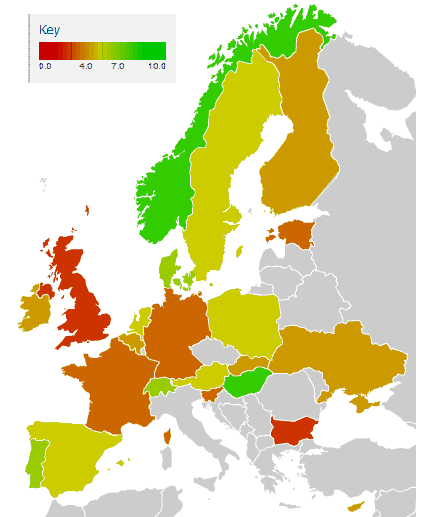
The researchers suggest that our low "trust and belonging" score may be "the result of the development of a highly individualistic culture in the UK". Basically, the suggestion is that we are in danger of becoming the most selfish nation in Europe.That's one explanation, that the low level of trust is symptomatic of Thatcherite-Blairite Hobbesian anglocapitalist values, where man is expected to be wolf to man (after all, were this not the case, that would be grossly inefficient and uncompetitive). Other factors could include greater geographical mobility (a society of immigrants, expatriates and the global superrich would be less cohesive than a tightly-knit local society). Interestingly enough, the countries with the highest level of trust and belonging in Europe appear to be Denmark and Norway (Sweden, it seems, has pulled away towards high-Gini competitive individualism, undoubtedly buoyed by the success of Ikea, H&M and a dozen supercool indie-folk and fashion-electro bands); could this be a reflection of the vaunted Scandinavian egalitarianism and/or the internalised repression of individualism of the Jante Law, or just of more homogeneous societies?
2009/1/6
There's an essay in the Graun about the fall from grace of the idea of kindness. Far from being a virtue to be embraced, conspicuously kind behaviour is now seen as a bad thing; it either signifies that the individual is a loser of low status (and best avoided; loserdom's contagious, you know, and you don't want to associate with losers), or up to something predatory or dishonest. Even if they're not, they're being kind for some sort of psychological payoff, and thus are really just as selfish and corrupt as the rest of us grasping predators in the urban jungle:
Kindness - not sexuality, not violence, not money - has become our forbidden pleasure. In one sense kindness is always hazardous because it is based on a susceptibility to others, a capacity to identify with their pleasures and sufferings. Putting oneself in someone else's shoes, as the saying goes, can be very uncomfortable. But if the pleasures of kindness - like all the greatest human pleasures - are inherently perilous, they are none the less some of the most satisfying we possess.
All compassion is self-pity, DH Lawrence remarked, and this usefully formulates the widespread modern suspicion of kindness: that it is either a higher form of selfishness (the kind that is morally triumphant and secretly exploitative) or the lowest form of weakness (kindness is the way the weak control the strong, the kind are kind only because they haven't got the guts to be anything else). If we think of humans as essentially competitive, and therefore triumphalist by inclination, as we are encouraged to do, then kindness looks distinctly old-fashioned, indeed nostalgic, a vestige from a time when we could recognise ourselves in each other, and feel sympathetic because of our kindness - if such a time ever existed. And what, after all, can kindness help us win, except moral approval; or possibly not even that, in a society where "respect" for personal status has become a leading value.
Margaret Thatcher's 1979 electoral victory marked the defeat in Britain of the Beveridge/Tawney/Titmuss vision of a kindly society, while the rise of Reaganism in 80s America saw a similar erosion of welfare values there. Kindness was downgraded into a minority motivation, suitable only for parents (especially mothers), "care professionals" and assorted sandal-wearing do-gooders. The "caring, sharing" 90s proclaimed a return to community values, but this proved to be rhetorical flimflam as Thatcher and Reagan's children came of age, steeped in free-market ideology and with barely a folk memory of the mid-century welfare vision. With the 1997 triumph of New Labour in Britain, and George W Bush's election to the American presidency in 2000, competitive individualism became the ruling consensus. The taboo surrounding "dependency" became even stronger, as politicians, employers and a motley array of well-fed moralists harangued the poor and vulnerable on the virtues of self-reliance. Tony Blair called for "compassion with a hard edge" to replace the softening variety advocated by his predecessors. "The new welfare state must encourage work, not dependency," he declared, as a plague of cost-cutting managers chomped away at Britain's social services.
So kindness is not just camouflaged egoism. To this old suspicion, modern post-Freudian society has added two more: that kindness is a disguised form of sexuality, and that kindness is a disguised form of aggression - both of which again reduce kindness to a covert selfishness. Insofar as kindness is a sexual act it is seen as a seduction (I am being very nice to you so I can get to have sex and/or babies), or as a defence against the sexual event (I'll be so kind to you that you will forget about sex and we can do something else together), or as a way of repairing the supposed damage done by sex (I'll be nice to you to make up for all my harmful desires). Insofar as kindness is an aggressive act it is seen as a placation (I feel so aggressive towards you that I can only protect both of us by being very kind), or a refuge (my kindness will keep you at arm's length). "One can always, for safety, be kind," as Maggie Verver says to her father in Henry James's The Golden Bowl.Of course, kindness is socially corrosive as it makes people less self-reliant and prevents the weak from being weeded out as Nature intended; to wit, there are formal systems for discouraging, or even punishing, acts of kindness, as described in the MetaFilter thread; for example, the old practice of passing unwanted all-day rail tickets on to strangers after using them is now a prosecutable offence in much of the UK. (Then again, in a world where business models are sacrosanct, this is just as criminal an act of theft as copying a MP3 for a friend or getting up during the ad break on TV.) It's as if the philosophy of Ayn Rand has assimilated itself into the unwritten cultural assumptions of society.
Meanwhile, if you encounter what looks like unwarranted kindness or friendliness from a stranger in a big city, your first reaction is wondering whether they're trying to con or scam you in some fashion. Though I suspect this is not an invention of Reaganism-Thatcherism or even of Ayn Rand, but just the way that things have been in big cities full of strangers since time immemorial. While the article makes some interesting points about the social consequences of the drive for free-market competitiveness as the primary principle of social organisation, of social planning on the assumption of individuals as gold-seeking individualists, the idea that there ever was a glden age of widespread kindness does seem somewhat implausible. (A time of widespread hypocritical lip service to the virtue of kindness seems more plausible.)
2008/11/10
A few articles about class in Britain today: The Guardian has one looking at what, if anything, constitutes class in neo-Thatcherite Britain:
The idea of class as an expression of wealth was always a misconception. Our modern obsession with its outward manifestations was entrenched at a time when wealth was at its most even level of distribution in Britain, in the immediate post-Second World War era. It was people's relative proximity in money terms that led them to find alternative ways of distinguishing themselves from their neighbours. Before the war, most people knew their place (and outside the political left, accepted it). But an acceleration of social mobility in the Forties and Fifties led to a boom in petty snobbery. It was the era of the 'u' and 'non-u' distinctions notoriously codified by Nancy Mitford. As the solidarity of the war years receded, but austerity kept people's incomes relatively homogenous, it became almost existentially important whether you said 'napkin' or 'serviette'; 'toilet' or 'loo'; 'how d'you do?' or 'pleased to meet you.'
Professor Dorling has a graph that shows what a purely wealth-based class structure looks like. There is a big chunk in the middle - 50 per cent of the population who qualify as 'normal'. Beneath them is a 15 per cent chunk of 'poor' people, and another 10 per cent who are 'very poor'. There is a sizeable chunk - 20 per cent - near the top who are rich. But the remaining five per cent are stratified into ever smaller distinctions of extreme wealth. These are people who, in Dorling's phrase, 'exclude themselves from the norms of society' - the footballers, pop stars, Russian oligarchs, oil sheikhs, hedge-fund managers. 'The top-level people all meet each other,' says Dorling, 'and the thing they have in common is money.'
But there is no agreement on where the boundaries of 'chavdom' begin and end. It is an extraordinarily polyvalent word, which can be used as a slur against the urban poor and the suburban rich. It is a weapon in a petty civil war waged almost entirely within the swollen ranks of the middle class, often between people of equivalent incomes, in houses of equal value.And The Times has a piece by (half-Asian, though very "middle-class") journalist India Knight, who writes from personal experience about the assumptions Britons have about race and class:
The class/race issue confuses many. I’ve had people pretend I was white since I was a child, despite the evidence of their own eyes. I am café au lait: this means I’ve been asked if I was Spanish, Italian, Greek, Turkish, South American. I don’t think anyone would have asked me if my family ran a corner shop and I had an Indian accent or wore a sari (although it’s always fun to stick one on: if people have only ever seen you in heels and dresses, you can see their bewilderment). I don’t think anyone genuinely wonders if I am Spanish; I think my middle-classness automatically “promotes” me to being manageably European, rather then problematically “foreign”.
2008/8/27
The recent Beijing Olympics have been acclaimed as a spectacular success; though what they really demonstrated is the power of totalitarianism to get things done, a point which has been lost on a lot of naïve Western commentators:
The road home from Beijing is lined with wide-eyed converts who've seen the light on totalitarianism. “China has set the bar very high,” Jacques Rogge, the president of the International Olympic Committee, said. “There are some things that London will not be able to compare to, or equal - such as the ability to bring hundreds of thousands of volunteers to different sites.” Yes, Jacques, it is amazing what people can achieve once they appreciate there is no alternative.
Of course the Beijing Games went without a hitch. Give anyone total, terrifying control over a population, with force, and they will make them march in unison, drum, smile, dance, mime, jump through hoops if necessary. “They don't look very oppressed,” wrote one observer. No, pal, and neither would you if you knew the consequences of complaint.
Those performing the three-minute umbrella dance at the opening ceremony trained for six months for 14-15 hours each day, while the 900 soldiers unrolling the scroll that was the centrepiece of the production wore nappies because they had to stay hidden for seven hours, with not even a trip to the toilet allowed. And this is the event that our Olympics Minister called wondrous? That Rogge thinks will be hard to beat?And the biggest threat, the article says, is that Britain's politicians, starstruck by Beijing 2008, will take home the lesson that totalitarianism can be so awesome:
This is the most worrying legacy of the Beijing Games. It has shown our ministers, civil servants and sports administrators what could be achieved, if we could only suspend personal freedom. Change is afoot.Not that suspending civil liberties for the duration of the Olympics so that everyone can have fun without being brought down by protesters or other troublemakers is without precedent; it happened during the Sydney Olympics of 2000, when locals were prohibited from letting friends park in their houses (as not to compete with the official parking sponsors) and wearing clothing with political slogans or non-sponsoring brand names on it in the streets. Which is fairly mild compared to mass levelling of neighbourhoods, though it does make one wonder what innovations in the management of civil liberties the Blairite/Brownites will be tempted to bring to London 2012.
2008/7/21
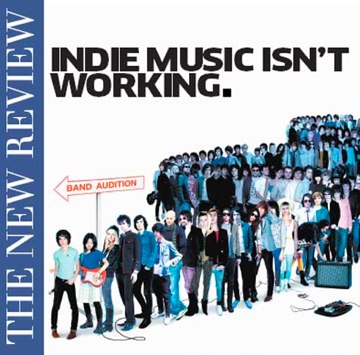 The Independent has a pretty authoritative piece on the terminal decline of the genre of "indie" in the UK, from its origins as independent, defiantly noncommercial popular music (typically released on small DIY labels) in the late 1970s and 80s, through the Britpop hype explosion, and to the present day, when "indie" means formulaic, commercially-oriented guitar rock by image-conscious young Blatcherite careerists:
John Niven was an indie fan in the 1980s, an A&R man in the Britpopping 1990s, and is now the author of Kill Your Friends, a sadistic satire of the record industry of which he was once an enthusiastic member. "I was in Gap a few weeks ago and there was some sort of generic indie music playing," he says. "I was with a friend who's a promoter and a bit younger than me. After about three or four tracks I asked him: 'Whose LP is this?' And he said, 'No, it's a compilation.' Every track sounded identical. The guitars, the production; all these bands sound like they're made in the same studio with the same producer. It's such a ball-less, soulless, generic whitewashed indie sound. You could probably take a member from each band and throw them together in a new group and no one would be able to tell the difference. They're completely interchangeable. Scouting for Girls are like the sound of Satan's scrotum emptying. They're abysmal."
"[Britpop] was great fun," wrote the journalist Andrew Collins in a 2006 piece for Word. "But it wasn't indie, and it pushed a whole slew of workmanlike guitar bands centre-stage, where they were even expected to represent their rebranded country, giving the quite false impression that Cool Britannia was an Indie Nation. The essence of New Labour, indie was capitalism dressed up as revolutionary socialism."
These days the term 'indie' is little more than a generic sonic description for any band that plays guitars and probably wears skinny ties, skinny jeans, and skinny cardigans. Collins, a former NME writer and ex-editor of Q, says now: "'Indie' has become a meaningless term. It just covers guitar bands. But it was never meant to be about a type of music, it wasa spirit and an attitude. When I glance around the bands that are supposedly 'indie' today, I don't see any attitude. I don't see any content in their records, any political interest in the band members. They're a terrible generation, unfortunately, but they're becoming famous overnight and selling a lot of records. I've heard them called 'mortgage indie'. It's a career path – a way of making a lot of money very quickly. The Kooks did so well so quickly. Scouting For Girls, from a standing start, have become a really big band. The Fratellis have become massive in a remarkably short time."
Here's another term for the indie glossary: a "firework band". It means a widely touted young act whose label has a debut LP to sell. They begin their professional lives by exploding into the top of the charts, shine brightly, then drop out of sight. The turnover of new acts is terrifying. Parklife, lest we forget, was Blur's third album.Also in the Independent, an apposite example of "mortgage indie" as a career move, in which a Cambridge indie band named Hamfatter turns to venture capitalism to bypass the recording industry. Which is something I have mixed feelings about: on one hand, from a business perspective, this is as indie in attitude as it guest. On the other hand, when art is seen through the jaundiced lens of business, with market research and venture capital, business plans and promotional campaigns, that is somewhat saddening. What happened to art made for the sake of art, without commercial calculation? Is there even a place for it in the post-Blairite marketing society? The new indie revolution may be about allowing the little guys to be as soullessly mercantile as only the old, huge record labels could afford to be.
2008/7/20
The Graun's Alexis Petridis is not impressed with the new Primal Scream album:
More baffling is the decision to foreground the vocals and lyrics of Bobby Gillespie. Never the highlight of any Primal Scream album, here they're inescapable: he is, as a rapper would say, all up in your grill. There's the usual torrent of drug-related cliches - "I stuck a needle in my baby's heart, she looked so hot and sexy," offers Gillespie, who is 46 years old - but the real problems come when he abandons the platitudes about junkies and veins and offers us something of himself, chiefly his famous political acumen. He has a tendency to address listeners as the lobotomised drones of the capitalist system. That sort of thing got a bit wearying coming from Crass, who were at least committed anarchists, squatting in an open house commune and apparently unable to play live without attracting unwanted police attention. Coming from Primal Scream, who are none of those things, but have been heard advertising everything from cars to clothes to Carphone Warehouse, it sounds, at best, pathetic. "Take a drive around the city, tell me what do you see? Empty houses, burning cars, naked bodies hanging from a tree," opens the title track, thus begging the question: where have you seen this, exactly? In Islington, where you live? No wonder property prices in N1 have levelled off.
At worst, however, it's genuinely insulting. "Congratulations, you live in a dream, in the dead heart of the control machine," sneers Gillespie, a man recently spotted confronting the grimy day-to-day reality of life on society's margins by attending the Mayfair launch of a $250,000 diamond and sapphire-encrusted ice dagger designed by Jade Jagger for use in the world's most exclusive bars, including Crystal, the London nightclub run by Prince William's Eton pal Jacobi Anstruther-Gough-Calthorpe. He was probably there plotting the downfall of the dead-hearted control machine with his fellow guests, including noted revolutionary Marxists Alexa Chung and Davina Taylor. These are hardened insurrectionists, who, like Gillespie, know that there can be no social justice until the gutters run red with bourgeois blood. "We've got a noose if you want to hang around," he jeers, "maybe some torture to tousle your hair."In my opinion, Primal Scream appear to be a textbook example of Thatcherism-Blairism as an artistic ideology, a Hegelian synthesis of (the superficial aspects of) bolshy anti-capitalist agitation of the Thatcher era and the whorish mercantility of the Blairite marketing society, a culture, nay, a civilisation built entirely on appropriating and repackaging. And Primal Scream do it well; moving at the speed of spin from trend to trend (from NIN-lite industrial rock to meat-and-potatoes blues-rock that sounds like the Rolling Stones if they instructed their engineer to overcompress everything into a black blob of loudness to the ubiquitous vapid cod-Marxism that makes Sid Vicious look like George Monbiot by comparison), never making the mistake of investing enough of themselves in any one thing to miss the next shift in market research. Soon enough, listeners realise that they've been sold a turd in a can, but by then they've moved on to the next thing.
2008/4/12
Good news: Britain is arguably entering the new age of the train, with more journeys having been made on the railways last year than in any year since 1946. Not so good news: Britain's railways are still barely adequate; John Major's ideologically-driven privatisation of British Railways has led to a situation where more taxpayers' money is being pumped into the railways than even in the bad old days of that Inefficient Socialist Monopoly, though fewer pounds actually making it through to improving the service (but rather going to the profits of various private enterprises at various levels and/or falling through the cracks of the various inefficiencies of the present arrangement, which in some ways looks to be cobbled together with duct tape and string). Meanwhile, passengers are paying more for their tickets than anywhere in continental Europe, whilst putting up with slower trains and often a lack of seats. Not surprisingly, most of the record-breaking rail journeys were fairly short ones, with people choosing to fly between cities (like, say, London and Manchester), in a way that they just don't do in France or Germany:
The problem is that Britain's railways are a public utility run as a profit-making enterprise, and thus a rather inefficient conduit for channelling taxpayers' funds into the coffers of private industry. It seems that there are two possible ways out of the current mess:
- Continue regarding the railways as a public utility and undo a lot of privatisation. Either nationalise rail operators or have them provide a service to a non-profit rail company, under carefully controlled terms. All state subsidies (for keeping socially- and economically-useful though unprofitable services running) will go to the non-profit (let's call it British Rail 2.0), or:
- Run the railways consistently as a profit-making enterprise, and restructure them to run at a profit. That would mean a new round of Beeching-style cuts, with most smaller lines being scrapped, and the service ultimately being cut down to something like American-style commuter rail, consisting largely of profitable shuttles between dormitory areas and economic centres, running mostly at commuting hours. This is the approach The Economist recommended last year.
2008/4/3
 Britain's Royal Mint has unveiled the designs for Britain's new coins. The new set of coins is based on the Royal Arms, or rather a hip, edgy, modern treatment of it befitting a marketing powerhouse such as post-Thatcherite Britain. When arrayed in a pattern, you see, the sub-pound coins come together like Voltron's lions and show the edges of the Arms. The design was created by a 26-year-old London-based graphic designer named Matthew Dent.
I think the coins look pretty nifty, though part of me wonders how dated the concept will look in a few decades.
2008/1/11
The Graun's Geoffrey Wheatcroft on Tony Blair's new sinecure as an advisor to JP Morgan:
And although Blair has been praised by the self-styled "very rightwing" historian Andrew Roberts for destroying socialism, that also misses the point. Blair never really understood the undoubted failures of state socialism, he just hated the Labour party. He has never intellectually grasped the case for the competitive market economy, he just loves the rich.
2008/1/8
A Sunday Times piece on the decline of Britain's railways, whose services have been deteriorating and costs rising, the difference going to the shareholders of private operators:
The new ticket price from Bristol to London with what is, by common consent (and by most of the official indicators) Britain’s worst train company, is £137. At which price you could take a family of five to Budapest and back, although not with First Great Western. Again, this seems better value if you take into account the fact that you might well have to get off the train at Chippenham and travel by bus for a bit; two modes of transport for the price of one, you see. They think of everything for you.
I asked the eminent transport journalist Christian Wolmar what he made of Muir’s suggestion that increased fares would lead to improved services. “It’s just complete and utter crap,” he replied. “The money is going to the train operating companies, full stop.” How much is invested in improving rail services is, in any case, decided in advance by the rail regulator. Muir is being disingenuous. At the least.
Here’s a few more fares to gape at in wonderment: Plymouth to London with First Great Western – £196. That’s three times the cost of the usual return air ticket, and of course it takes almost four times as long by train. London to Manchester on Virgin Trains – £219. Fly instead and it will set you back about £80. And incidentally, those are the old prices, without the “A happy Christmas to all our benighted customers” fare increases.The author lays the blame at the feet of John Major's Conservative government, and its privatisation of British Rail (which, as maligned as it had been, was apparently much more efficient than today's system), a move driven more by neoliberal ideology and Tory antipathy to public transportation than practical concerns, though New Labour, who have presided over the decline of Britain's railways, get some of the blame:
It is either depressing or hilarious, take your pick, to mull over the fact that the privatised rail network soaks up almost three times as much taxpayers’ money in subsidies than did that much maligned, publicly owned corporation, British Rail. And the sad truth is that in those final years British Rail really was “getting there”.
You might expect of the Conservative party an instinctive affection for that most insular and individualistic form of transport, the motor car. Labour, though, has its ideological roots in public transport – and yet in the 10 years since Tony Blair took office, rail fares have been allowed to rise by 46% (not counting the latest rise), while the cost of travelling by car has risen by only 26%, according to figures from the Department for Transport. In other words, Labour has made it even more attractive to travel by car and less attractive to travel by train.
Again, the train companies will tell you that more people are travelling by rail than at any time since the 1950s. Well, up to a point. But they’re travelling short distances by rail (especially within central London, which recently got its first effectively nationalised route, the North London line). For the longer trips, people are turning to the planes, or sticking with the comfort of their cars.Or course, the idea of renationalising Britain's railways is absolutely out of the question, because that would be socialism, which is discredited, and it has been proven that free markets always achieve the best of all possible outcomes. So, whoever wins the next election, we can expect more of the same: underinvestment, price rises, and Britons paying for a service that costs considerably more and delivers less than on the continent, and choosing to fly over any distance further than London to Birmingham.
2007/6/21
The Guardian reveals an all-but-forgotten fragment of the social history of 1980s Britain: a ZX Spectrum game named Hampstead, which codified the aspirational values of Thatcher-era Britain in the blocky, primary-coloured computer graphics of the period:
Hampstead was the ultimate 1980s adventure game, yet one of the few that broke from the traditional orcs and goblins fare. In it, you took the role of a down and out dreamer trapped in a grotty east London flat with ideals of leafy suburbs and affluence.
As aspirational games go, this text adventure was pretty high on the narcissistic scale. With the right clothes, the right education, the right muesli and the right girl (Pippa, of course), all that stood between your and your freehold was her Dad. And he was a pussycat. Hampstead taught a generation of future Brees and Tarquins how to climb the social ladder and how to look good while doing it.
2006/9/6
It looks like the UK Labour Party has had it with Tony "the Smiler" Blair. The brand of slick spin that was synonymous with Blairism and New Labour is no longer papering over deeply unpopular policies, from unconditional and enthusiastic support for whatever comes out of the Whitehouse to neo-Thatcherite economic policies and a right-wing populist tint that's more Daily Mail than the Guardian, and, one by one, the former faithful are telling Blair to go before the Labour Party's standing declines any further. Now a junior minister has resigned in protest at Blair's refusal to step down. Interestingly enough, the rebel in quetion is Tom Watson of West Bromwich East, best known for (a) his rather clunky attempts to appear hip to the kids on his personal website, and (b) never rebelling against the party line (which would make him the quintessential Blairite, then). Now that's got to hurt.
2006/7/12
A professor of psychiatry in Dublin suggests that Reaganite/Thatcherite "economic rationalist" ideology may have originated in Asperger's Syndrome, a mild form of autism. The claim is based on a diagnosis of Sir Keith Joseph, a pioneer of the radical free-market ideology that strongly influenced Margaret Thatcher:
"His ideas have influenced politics for 20 years. Monetarism has some of the characteristics of Asperger's in its insensitivity and its harshness - that is my point, the man and what he does in life are one. It is important to know this because these people control the destiny of the nation," Professor Fitzgerald said.
People with Asperger's are mostly of normal intelligence but have narrow, intense or obsessive interests. They suffer social impairment and have difficulty making friends and forming and keeping relationships. They lack the ability to understand the subtext of social situations, and make remarks that cause offence or behave in ways that breach the rules of acceptability. They have to learn social skills intellectually rather than intuitively.That doesn't sound too far away from "there is no such thing as society".
2006/6/29
In London, there are official notices everywhere from local councils and the Home Office warning the reader to beware of the criminality of their fellow man:
Momus, who is currently visiting London, has not failed to notice this (and, indeed, being an Emotional Communist, he sees it as evidence of the vicious winner-takes-all culture of Thatcherite-Blairite Britain):
It seemed to chime with the odd attitude expressed in an article I read in a British newspaper about an elderly couple who'd been murdered by robbers in their home. While everybody interviewed said what a sweet old pair they'd been, walking into town arm in arm, they were unanimous: these were people you'd almost expect to get robbed and killed, considering what an affluent area they lived in and how old and sweetly defenseless they were. It was almost some sort of Darwinian inevitability that such folks would get chopped up.Momus picks up on the slogan "leave it on show, expect it to go", and suggests some additional rhyming slogans warning people of the ubiquitous danger around them, whilst at the same time making it clear that they have only themselves to blame if they're insufficiently paranoid:
Walk visibly breasted, get quickly molested.And in the comments, others make their contributions:
Say something clever, get ready for bovver.
You died having sex? What did you expect?
Come to Berlin, you won't get done in!
peace, love and understanding? we're going to a hangin'Though not all take as gloomy a view of contemporary British life as Momus does. His old foil, Rhodri Marsden, has a different take:
get paid to make art??? we'll just buy it at wal-mart.
take the ipod for a jog, get murdered like a dog.
If you're not waving a flag, they'll call you a fag.
Get on the bus - you'll have no fuss!
Pop out for a beer, for fun and good cheer!
Let's all have a lark at Finsbury Park!

2006/5/4
In Britain, there is little free map data. There is an excellent map of the whole of Britain, assembled by the government's Ordnance Survey, but, in line with Thatcherite-Blairite ideology, which holds that not extracting the maximum profit is a grievious dereliction of duty, this is commercial and expensive. (In contrast, the United States Geographical Survey's maps are in the public domain, the reasoning being that, as they were assembled with public funds, they belong to the public.) A group of mapping geeks and free-culture activists under the banner of OpenStreetMap are working to reverse this by creating their own maps; they have a wiki-like system to which volunteers with GPS units can upload traces of streets they have walked down and such. This weekend, they are having a working bee of sorts, intensively mapping the Isle of Wight. More than 30 volunteers will descend on the island, walking its many paths with GPS units and uploading their traces to the wiki; of course, the more the merrier, so if you have a GPS unit and a belief that information wants to be free.
It is hoped that this project, and the OpenStreetMap project in general, will force a sea change in the ownership of geographical data in the UK, much in the way that the Sanger Institute's human-genome sequencing effort in Cambridge made it unfeasible for Celera Genomics to exercise proprietary control over the human genome.
(via Boing Boing) ¶ 3
2005/9/18
More details of Tony Blair's special relationship with another superpower -- namely, Rupert Murdoch's News Corporation -- have emerged. On Thursday, Blair was heard telling Murdoch that their mutual foe the BBC's coverage of Hurricane Katrina was "full of hatred of America and gloating.
"Tony Blair... told me yesterday that he was in Delhi last week and he turned on the BBC World Service to see what was happening in New Orleans, and he said it was just full of hate at America and gloating about our troubles," the chairman and chief executive of News Corporation said.
It must be a different BBC than the one I've seen. Perhaps Blair tuned into the Baghdad Broadcasting Corporation, the al-Zarqawi-boosting, freedom-hating fountain of anti-Western propaganda that only Little Green Footballs readers seem to be able to see?
It's a good thing that the Beeb has won its 10-year charter; otherwise, it would look like Blair and Murdoch were sharpening their knives.
Also in the same report: an extract from the diary of one of his former spin doctors claims that Blair gave News Corp. the power of veto over Britain's European policy. Or, "the things we do to keep The Sun onside".
An entry in a diary kept by Lance Price, who worked for the PM between 1998 and 2000, said: "We have promised News International we won't make any changes to our Europe policy without talking to them."And here is a summary of things Downing Street allegedly had removed from Lance Price's diaries, including the claim that, while he publicly claimed to be sending troops to Iraq "with a heavy heart", the Smiler relished doing so, looking forward to his "first blooding". Whether or not he also strangles puppies in his spare time to relax is as yet unknown.
2005/8/3
A Times piece on the effects of Labour's shift to the centre-right, and the Tories' subsequent identity crisis:
The view has long been widespread among commentators that Tony Blair is unusual: not exactly a Tory, but somewhere much closer to a continental Christian Democrat than a typical Labour Party product. James Callaghan reportedly said of him: "I don't know what that young man is, but, whatever he is, it isn't Labour."
Of course, while truth in advertising is laudable, renaming the party to the "Christian Democrats" would alienate voters of other faiths. Perhaps "Abrahamic Democrats" would be more appropriate, or (to include Hindus and such) "Theist Democrats"? That leaves the atheists out in the cold, of course, but everybody knows that they're amoral nihilists and shouldn't be encouraged.
In the cause of trying to contrive meaningful differences with Mr Blair, the Tories have opposed policies which, intellectually, they should support, while adopting inconsistent tactical postures. The frustrated search for territory beyond the Blairite shadow took the Tory election campaign to the wasteland of HIV testing for immigrants, strict quotas for asylum-seekers and a crackdown on gypsies, while saying little about the economy, hospitals or schools.And while Labour's transformation into Tories-with-good-PR has alienated a lot of leftists (many traditional Labour supporters didn't bother voting in the last election), it has been popular with elsewhere: 70% of current Labour voters regard themselves as "supporters of new Labour not old Labour".
2004/12/28
Expatriate citizen-of-the-world Momus returns to Britain -- and hates it; on returning, he finds squalor, shabbiness, crass consumerism and an edge of latent aggression.
The marketing is slick and constant, nothing works, and it's twice the price it would be back home. And there's some sort of druggy, boozy menace hanging over the streets at night. Blame the binge drinking sprees! Have a happy smashed British Christmas!
We stop at a filling station on the Shoreditch High Street to buy some food. A homeless man is sitting at the entrance. 'Spare some change, please? Spare some change?' A black man gets out of a BMW and comes over to reform him. 'Look at yourself, mate, you've got to stop using the stuff. Go to a gym, man, do a workout, get out of this state you're in, it's a fucking shame on you, man!' He's a winner, the junkie's a loser. Go to a gym, start a business, buy a BMW, join the winners. It's dog eat dog.
The next morning the taps in the bathroom don't seem to work, and neither does the flush in the toilet. Fuck! At least I'm able to shower. I don't think I could bear to be dirty in London. It already feels like a gigantic toilet. Crossed with an advertising agency. An advertising toilet? Why not? Clever marketing idea! Out on the street, I see a bus with an advert on the side that says 'More Glitz! The Brent Cross Centre, feed your addiction'. Feed your addiction? Fuck, you mean become like that junky we saw last night at the filling station? Have drugs and celebrity become metaphors for everything in Britain? Are they marketing heroin yet? Welcome! Fuck!
The atmosphere didn't feel benign at all, nothing like soft, safe neon nights in Tokyo. `it felt brutal. Minicab sharks, cars pulling up behind pedestrians. You're in there, protected, and I'm out here, not. I'm just going to have to hope you have a good heart. People in hip hop hooded tops looking hard in kebab shops. It all feels like one of those Streets videos where a bunch of tanked-up British guys end up with blood streaming down their faces. 'Mate, mate, I don't want any trouble, mate.'
The kids in the next seat just said 'Bling bling!' The phrase is everywhere in Britain, an R&B-rap-pop fashion as widely adopted as the flash white sportsgear people wear on British streets, minus all the gold, silver and diamonds that stars like J-Lo and Britney accessorize it with. I open the Virgin Trains magazine. (Wow, marketing! Trains never used to have in flight consumer magazines! Then again, they once had basic services like running water and hot food.) There's an article about shopping in Birmingham. It begins 'Diamonds, platinum and all things bling lie ten minutes from the city centre in Birmingham's jewellery quarter...' Later in the journey, bored, I open the new tabloid Times and there it is in the financial section. 'Bling bling: fashion designer John Zhao shows off his crystal encrusted iPod'. Britain speaks fluent bling bling. Britain, from top to bottom, embraces the showy materialism. the 'I won, you lost' mindset of hip hop and R&B videos. Bling bling, I win!
I've noticed some of these things since coming here; the ubiquity of branding, often taking priority over other things (for example, anything to do with live music here has the Carling brand (which is a rather generic lager) slapped on it, and band venues have advertising billboards on the walls), the "ATM attendants" stationed beside every cash machine, trying to guilt the relatively well-off user out of one of their tenners, the chav kids looking hard and dead-eyedly cynical in their hip-hop thugwear (Burberry baseball caps worn under hooded tops, to hide faces from the ubiquitous CCTV cameras, seem to be a big part of youth fashion here), drunk arguments in the streets, with couples screaming "FUCK OFF, YOU FUCKING WANKER!" at each other, the dozens of different posters on every form of public transport, from buses to long-distance trains, warning passengers not to assault staff.
2004/8/10
Some of Tony Blair's oldest and closest allies have turned against him, claiming that he is running down the Labour Party. Their main charge (other than the Bush's poodle/Iraq thing, which goes without saying) is that Labour under Blair is primarily concerned with pushing the Conservative Party to the margins of politics by appropriating their ideologies and positions; not only has Labour abandoned socialism (which, to an extent, made sense; calling for things like the nationalisation of all industry does seem somewhat anachronistic), but social democracy has gone out the window as neo-liberalism is the only game in town.
Some interesting questions come to mind. If Labour are the new Tories, could we see Labour and the Tories form an Australian-style right-wing coalition a few years down the track to do battle against the Lib Dems/Greens/whoever? (The parallels are tempting; the marginalised Tories can be the Nationals, appealing to fox-hunters and god-botherers, whereas Labour can be the tragicomically-misnamed majority party of the coalition.) Secondly, is it the case that Blair hijacked Labour and turned it into Tories with good spin, or rather that the allies who are making the claim are overestimating the amount of ideological freedom a party has in this neo-liberal, globalised age, and that anybody to the right of George Galloway would have done the same sorts of things by necessity?
2004/4/29
Life imitates Christopher Brookmyre novels: a nurse in Britain is on trial for being somewhat overzealous in tackling the bed-blocker problem, to the extent of attempting to hasten several patients' journey through death's door. In her efficiency drive, Barbara Salisbury is alleged to have given patients overdoses of diamorphine and withdrawn their oxygen supplies.
Salisbury, who was described by the prosecution as an experienced, capable and efficient nurse, is accused of attempting to murder Frances May Taylor, 88, in March 2002 in that she inappropriately administered diamorphine using the syringe pump, telling a colleague: "Why prolong the inevitable."
She is accused of attempting, 10 days later, to murder Frank Owen, 92, by instructing another member of nursing staff to lay Mr Owen on his back, allegedly adding: "With any luck his lungs will fill with fluid and he will die."
I wonder whether (assuming that the charges are true, of course) she was acting out of a personal cruel streak, or whether this is merely the most extreme manifestation of an institutional focus on patient turnover in the Thatcherite/Blairite health system in Britain (as was the plot of Brookmyre's Quite Ugly One Morning; though, granted, Brookmyre seems to write from a Scottish-socialist point of view).
2004/4/21
Former Blair spin doctor Alastair Campbell has condemned a reality TV show based on selecting potential MPs. Campbell has denounced ITV's "Vote For Me" series (or "Political Idol", as some call it), in which an "independent" political candidate is selected and groomed from a field of contestants, as exploiting youth cynicism and undermining the importance of politics. Which is all a bit rich, coming from the architect of Cool Britannia and Teflon Tony's image-conscious, style-over-substance media strategy.
2004/2/16
The Blair government in the UK is apparently making the most of the blank death warrant for the BBC handed to it by the Hutton enquiry, and has drawn up plans to break up the BBC, revoke its editorial independence, and close BBC outlets not considered "public service". (Which could result in former BBC assets being picked up by "free-market" providers at fire-sale prices; MTV could get BBC1 and Top Of The Pops (or whatever it's called now), FOXNews and/or CNN could get news-gathering facilities, and so on. And aren't ClearChannel planning to expand into the British market? I'm sure Blair (who personally intervened to allow Walmart to buy Asda) will be more than happy to help them.)
2003/7/24
While Senator Alston is trying to nail the ABC to the wall for insufficiently following the party line, Tony Blair and Rupert Murdoch are trying to do the same to the BBC; to the point where some New Labour politicians are talking about cutting the television license fee that funds the BBC:
Fox, owned by Rupert Murdoch, is what Blair must have fantasised about having on his side. The network was raucously pro-administration, delivering to George Bush the rightwing commentaries and inspiring pictures he needed to help him conduct the war. How convenient it would be for any centreright, interventionist British leader to have his own, Union Jack-branded Fox.
Gavyn Davies and Greg Dyke have refused to play their allotted role as New Labour toadies. This is brave since they must know that they, and the BBC, have nowhere else to go. The Tories would privatise them like a shot. Now that the Conservative manifesto is likely to suggest slashing the licence fee, it is not hard to see a vengeful New Labour starting a Dutch auction, cutting and cutting. Then it will be curtains for the governors and the hunt will be on for a more reliable director general.
It'll be a shame if the BBC is cowed into a corner, and reduced to timidly reporting the party line between pumping out unchallenging Merchant-Ivory-style costume dramas for the Region 1 DVD market.
2003/5/12
More proof that Tony Blair is not any sort of progressive or liberal: Britain's Labour Party is planning to introduce legislation allowing employers with a "religious ethos" to sack gay/lesbian employees, and legalising discrimination against atheists. The law was meant to give protection to gays and outlaw discrimination, in line with an EU directive, but were watered down after a directive "from the highest level". Critics claim that this will allow any employer owned by a personally religious entrepreneur to discriminate freely. (via MeFi)
What is this man doing leading the Labour Party?
2003/3/7
The value of arts degrees has been unofficially questioned in humour and popular culture for decades (at many universities, toilet roll holders are adorned with the graffito "Arts Degrees -- Please Take One"). Now a study in Britain has found that having an arts degree reduces one's earnings; in other words, people with arts degrees (in subjects such as history and English) earn between 2% and 10% less than people with no university degrees.
Professor Ian Walker, leading the study, said: "Feeling warm about literature doesn't pay the rent.
So, if you're planning to do an arts degree for the career potential (as opposed to as a somewhat expensive intellectual hobby), you may be better off calling it off and getting a 3-year head start on your fast-food industry career. Or maybe not.