The Null Device
Posts matching tags 'linux'
2011/5/31
A group of hackers in Germany have built a device disguised as a wall-mounted power supply which connects to wireless networks, intercepts packets and subtly changes the content of pages from news websites:
The Newstweek uses ARP spoofing to change the text displayed on several news sites. After doing some field research, placing and configuring the device, there’s a simple web frontend that configures the man-in-the-middle hack. Right now, the Newstweek only allows a few news sites to be targeted, but the team is working on allowing anyone to add their own targets.There is a technical walkthrough of its construction here. Unsurprisingly, it's basically a Linux-based wireless access point, hacked into a new case and running a customised version of the OpenWRT firmware.
Meanwhile, Charlie Stross extrapolates on more serious applications of such technologies:
This sort of gadget is, in bulk, extremely cheap — I bet you could order them for well under $100 in batches of a thousand and up. Say you're a repressive regime, but not so repressive that you can just haul random dissidents off to the torture chamber without paying lip service to due process. How hard would it be to plant these things in your targets' homes, so that you can gaslight them by interfering with the news they're reading? Call it a digital agent provocateur. Say you're the DHS and you want a steady stream of clueless Al Qaida wannabes to arrest and show on CNN to keep everyone afraid enough to go along with your PATRIOT Act extension? Plant these in the homes of young muslim males who hang out at the wrong mosques, crank up the volume of hateful news, and see who snaps ...
2010/11/14
Google's Open Source blog has a video interview with Australian open-source developer Rusty Russell, who has contributed to gcc and the Linux kernel, in which he puts forward a possible explanation for why there are disproportionately many Australian open source developers; and explanation based upon that ubiquitous factor within Australian culture and society, the tyranny of distance. Russell contends that the fact that Australia is so far away from the centres of technological development means that young Australians with a talent for coding are more likely to express that by getting involved in projects on the internet, and, more often than not, open-source projects.
I wonder whether this means that areas with high concentrations of technological companies and startups (such as the Bay Area, London and Berlin) contribute less to open source than (internet-connected) places in the middle of nowhere.
2009/12/18
2009/6/8
Some news on the computer music front: version 2.0 of the veritable Windows audio patching environment AudioMulch is now out, and it's now available for OSX. It costs US$189, though, so it may not be everyone's cup of tea; however, the objects are higher level than those in other environments like Pd, and there's less fiddling around with oscillators involved before you actually start getting interesting noises.
Meanwhile, I somehow managed to miss the fact that the veritable MDA VST plugins are now open-source. And for some reason, there are precompiled VST binaries for Linux. It turns out that people are using Steinberg's VST plugin standard on Linux (presumably unofficially, though).
2009/4/17
More dispatches from the War on the Unexpected: London police forced an Austrian tourist to delete photographs of a bus station, on the grounds that photographing transport infrastructure was "strictly forbidden". Which sounds like something more befitting of, say, Belarus or North Korea than of an ostensibly free country:
Matkza, a 69-year-old retired television cameraman with a taste for modern architecture, was told that photographing anything to do with transport was "strictly forbidden". The policemen also recorded the pair's details, including passport numbers and hotel addresses.
In a telephone interview from his home in Vienna, Matka said: "I've never had these experiences anywhere, never in the world, not even in Communist countries."Meanwhile, in the United States, police seized a student's computers on the grounds that he was using a suspicious operating system (i.e., Linux), and thus probably up to no good:
_________ reported that Mr. Calixte uses two different operating systems to hide his illegal activities. One is the regular [Boston College] operating system and the other is a black screen with white font which he uses prompt commands on.Which sounds like he's guilty of some kind of technological witchcraft.
2008/4/28
Linux filesystem developer Hans Reiser has been found guilty of the first-degree murder of his wife. He is yet to be sentenced, though apparently the death penalty is not being considered.
2008/2/8
Is anybody else having problems scrobbling tracks to last.fm using third-party software?
My home music-playing setup consists of a Linux box running MPD, a client-server music playing system. To this, the mpdscribble client is attached, monitoring its status and sending the details of tracks played to last.fm. As of a few days ago, though, mpdscribble stopped working; it connects to last.fm's servers well enough, though once the time comes to send a track, it reports an authentication error, as if the password were incorrect.
I have tried the same username and password combination for logging into the website, and for using the official OSX last.fm client, and it works. I have also tried two other, independent, MPD/last.fm clients (scmpc and lastfmsubmitd), and found that they had the same problem; as, indeed, does the (somewhat old) third-party iScrobbler client for OSX. (This was, needless to say, on two different machines.)
Could last.fm have broken an older version of the AudioScrobbler protocol used by a lot of open-source software? (It appears that these clients use protocol 1.1, whereas there is now a 1.2 protocol.) Oddly enough, a Google search fails to reveal anybody else reporting this problem.
2008/1/28
Nokia to buy Trolltech, the Norwegian company behind the Qt C++ user interface library (as used in Linux desktop KDE and numerous multi-platform applications including Google Earth and the Last.fm client) and the Qtopia mobile user interface platform. Nokia has pledged to continue the development of Trolltech's software and its commitment to open source, and this step could give it more of a foothold in the Linux mobile phone market. The future for Nokia's own Maemo toolkit (based on Linux and rival user interface library GTK) looks less certain.
2007/10/26
Two technological death notices: firstly, the latest version of OSX, 10.5 ("Leopard"), can no longer run MacOS Classic (that is on PowerPC machines; the Intel ones, of course, never got Classic in the first place). Apparently this has nothing to do with technological constraints and everything to do with Steve Jobs having decided beneficiently that the users should have moved on by now. Of course, if you still want to run that ancient copy of Fontographer or whatever, you can probably do so on SheepShaver or similar.
Meanwhile, TrollTech have knocked their Linux-based Greenphone on the head, and will be concentrating on developing their phone OS on the very hackable and (soon to be) highly commercially available (though somewhat more cheap and plasticky-looking) Neo1973 phone.
2007/3/16
Last night, I went to the London Open Source Jam, a Linux-themed show-and-tell hosted at the Google offices near Victoria Station.
They had various speakers who came in, bringing in variously interesting Linux-based projects, talking (very) briefly about them and then letting people poke around with them.
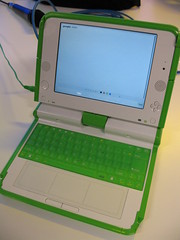 They had some people from the One Laptop Per Child project, who brought along two prototypes of the US$100 laptops which they are going to build and distribute to children in the developing world. The machines are very well designed (they're full of innovative design features, they're reportedly almost indestructable, and they look desirably good); they're based on Linux and Python, look nothing like the machines used elsewhere, and are designed to encourage tinkering and exploration. They even have a key (labelled with a graphic of a cog) which, when pressed, takes you to the source code for the currently running program so you can hack and modify it. (That didn't seem to be working on the laptop I looked at, though that prototype wasn't working perfectly.)
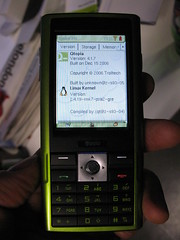 Someone also brought along a Trolltech Greenphone; that's a new mobile phone, created by Trolltech (the Norwegian company that makes the Qt toolkit (a rather elegant GUI library) and the Qtopia interface for portable devices), and based entirely on open-source(ish) software. It looked much like a regular phone, albeit with some developer features. I saw no evidence of it containing WiFi, though, so it may be lacking in that department.
Sony sent along a representative with a PS3 console, to show that it could boot Linux (and not only from special Sony-approved distributions, as the PS2 could, but from any distribution of your choice). Of course, the catch is that when the PS3 boots an untrusted Linux disc of your own providing, it runs it in a sandbox (under a Xen-style hypervisor), isolating it completely from the nifty graphics chip (so that game developers can't evade Sony's game-licensing fees by distributing full-featured games as bootable Linux live DVDs), and reducing it to a generic computer with a somewhat unusual CPU.
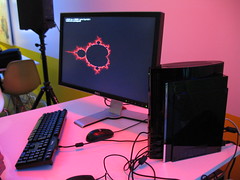 They had a demo, which rendered a Mandelbrot set and let you zoom around on it; it was like a faster version of something I saw on a 386 PC in 1989. All in all, I found this demo underwhelming; when asked why anyone would want to run Linux in a sandbox on a PS3 when one could build a PC for less and get access to better graphics capabilities, the Sony rep didn't have a good answer; it was intended, she said, for people who already have a PS3 and, for some reason, are seized with the desire to run Linux on it. Though I suspect that, the fact that doing so doesn't involve breaking locks or using the hardware for anything more than it was designed for (the fact that the PS3 can be a mediocre Linux box is about as exciting as the fact that an iPod can be a mediocre PDA, or a mobile phone can be a mediocre MP3 player), will largely leach any such endeavour of any hack value it may have had.
2006/11/9
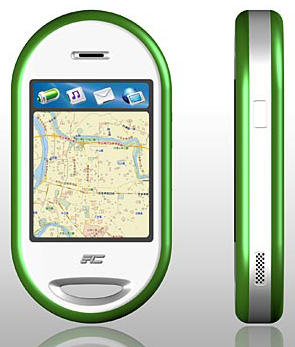 Hot on the heels of the TrollTech Greenphone, a company named FIC is releasing an open-source, Linux-based mobile phone. The OpenMoko won't have WiFi (as the GreenPhone will), but it will have a GPS receiver built in, as well as Bluetooth, USB, a MicroSD slot and a multi-touch touchscreen capable of understanding two-fingered dragging gestures. More importantly, it's not so much a mobile phone (which is to say, a locked-down proprietary appliance) as an openly hackable general-purpose computer with a GSM module and GPS receiver attached. (The radio components are, for regulatory reasons, closed modules; everything else, though, is fair game.) And apparently it will have a Debian-style package management system built in which can download new (or updated) software components on demand. And, also unlike the Greenphone, it will be released to the mass market (they say in January, which could mean sometime in the first half of 2007).
2006/10/11
Hans Reiser, the author of the eponymous Linux filesystem, has been arrested on suspicion of murdering his wife, who went missing more than a month ago. More sordid background details here. Meanwhile, the Slashdot peanut gallery has been busy; in between impassioned debates on the death penalty, sincere hopes that this does not disrupt a fine project (now that would be a tragedy!) and discussions on whether ReiserFS will be renamed if he is found guilty, there have been a lot of off-colour jokes:
What's the difference between O.J. and Hans Reiser?
Hans kept a journal.
If the transaction doesn't commit, you must acquit!Not to mention the following observations:
This isn't meant to be funny or insensitive ... but if he did do it and is found guilty it seems like he'll have a bunch of time on his hand. You know, with the long jail sentence and all. Is their a reason why he can't continue working on this project from jail? Also, working on a OSS with your free time in jail seems like it might get you some good behavior points.Glad to see someone's got their priorities straight...
2006/8/15
Trolltech, the Norwegian company behind the Qt user-interface toolkit (as seen in everything from KDE to Linux-based handhelds) has just announced that it is getting into the mobile-phone business, with an open-source Linux-based phone.
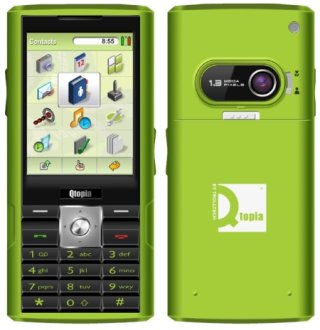 The Greenphone, which is due to begin shipping in September, is based on Trolltech's Qtopia Phone Edition toolkit, and is designed to be extremely hackable; everything but the actual radio-frequency interface (which is subject to government regulation) is open-source and can be recompiled and replaced.
Anticipated applications include games, business applications, and web services frontends, along with "unpredictable" applications. The company says it expects to be "surprised" by what users come up with, adding, "[The] spirit of innovation has been key to the success of the PC and Internet. We think that the same dynamic has to appear in the mobile market."Other than the mobile-phone network interface, the Greenphone also has a camera (apparently with some sort of dynamic focus, which is better than the fixed-focus toy cameras embedded in most phones), Bluetooth, built-in WiFi and some sort of VoIP software. The last part means that it could have a disruptive effect on the economics of closed mobile-phone networks; after all, why pay by the minute when you can call over the internet for free?
Don't expect to find it in your local phone shop next to the Nokias and Sony-Ericssons, though; the Greenphone won't be available separately as such, but rather only as part of a development kit, The good news is that Trolltech specifically plan to put this kit in the hands of open-source developers, which hopefully means that it won't be too expensive. (Update: The development kit is expected to cost about US$690, if my limited command of German is right.)
CTO Benoit Schillings added, "I'll tell you a secret. Getting the phone into open source developers' hands is exactly what I want to happen."The Greenphone is not the only nifty-looking Linux/Qtopia gadget coming out soon; there's also the Sony Mylo, which isn't a GSM phone, but does have WiFi, a keyboard and Skype. Mind you, given that it's a Sony, it could well have strict measures against anything remotely subversive being done with it, just in case.
2006/6/13
Google have just released a MacOS X version of their amazingily intuitive CAD package SketchUp. This program is rather nifty, and seems to use various human-interface heuristics to disambiguate what the user is trying to do, and consequently making 3D drawing a lot less painstaking than with traditional CAD/modelling programs. It also has some rather nifty rendering modes (such as pencil sketch, or precise-yet-cartoonish-looking textures), and looks good for everything from designing DIY projects to making comics. And it's free.
Also from Google: a new beta of Google Earth, now with a Linux version. (For some reason, though, the view window is all black on this machine, even though it does have OpenGL.)
2006/5/24
These people are porting Linux to the Palm Tungsten. Apparently they now have it running on the T3 and showing a graphical environment (Qtopia or KDE, at a guess, though they don't say).
2006/1/29
If you're planning to buy a new MP3 player, beware, as many of the new ones use a proprietary interface protocol tied to Windows Media Player. Whereas a lot of older players (the Archos Jukebox series and iRiver H100 and 300 series, to name two, not to mention various generic Flash-based players) were USB Mass Storage devices (i.e., looked like external hard disks to a computer), new ones use a proprietary Microsoft protocol named MTP, to transfer data to them and possibly enforce RIAA-mandated inconveniences on the user.
MTP appears to be based on the Picture Transfer Protocol used by some digital cameras, only with some Microsoft extensions, and is tightly integrated with the Windows Media Player; it is currently possible to hack gPhoto, a command-line PTP client, to talk to at least some MTP players. There is some doubt over whether or not this infringes on patents. Users of pre-XP Windows systems, however, may be out of luck.
For Penguinheads and other Windows refuseniks, the Apple iPod is apparently still usable. It looks like a USB Mass Storage device (or a FireWire hard disk), and can be copied to/from, though requires music files to be indexed in a proprietary database file onboard, which iTunes writes; there exist open-source tools, running on UNIX-like OSes, for writing this file as well. (Disclaimer: I've never owned an iPod and so have no experience of how useful or clunky it is to use without iTunes. My way of filling my MP3 player involves mounting it as a disk and copying files or directories to it.)
(via  reddragdiva) ¶ 2
2005/11/10
The Nokia 770 Internet Tablet, a hand-held, Linux-based, WiFi- and Bluetooth-enabled web-browsing/email appliance, is out. In the UK, it's selling for £245, and appears to be out of stock already. It costs twice as much as the other hackable, Linux-based gadget, the GP2X, though has wireless communications technologies (which the GP2X lacks altogether) and more than four times the screen resolution; however, external storage is limited to the smaller RS-MMC cards, as opposed to the somewhat larger SD cards the GP2X takes; also, while it's likely that someone will port MAME to it, playing arcade games with the nagivation pad probably won't be as comfortable as with the GP2X's controls. I'd have one of each, had I £370 I had no better use for and a jacket with infinitely capacious pockets.
And here there is a round up of reviews of the Nokia 770.
2005/11/9
This person is planning to build his own home-brewed GSM mobile phone, out of an ARM-based Linux board and a GSM module. It doesn't appear that he's quite hardc0re (or insane) enough to write his own GSM stack over software radio and risk a visit from the FCC Ofcom's SWAT team, though at the end of the day, he will end up with a phone that runs Debian.
(via bOING bOING) ¶ 0
2005/8/17
Never mind the PSP, I want a GPX2. It's a pocket-sized SD-based media player (capable of playing DivX/MPEG4 movies and MP3s) and some undefined games (with the provided joystick). Most interestingly, it runs Linux; assuming that they don't deliberately cripple it, that means it's going to be possible to put MAME on it, load up a SD card with old arcade ROMs and have an arcade in one's pocket. The only thing it's missing is WiFi.
2005/8/11
This looks interesting: BlackDog appears to be a device the size of a USB flash drive containing an entire Linux-based computer. Plug it into a PC's USB port and it appears as a network-connected Debian box, and auto-runs an X server to connect to the machine in question (this is presumably on Windows). It also includes a "biometric reader" to control access to it.
And then there's the Neuronium. An eye-catchingly blue box hand-built by a German vintage synth designer, it looks like some kind of dance-techno sample-synth module or virtual analogue synth, but is basically an analogue neural network for generating vaguely Tangerine Dream-esque electronic burbling noises. If you have €2499 to spare, it could be yours.
2005/7/26
Everybody Loves Eric Raymond, a web comic for penguinheads, involving Richard M. Stallman, Linus Torvalds and Eric S. Raymond living in a shared house.
And then there's Buzz Aldrin's Conspiracy Smackdown:

(via bOING bOING, reddragdiva) ¶ 0
2005/6/10
jwz gets pissed-off at Linux soundcard complications, buys an iMac, never looks back; imminent death of xscreensaver predicted.
2005/5/27
The Nokia 770 looks nifty. It's not a mobile phone, but rather a thin client, with a touch screen, web browsing/RSS reading/VoIP facilities; it can connect to the internet via WiFi, or by Bluetooth through a mobile phone. Even more interestingly, the system software is entirely open-source, based on Debian Linux and GNOME with a Symbian-esque GTK-based UI named Hildon. Full developer tools are available for downloading.
Of course, the 770 has its downsides, such as the lack of storage facilities more substantial than a MMC slot; though even with these shortcomings, it looks extremely hackable. (You could try playing cat and mouse with Sony on getting user code running on a PSP, or you could get a 770 and run what you want on it with Nokia's blessing.) MusicThing already lists one application for it, as a control surface for music performance.
Meanwhile, Nokia have committed to allowing use of all their patents in the Linux kernel.
(via MusicThing, /.) ¶ 0
2005/5/18
Cuba is now planning to abandon Windows for Linux, following such radical states as Brazil and, umm, Munich. The "open source = Communism" mob will undoubtedly have a field day with this news.
Del Puerto said his office was working on a legal framework that would allow the replacement of the Windows system.
Hang on... a legal framework? Isn't Cuba on the list of countries it is illegal to export Windows too? I imagine Microsoft would have a hard time selling licenses to Cuba, for one. And would Cuba even recognise US software licensing law? Perhaps they have to make a show of being good global intellectual-property citizens if they are to keep those Che merchandise and Buena Vista Social Club CD royalties coming in.
2004/11/1
The latest thing to come out of Iceland, following Björk, Múm and Sigur Rós, is a patch to allow C++ in the Linux kernel. It appears to be quite well optimised (the runtime library has been modified, bringing the cost of throwing an exception below that of calling good old printk() in the plain-C kernel). As such, it looks like it could be good for performance and stability; Darwin (the MacOS X kernel) is written in (a somewhat stripped-down) C++, and seems a lot more solid than Linux, and less likely to be destabilised by unforeseen conditions (i.e., devices/filesystems/&c. suddenly disappearing); I suspect that C++'s exception handling has something to do with this.
2004/9/30
A few pieces of good news: Microsoft's claimed patents on the FAT filesystem have been shot down, thanks to a challenge from the Public Patent Foundation.. As such, that ugly, inefficient throwback to the days of CP/M and 100Kb floppies that, nonetheless, has become the universal standard for storing files on everything from digital camera memory cards to MP3 players is free for anyone to use without having to pay a cent. With any luck, it's not the last overbroad software patent to go down in flames. Meanwhile, in Europe (where US multinationals are doing their all to push software-patent legislation through Parliament), Munich is pressing ahead with dumping Windows for Linux, despite claims that Linux violates loads of software patents and is a massive legal liability. Finally, in the US, part of the Patriot Act has been struck down as unconstitutional.
2004/5/18
From a Slashdot interview with Jeremy White of the WINE Windows API emulator project and/or Crossover:
We also go to all kinds of interesting lengths to avoid problems with viruses and worms. For example, we have a hack in our flavor of Wine, in the CreateProcess call (the code to start an executable) that basically checks to see if the parent process is outlook.exe, and if it is, we crash and burn, preventing many of the worms and such from running.
Meanwhile, someone's porting WINE to MacOS X. It doesn't actually emulate an Intel CPU, so it won't run your Windows binaries, but you can recompile Windows programs from source code and get them to run, and look authentically Windowslike, on your Mac. Though you'll need to use X11 as well, as it doesn't speak directly to Quartz/Cocoa/Carbon (and there don't appear to be any plans to make it do so).
2004/3/30
Remember the Simputer, the tiny Indian-designed Linux-based computer that was going to be cheap and rugged enough for remote villages and powerful enough to be useful, and was going to revolutionise life in the developing world? Well, it's now available. The Amida Simputer has some fairly decent specs, and connects to a lot of things. The internal software is based on Linux and X, only with a custom toolkit. The bundled software gives a glimpse of what PCs would have been like had they been invented in India rather than the US, with "Khatha", a financial planning package based on traditional Indian accounting methods and an astrology application ("Even if you are only peripherally interested in astrology, it may still be fun to find out if your girlfriend's star matches yours!") alongside the usual notebooks, MP3 players and world clocks. (via WorldChanging)
It'd be interesting to get a closer look at one of these; on the website, it looks fairly promising, just from the specifications and screenshots. Though so did the Agenda VR3 Linux-based PDA, which turned out to be half-baked and next to unusable, once the novelty of calling up a UNIX shell on something without a keyboard wore off.
2003/11/6
Crackers break into Linux source code server, attempt to trojan the Linux kernel, giving root privilege to processes. The attempt was caught, and even had it not been, it wouldn't have matched against Linus' separate copy of the kernel sources.
It makes you wonder who's behind it? A teenager with something to prove? Spackers laying the groundwork for the next generation of distributed spam-hosting/sending/DDOS servers? The Russian Mafiya/Shanghai Triads/Yakuza doing a spot of long-term strategic planning? Al-Qaeda? Maybe even our own intelligence agencies?
2003/10/23
This looks potentially interesting: the Zero Install System, an experimental alternative to packaging systems for Linux. Instead of installing software, users run the software from the website on which it is hosted; the Zero Install System downloads and caches the binaries and libraries as they are needed. Additionally, it runs without root privilege.
2003/9/2
Rocknerd's Ben Butler connects the SCO/Linux lawsuit to the recording industry's woes. What links SCO and the RIAA, you see, is that both have seen their markets become commodified, eroding their business models, which depended on them being able to name their own prices and terms.
The process goes something like this: you sell widgets. You are the only company selling widgets. Some other companies enter the widget market. They undercut your price. But yours are the original, superior widgets, so you charge a premium for them. More competitors enter the market. The price drops more. Suddenly widgets are cheap. Your brand value is eroded - people figure out that all the widgets are substantially the same and besides, even if your widgets are better made than everyone else's, it no longer matters - they're cheap enough to throw out and replace when they break.
2003/7/16
The Dashboard project looks quite interesting. It's a bit vague (the only documentation is a developer's diary, with screenshots) but it appears to involve applications (terminal windows, mail programs, IM clients) sending XML-based "cluepackets" to each other, looking up information related to the subject at hand and then sending it to a "dashboard" sidebar for display; i.e., if a friend's ID appears in GAIM, a cluepacket is sent off to various agents, which match it against their address book card, and the dashboard shows their message logs and the RSS feed of their blog. It's a GNOME thing; not sure whether it's integrated into the GNU Network Object Model (whatever that is) or whether non-GNOME applications can play as well. It's good to see open-source developers trying something novel rather than just chasing taillights and trying to implement a GPLed equivalent of your favourite Microsoft/Adobe/Electronic Arts title, only five years later. (via Oblomovka)
2003/6/23
Struggling UNIX vendor/patent owner SCO sues IBM, making nebulous claims of stolen trade secrets in Linux. Penguinheads hold protest outside SCO offices. And SCO staffers hold counter-protest. with identical-looking hand-drawn signs reading "I (heart) Software Piracy" and "Give Communism a try - use Linux". Are they sure it was SCO employees, though, and not some group of Ayn Rand zealots? (via Slashdot)
2003/3/2
The latest blow in the KDE/GNOME catfight: How GNOME became LAME. In short, GNOME was started with a vague idea of being "like KDE only better" and more ideologically sound, a fetish for being language-independent (to the point of doing object-oriented programming in C, which is invariably ugly and painful to work with) and some highfalutin' promises about a "network object model", which turned out to be just hot air. It was meant to swiftly overtake KDE (which was tainted with the black mark of proprietary software) and consign it to the dustbin of history, ushering in a Brave GNU World. A few years later, KDE has KParts which make everything very modular and doovy indeed, and bindings for lots of non-C++ languages, while GNOME has forgotten all about the "network object model" stuff, swapped window/file managers a few times, acquired a Windows-like registry and is quite possibly about to follow it up by reinventing itself as a Microsoft .NET-esque system. However, there is no component mechanism, so applications which don't want the default widgets invent their own, with jarring results.
Perhaps the KDE/GNOME stoush can be seen as a manifestation of the clash between the European and American cultures? KDE (whose developers are primarily German and Northern European) is a model of Teutonic efficiency and/or European dirigisme, providing a central framework and set of interchangeable components conforming to a strict standard. Meanwhile, GNOME takes more of a laissez-faire libertarian approach, relying on the glory of the free market of ideas and enlightened self-interest (if someone wants a better file dialog, they'll write one; if we end up with a dozen different file dialogs, that's more choice in the marketplace of ideas, and the good ones will get adopted; it's ugly but it works without central planning). Does that make any sort of sense?
(Incidentally, I don't use either system. My desktop is a bunch of xterms launched from a WindowMaker menu, with the odd KDE or GNOME app running by itself. Though KDE does seem to be a lot more coherent these days.)
2003/1/20
I just downloaded and compiled Sodipodi, after seeing a link to it from a Slashdot forum on SVG. It looks like a fairly promising vector graphic editor for Linux; and about time too. (KDE's Kontour is slow and bug-ridden, the new KDE Karbon requires KDE 3 which doesn't play well with Debian yet, so I haven't had a chance to try it.) It's still a bit rough (it prints lots of diagnostic messages on stdout, and lacks a few things, such as a "select all" option), but it's looking quite promising.
2002/12/11
I stand corrected; it is possible to run Windows VST plugins under Linux and use them with Pd and LADSPA clients. This announcement describes vstserver software, which may be found here. You'll also need WINE source code and Steinberg's VST SDK (which requires an agreement, but it doesn't seem particularly restrictive).
2002/12/9
After being dragged along to some laptop electronica performances by Peter, I've started playing around in earnest with Pd; it's a fun piece of software to play with. With an audio in socket and the built-in objects (and possibly some optional LADSPA plug-ins), it's possible to make a Linux-based PC into a customisable bank of effects pedals for whatever you plug into it (i.e., a guitar, microphone, Casio keyboard, electronic bagpipe chanter, whatever). Now all I'd need is a decently fast Linux-capable laptop.
Aside: someone should write a WINE-based wrapper of some sort for running Windows VST plugins under Linux and interfacing them with Linux audio software. It shouldn't be too hard; one way would be to write a very simple Windows VST host which takes audio input, runs it through a plugin rack, and sends it to output, and then use WINE to wrap it in such a way that the input and output goes to FIFOs in /tmp or somesuch. A better alternative would be to actually wrap the plugins within the host application, giving them just enough Windows GDI calls to draw their user interfaces and such. (After all, the DSP code should be fairly portable.)
2002/11/25
Hey penguinheads; remember Berlin, the superdoovy new windowing/rendering system that was going to replace X and usher in a new era of peace, prosperity and seamless translucent, rotated windows? Well, the project didn't die; it's now named Fresco and Milestone 1 came out a few days ago. And here are some screenshots. Nice to know that they've gotten beyond the "look, translucent rectangles!" stage. Still looks a bit rough, but the technology looks promising. I'll probably play with it at some stage. (via slashdot)
2002/6/25
Somebody has written a plug-in for the Linux xmms media player to allow it to use Winamp visualisation plugins, using the Wine Windows emulation library. Which is fairly nifty. Now if only someone wrote a Linux library for accessing Windows VST audio processing/synthesis plugins, perhaps in the aRts or LADSPA framework...
2002/4/7
Subterfugue, a system for intercepting and altering system calls from untrusted Linux binaries, scriptable in Python. Get it before it's banned under the SSSCA. (via NtK)
2002/3/28
CodeWeavers, who wrote the CrossOver web browser plug-in for Linux (which allows Windows plug-ins to run under Linux) have now released a system for running MS Office on Linux. Which is technically a fairly impressive feat; equally impressively, all the code has been contributed back to WINE, the LGPLed Windows emulation system for Linux; which means that, after all these years, WINE may be becoming more than a technical curiosity. (It's certainly better than things like Lindows, as (a) it isn't based on a customised, dumbed-down Linux distribution, and (b) the code is going back to the community.) (via Slashdot)
2002/2/20
Charlie Stross' Linux columns, from a UK magazine named Computer Shopper, are well worth reading; covering things from cryptography to Zope to digital cameras. And Peter tells me that his scifi stories are worth a read too.
2001/11/10
Linux geekery: A great big list of Linux sound hacking links. Everything from sound processing libraries to revolutionary new DSP APIs to file reading code to MIDI classes for Python and Tcl. Also, CDfs, which lets you mount a CD (including multiple sessions and audio tracks) as a special file system.
2001/11/8
Now this is ingenious: someone has devised a patch to the Linux kernel which allows you to essentially split a Linux box into several virtual servers, each with its own root user, process space, IP address space and such, all securely quarantined from each other. The applications include virtual servers (i.e., you can give people root on their own virtual servers on a machine without trusting them with the entire machine), virtual firewalls, testing/teaching environments and many more that people will undoubtedly come up with. (via Slashdot)
2001/11/7
And while I'm stealing links from Slashdot, the CrossOver plug-in for Linux is out now. This is a plug-in allowing you to use Windows web browser plug-ins (QuickTime, Shockwave, &c) in Linux browsers (i.e., Mozilla, Konqueror and so on). There's a downloadable demo version too. (Currently, if I need to look at Shockwave content, I use IE under Win98 under VMWare, though this looks interesting.)
2001/7/27
Penguinheads, take note: Borland's Kylix development environment for Linux is now available for free , but only for developing GPLed software. Which is a nice gesture on Borland's part, giving something back to the free software community and all. (you probably saw this on Slashdot already)
2001/7/13
I recently got an Agenda VR3 through work. The VR3 is a PDA, a small device, physically not unlike a PalmPilot. The main difference is that it runs Linux; when you turn it on, you see the Linux boot messages scrolling past in a tiny font, and then the familiar X11 stippled background. There is also a Terminal application which gives you a UNIX shell (one of those tiny stripped-down rescue-disk shells, mind you; everything on the Agenda is done with economy in mind). How useful that is is another matter; the handwriting recognition system also seemed a bit slower and more erratic than the PalmPilot's (even than my aging Pilot 5000, whose digitiser seems to be going senile), making entering UNIX commands somewhat painful.
The software built into the Agenda is what you'd expect: notes, address book, scheduler, &c. However, much of it is somewhat rudimentary compared to the Palm. For example, there is no way to tell the scheduler to display days from 2pm to midnight, rather than the hegemonic 9 to 5 of the Morning People who rule the world, and adding events means going through dialogs.
The Agenda probably won't replace my aging Pilot; however, the fact that it's Linux-based and hackable raises some interesting possibilities.
2001/6/26
Doovy! there's now an open source outline font editor for Linux/UNIX. Given that Fontographer has not been in development since 1996, perhaps open-source tools are the way to go. (ta, Toby!)
2001/6/20
Some academic ratbag types in France have released an open-source DVD player, which apparently does CSS decryption. This is currently legal in France, though with the EU Directive on Copyright, it won't be for long. (via Slashdot)
2001/6/13
An interesting interview with Jim Gettys, architect of the X Window System, where he puts paid to the myth of X bloat.
Most of the perception of bloat is caused by how Linux reports memory. An X server maps the display card into its address space, and on current graphics cards this can easily be 8, 16, 32 or even 64 megabytes of address space (for the frame buffer and registers of the display). Naive people look at "ps" or "top" and draw the wrong conclusion.
(via Slashdot)
2001/4/6
I was thinking that my next PDA would be a Psion, but now I'm thinking that one of these may be better.
2001/4/5
A Microsoft exec speaks to Slashdot about Linux, software rental, standards and the like. Quite candid; it's interesting to read what the Redmond mindset on all these things is.
2001/3/10
2001/2/1
Now this is an interesting gadget: Netcomm's combination modem/hub/firewall, which runs Embedded Linux and can be configured with a web-based tool or by telnetting in. Probably not necessary for a one-machine setup, though a must-have for a geek/penguinhead share-house. (via Slashdot)
2000/12/2
Rabid Penguinheads post a Windows email virus which prints a pro-Linux message. Or is it an anti-Linux black-op by Darth Bill's forces? (via Slashdot, of course)
2000/10/26
Good news on the emulation front; Plex86, which aims to become a free VMWare-like virtual-PC program for Linux, now boots Linux normally. Granted, Linux on Linux is not particularly impressive from a practical point of view, but it's a step to running Windows on Linux, not sacrificing having a real OS on the machine. Meanwhile, Windows emulator WINE allegedly runs Word/Excel 2000 on Linux. No Internet Exploiter though.
2000/10/23
Interesting software du jour: Mac-on-Linux, which allows you to run MacOS in a window on top of Linux/PPC (a bit like SheepShaver, only this one is GPLed). I should probably have a look at it at some stage (if I decide to play with Linux/PPC once I get more disk space on my Mac); though I probably wouldn't end up using it much (I suspect Cubase VST probably wouldn't run on it as efficiently as on MacOS alone).
2000/10/19
Linux stuff: An overview of the Tux2 filesystem, which looks quite impressive. It's good to see open-source projects coming up with state-of-the-art technologies and beating the patentmongers to them.
2000/10/16
A good opinion on why a Linux Visual Basic clone is a stupid idea. I agree; technically, VB's syntax has nothing to offer that Python (or even Perl) cannot trump by orders of magnitude, and VB compatibility would depend on having all the Windows guts there. The only reason I can think of for even considering such a daft enterprise is to have something on paper to impress clueless management types.
2000/10/1
Penguinhead stuff: An interesting Slashdot thread comparing the four upcoming journaling filesystems for Linux, and mentioning an intriguing dark horse (tux2, a "phase tree" filesystem, whatever that is).
2000/8/26
More reasons to use Linux: A laptop stolen in London was found abandoned on the Tube and returned to its owner, because the thief couldn't figure out what to do with it. When he turned it on, the Linux login prompt threw him.