The Null Device
Posts matching tags 'totalitarianism'
2013/6/9
One reaction to the revelations about the NSA's surveillance programmes has been along the lines of the old chestnut that “if you have nothing to hide, you have nothing to fear”. One commenter, who claims to have lived under a Middle Eastern dictatorship, debunks this:
1) the purpose of this surveillance from the governments point of view is to control enemies of the state. Not terrorists. People who are coalescing around ideas that would destabilize the status quo. These could be religious ideas. These could be groups like anon who are too good with tech for the governments liking. It makes it very easy to know who these people are. It also makes it very simple to control these people.
Lets say you are a college student and you get in with some people who want to stop farming practices that hurt animals. So you make a plan and go to protest these practices. You get there, and wow, the protest is huge. You never expected this, you were just goofing off. Well now everyone who was there is suspect. Even though you technically had the right to protest, you're now considered a dangerous person.
With this tech in place, the government doesn't have to put you in jail. They can do something more sinister. They can just email you a sexy picture you took with a girlfriend. Or they can email you a note saying that they can prove your dad is cheating on his taxes. Or they can threaten to get your dad fired. All you have to do, the email says, is help them catch your friends in the group. You have to report back every week, or you dad might lose his job. So you do. You turn in your friends and even though they try to keep meetings off grid, you're reporting on them to protect your dad....
Maybe Obama won't do it. Maybe the next guy won't, or the one after him. Maybe this story isn't about you. Maybe it happens 10 or 20 years from now, when a big war is happening, or after another big attack. Maybe it's about your daughter or your son. We just don't know yet. But what we do know is that right now, in this moment we have a choice. Are we okay with this, or not? Do we want this power to exist, or not?
I actually get really upset when people say "I don't have anything to hide. Let them read everything." People saying that have no idea what they are bringing down on their own heads. They are naive, and we need to listen to people in other countries who are clearly telling us that this is a horrible horrible sign and it is time to stand up and say no.
2013/6/4
As the anniversary of the Tienanmen Square massacre/counterrevolutionary criminal riot (delete as appropriate) comes around, the game of cat and mouse between Chinese censors and dissidents have escalated to new heights of the absurd:
24 years after the Chinese government's bloody crackdown on pro-democracy protesters in Tiananmen Square, "today" is part of a long list of search terms that have been censored on Sina Weibo, the country's most popular microblog. Other banned words include "tomorrow," "that year," "special day," and many number combinations that could refer to 4 June 1989, such as 6-4, 64, 63+1, 65-1, and 35 (shorthand for May 35th).
Many of their posts have been embedded in pictures, which can often elude automatic detection: a girl with her hand over her mouth; a Lego man facing down three green Lego tanks; the iconic "tank man" picture with its tanks photoshopped into four giant rubber ducks, a reference to a well-known art installation in Hong Kong's Victoria harbour. Most of these pictures, too, have since been scrubbed clean. By Tuesday afternoon, the term "big yellow duck" had also been blocked.And so, the fourth of June becomes The Day The Internet Breaks For No Reason Whatsoever.
Last week, Sina Weibo appeared to have rolled out a new censorship function – searches for "Tiananmen incident" and "six-four incident" were not blocked, but instead pulled up posts about other historical events, such as a 1976 demonstration in Tiananmen Square mourning the death of Premier Zhou Enlai.Meanwhile, many dissidents are protesting precisely by posting nothing at all. Perhaps next year the authorities get wise to this and leaving a suspicious, indignant block of white space in one's online footprint on a sensitive date will be forbidden, with those doing so without a good excuse being taken away and prosecuted on various grounds. Perhaps in a few years' time, we will be treated to the spectacle of totalitarian censors trying to suppress an act of dissent by large numbers of people posting the same banal, apolitical message about the weather/what one had for lunch in mockery of the law or something?
2013/4/20
A new book, How The Beatles Rocked The Kremlin, makes the claim that the Beatles contributed greatly to the collapse of the Soviet Union (or at least to the collapse of the legitimacy of the communist regime among its youth; whether glasnost, perestroika and the disintegration of the USSR would have happened as they did without the Beatles is a matter for historical inquiry):
The book's main character, the Russian writer and critic Art Troitsky, makes the claim that: "In the big bad west they've had whole huge institutions that spent millions of dollars trying to undermine the Soviet system. And I'm sure the impact of all those stupid cold war institutions has been much, much smaller than the impact of the Beatles."
A grand assertion, maybe – but widely shared. "Beatlemania washed away the foundations of Soviet society," explains Mikhail Safonov at the Institute of Russian History. And the Russian rocker Sasha Lipnitsky – snowflakes falling on his beret as he talks to Woodhead in a park bandstand – insists: "The Beatles brought us the idea of democracy. For many of us, it was the first hole in the iron curtain."The Soviet authorities didn't quite know how to respond, and alternated between trying to co-opt the new fad and attempting to stamp it out, but to no avail; once music fans contrasted the music with the authorities' denunciations of it, they became more sceptical of the official party line:
Indeed, the repression and harassment of the music ebbed and flowed as the party controls lapsed or intensified. "It went in waves: sometimes you could be approved for an official recording, and sometimes you were banned, losing your job or education. It must have driven them insane," says Woodhead. He not only excavates the minds of the rebels but also the propaganda machine at work. He recounts how a school staged a mock trial of the Beatles – broadcast on radio – with a prosecutor and denunciations in the manner of Stalin's show trials of the 1930s. A critical bulletin shown on state TV, entitled Pop Quartet the Beatles, told the story of how "these gifted guys could be real cash earners" while, "struck down with psychosis, the fans don't hear anything any more. Hysterics, screams, people fainting!" So ran the TV commentary, accompanied by shots of dancing fans intercut with images of the Ku Klux Klan and dire poverty in the American south. "Keep on dancing, lads, don't look around," the programme taunted, "You don't really want to know what's happening. Keep going, louder and faster! You don't care about anyone else."The article also mentions the USSR and its satellite states' interaction with other forms of countercultural and popular music, some deemed less threatening than others. (Disco, it seems, is OK because it's easy to contain. By then, the sclerotic Brezhnev-era USSR must have given up on trying to inspire its youth with Leninist zeal in its vision and was merely hoping that their recreations would remain safely apolitical, and, dare one say, bourgeois.)
Looking through the other end of the telescope, it is enlightening to find what the Soviet authorities approved of. They "positively encouraged" disco music – the Bee Gees' Saturday Night Fever, Abba and Boney M (though Rasputin was officially banned) – because, says Woodhead, "it was musically rigid and could be contained within the dance floor, it wasn't going to spill out on to the streets".
Why the Beatles? There is no hint of the Rolling Stones or the Who in all this. In Czechoslovakia, the underground was being inspired by dark dissonance in the Velvet Underground and Frank Zappa. "I think the Czechs had that recent memory of democracy, before the war," reflects Woodhead. "And their culture has roots in Kafka and the surreal. But Soviet taste was more melodic, they like tunes above all, even a little sentiment, verging on the beautiful – and there, I'm describing a McCartney song, not hypersexual rock'n'roll, or Street Fighting Man.
2013/1/15
The latest refugee in Australia's archipelago of detention centres: an Iranian heavy metal drummer, fleeing persecution by the theocratic regime:
The man wrote that he abandoned his beloved drums after authorities began to increasingly target music fans.''In an underground concert more than 60 fans were arrested, charged and locked up. Players were taken to Intelligence. Two teachers of mine were arrested also.''
He panicked. He sold his drums, moved to a new location and changed his phone number, cut ties with everyone but family and sank into depression. ''I deleted every history of my music from my life because of my fear of being arrested by the government who were intent on stopping this music. During this time six musicians that I knew were arrested in their training place. After that no one contacted each other, even on Facebook.''The Iranian regime's war on popular music is old news: a documentary from 2009, Nobody Knows About Persian Cats, recounts the travails of an underground twee pop band in Tehran. If anything, heavy metal musicians would be singled out for particularly harsh prosecution, possibly even executed for religious crimes, as the unnamed drummer suggests. (Metal bands in neighbouring Iraq haven't fared well either recently; the country's one and only well-known band, Acrassicauda, fled via Turkey and sought asylum in the US.)
(It's interesting that Facebook is (a) not blocked inside Iran, and (b) avoided by those fearing persecution; which suggests that the regime has the means to monitor it, possibly using those forged SSL root certificates it is speculated to have, enabling it to carry out man-in-the-middle attacks on any SSL connections.)
2012/12/29
The Zuckerberg Doctrine has its fans: in the Chinese Communist Party:
China passed rules yesterday requiring people to identify themselves when signing up for Internet and phone services, as the Communist Party tightens control over the world’s largest population of web users.
Under the law, people must give their real names when they sign up for Internet, fixed-phone-line or mobile-phone services. Providers must also require people’s names when allowing them to post information publicly, it said.Meanwhile, an Oregon woman found a note from a Chinese labour camp inmate in a package of Halloween decorations:
Oregon resident Julie Keith was shocked when she opened her $29.99 Kmart Halloween graveyard decoration kit to find a letter, folded into eights, hidden between two Styrofoam tombstones.
Coming all the way from unit 8, department 2 of the Masanjia Labor Camp in Shenyang, China, the letter written mostly in English read, "Sir: If you occasionally buy this product, please kindly resend this letter to the World Human Right Organization. Thousands people here who are under the persicution of the Chinese Communist Party Government will thank and remember you forever."
2012/12/6
What does a cash-strapped totalitarian regime do for money? Well, one option is to sell its citizens for medical research, as it's now revealed East Germany did in the 1980s:
In another case, Annelise Lehrer, the widow of a former East German heart patient discovered that her husband Gerhard had been part of a batch of patients who were unwittingly subjected to testing for the blood pressure drug Ramipril, which was developed by the former Hoechst company in 1989. Gerhard Lehrer died soon after his release from an East German hospital in 1989. His wife discovered that in keeping with Hoechst’s testing procedure, he had been part of a group which was given placebos and had received no treatment for his heart condition.
The makers of Tests and the Dead said they had identified the individuals who had organised drug tests for Hoechst in East Germany, but all of them had categorically refused to be interviewed.Two thoughts: a) surely those involved can be prosecuted? And, b) I wonder which of the world's pharmaceutical companies are doing similar deals in, say, North Korea today.
2012/11/24
The conservative theocracy of Saudi Arabia is embracing modern technology on its own terms; it has just implemented a tracking system for women, whereby, whenever a woman travels abroad through a Saudi airport or border crossing, her male guardian (and all women in Saudi Arabia, being perpetual minors in law, have those) is informed by text message.
“The authorities are using technology to monitor women,” said columnist Badriya al-Bishr, who criticised the “state of slavery under which women are held” in the ultra-conservative kingdom. Women are not allowed to leave the kingdom without permission from their male guardian, who must give his consent by signing what is known as the “yellow sheet” at the airport or borderSo far, the system is just tied into fixed borders, but once the principle that the men who have custody of a woman are entitled to know her whereabouts is accepted, the potential for expansion is huge. For example, the mobile phone network in Saudi Arabia could be configured to store each subscriber's sex and, if they're female, a link to her male guardian, and to allow him to get her phone's location at any moment. (I heard once that the Saudi mobile phone network is already configured to segregate subscribers by gender and disallow women from placing calls to men outside of a short list, though don't have confirmation of this factoid.) Think of it like Apple's “Find My iPhone” feature, only for your wives. But why stop there? Why not a daring programme of IT streamlining, giving male guardians real-time access to any data generated by about the women in their custody, from credit card purchases (with perhaps even an option for the custodian to approve or decline a transaction) to telephone and SMS logs of whom they're communicating with. When one is committed to using modern technology to mediaeval ends, the sky's the limit.
Technology is, however, helping to undermine traditional strictures in other places in Saudi Arabia. Meanwhile, here is an interview with a Saudi atheist, speaking under the pseudonym Jabir, who says that, with services like Facebook and Twitter, the few closeted atheists in the severely religious country are discovering that there are others who think like them:
“I was shocked to meet older people in their forties and fifties who been hiding their atheism for decades. They said that only recently with the young generation in their twenties had they found other people who think like them and were able to find social group that they can talk and debate about their ideas in.” Jabir politely demurs when asked about the backgrounds of these people; confidentiality and secrecy run deep in the Saudi Arabian atheism milieu.
Yet, it may also, as the political system reacts to these new conditions, be a time of tightening and ever greater social and religious restrictions. The nightmare situation for Jabir is that when the relatively reform-minded King Abdullah dies it will bring about a new monarch who will let the religious police and certain segments of the Saudi community start an aggressive witch-hunt for ‘non-believers’.Meanwhile, in nearby Qatar, censors are going through Winnie The Pooh picture books and blacking out Piglet, because pigs are unclean in Islam.
2012/8/25
Wary of the possibility that a population of educated, frustrated women could result in pressure for political liberalisation, Iran's government has moved to preempt this by declared 70 university courses to be for men only:
It follows years in which Iranian women students have outperformed men, a trend at odds with the traditional male-dominated outlook of the country's religious leaders. Women outnumbered men by three to two in passing this year's university entrance exam.
Senior clerics in Iran's theocratic regime have become concerned about the social side-effects of rising educational standards among women, including declining birth and marriage rates.Of course, if women outperform men in academic fields, banning women may make the men feel better about their performance, but it will be less salutary for Iran's economy if half of all potential knowledge workers are prohibited by law from developing their potential.
This is at odds with the arguably more progressive Saudi approach (and "progressive" and "Saudi" aren't two words I expected to write adjacent to each other) of planning segregated women-only cities, where the nation's educated, otherwise frustrated women can work in industry on a “separate but equal” basis. (I wonder how long that will last; eventually, I imagine it'll lead to those invested in the status quo deciding that it's a threat and attacking it; starving it of resources, imposing crippling restrictions on it, and eventually shutting it down and sending the women back to the authority of their male family members, and the city will go the way the the USSR's Jewish Autonomous Oblast did once Stalin found it too threatening.)
And Iran is moving to further remind women of their place under an Islamic theocracy, by moving to legalise the marriage of girls under 10. The current age at which girls can be married in the Islamic Republic is 10, down from 16 before the revolution.
2012/6/6
In China, where the government asserts total control over public discourse, certain topics are forbidden, among them is the Tienanmen Square massacre of pro-democracy protesters on 4 June 1989. The government has done its best to expunge the event from the national memory, something which has become increasingly challenging as the population has embraced (a filtered version of) the internet. So the national firewall is programmed to expunge certain keywords, and armies of censors scour message boards looking for offending content. Every year, as the anniversary approaches, the censorship is ramped up to levels bordering on the absurd:
And so all day today users in China got bizarre replies from their search engines. “According to the relevant laws and policies, the results of your search ‘89’ cannot be displayed,” was the head-shaker I just read on my own screen. Typing “Tiananmen Square” – in English or Chinese – gets the same answer on the popular Sina Weibo site, which boasts over 300 million users. Pity the poor tourist just trying to find the plaza in the middle of the Chinese capital.
(The sina.com and baidu.com search engines allows don’t bar the terms, but only return politically approved material, such as a China Daily article headlined “Tiananmen Square massacre a myth.") Chinese Internet users are a wily bunch. Last year, they briefly evaded censors by referring to the date of the crackdown as “May 35th” rather than June 4th, a move that forced the conversation-killers to ban a non-existent date this year.The censors' crusade against remembrance has extended to temporarily banning websites which allow visitors to light a virtual candle for the deceased, on the off-chance that one may be doing so as part of a forbidden protest. Other than prominently highlighting the forbidden date, a date on which nothing is allowed to have happened, this has also claimed collateral damage, such as anyone else anyone may innocently wish to memorialise close to such a sensitive date:
All weekend long, tributes piled up on the Weibo page of Lin Jun, the 33-year-old from Hubei province who was brutally murdered and dismembered in Montreal late last month. By Sunday night, there were more than 20,000 comments on Mr. Lin’s page. Many users, at a loss for words, had simply posted the candle emoticon in simple tribute. But today, the censors’ new rules had marred even something so moving and apolitical as the public outpouring for Mr. Lin (while letting the anti-gay slurs posted by a hateful minority remain on his site). Where once there had been rows of flickering orange candles on Mr. Lin’s Weibo page, there now read the somewhat less moving “[candle][candle][candle][candle][candle].”The Chinese government's censorship system also ended up blocking the Shanghai stock exchange after a drop in the Shanghai Composite Index (64.89) matched the forbidden date.
Meanwhile, Chinese social-media site Sina Weibo is trialling a new social credit rating system:
Sina Weibo users each will now receive 80 points to begin with, and this can be boosted to a full 100 points by those who provide their official government-issued identification numbers (like Social Security numbers in the U.S.) and link to a cellphone account. Spreading falsehoods will lead to deductions in points, among other penalties. Spreading an untruth to 100 other users will result in a deduction of two points. Spreading it to 100-1,000 other users will result in a deduction of five points, as well as a week's suspension of the account. Spreading it to more than 1,000 other users will result in a deduction of 10 points, as well as a 15-day suspension of the account. Once the point total falls below 60, the user is flagged as "low-credit." A loss of all points will result in an account's closure.The definition of “falsehood” includes “nonconforming” or false images, claiming that problems which have officially been resolved are ongoing or giving “incomplete or hidden information”.
2012/2/25
While punk rock may be just another retro lifestyle brand in the West, in some parts of the world, it still means something; perhaps nowhere more so than Burma, a police state ruled with an iron fist by a military dictatorship.
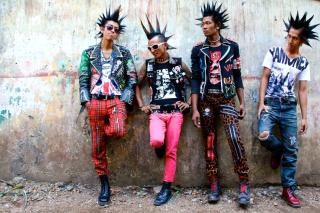 Punk arrived in Burma on cassettes smuggled in by sailors, and soon struck a chord with a young generation who had seen their future smashed under the fist of the state; as the junta cracked down on the “Saffron Revolution” which had been led by Buddhist monks, Burmese youth found a voice in its fiery rage, and soon adopted the semiotics of punk, born in remote 1970s London and New York, as banners of their anger at the state.
In Burma, punk is far more than just a superficial copy of its Western counterpart. Here, what is probably the most rebellious of all subcultures in the Southeast Asian country is going up against one of the world's most authoritarian regimes. Punk gives young Burmese a chance to symbolically spit in the face of the hated government, which took power in 2010 in the wake of what was widely considered a fraudulent election.
"The government keeps the people in poverty," says a 30-year-old who goes by the name of Scum, spitting on the ground. "It's a daily struggle just to get by." Protests are rarely possible, he says. Scum is one of the leaders of Rangoon's punk scene. He is sitting on a tattered sofa, the only piece of furniture in his narrow one-room apartment. Dirty dishes are piled up on the floor. In the corner, there's a box with English-language books. Scum studied literature, but now he makes a paltry income selling tickets for an illegal lottery. He refuses to have a legal job because he says it "would only be supporting the government."
Ko Nyan organizes most of these punk concerts. The 38-year-old makes a living selling punk T-shirts and CDs at a market stand in Rangoon. He is also one of Burma's original punks. In the mid 1990s, he read an article about the Sex Pistols, the legendary British punk band, in a music magazine he fished out of the British Embassy's garbage. Ko and his friends try to imitate the look of the musicians they saw, which comes as a shock to their countrymen. "When we walk through the market, everyone just stops and stares at us," he says. "They have no idea what punk is and just think we are crazy."What's interesting to me is how Burma's angry youth have taken a foreign cultural phenomenon (and one now confined to the cozy past in its country of origin; there's even a punk rock compilation from the National Trust for visiting Anglophiles to take home alongside their diecast model Routemaster bus and Kate and Wills teacups) and repurposed it into something new without changing its outward appearance. Looking at the attire of the punk scene members in the photo gallery accompanying the article, there are few if any references to Burma, its culture or politics; instead, one sees English-language slogans and band names of the sort one could find at a stall in Camden Market, as well as meticulously assembled collections of studded leather jackets and tartan bondage trousers. (One of the interviewees recounts working for a year in a textile factory to buy his leather jacket; upon reading this it is tempting to contemplate the exquisitely ironic possibility that similar factories were making Sex Pistols T-shirts for export to teen boutiques in the West.) Yet another young punk wears a vest printed simply with the Union Jack, a provocative symbol lobbed with weaponised irony in the malaise of 1970s Britain, though in Burma (a former British colony), I imagine its connotations would be quite different. And yet, the gravitas of Burma's situation takes these acts of almost cargo-cultish copyism and imbues them with a fresh radical meaning.
2012/2/12
Religious dictatorships find their own use for international policing protocols, it seems. After Saudi journalist Hamza Kashgari fled to Malaysia after posting a Twitter comment critical of Islam, Saudi Arabia used Interpol's red notice system to have him arrested. He has been hastily deported to Saudi Arabia, where he may face the death penalty for "insulting the Prophet Mohammed".
The Malaysian home minister, Hishammuddin Hussein, said: "Malaysia has a long-standing arrangement by which individuals wanted by one country are extradited when detained by the other, and [Kashgari] will be repatriated under this agreement. The nature of the charges against the individual in this case are a matter for the Saudi Arabian authorities."
Kashgari said in an interview that he was being made a "scapegoat for a larger conflict" over his comments, Reuters reported. Amnesty International labelled Kashgari a prisoner of conscience and called for his release.This incident has brought to attention Interpol's notice regime, and ways in which it could be used to suppress human rights. While the system does have ways to challenge notices, that amounts to little when an extradition for a religious offence is fast-tracked.
2011/2/13
An Iranian web programmer resident in Canada, who returned to Iran to visit family, has been sentenced to death after allegedly confessing to having worked on pornographic web sites in Canada. Saeed Malekpour's family are saying that the charges are false and that the confession was extracted under torture.
Why is the Iranian government allegedly torturing an innocent man with a view to executing him for a crime he did not commit? Well, one theory goes that it's to act as a deterrent to revived anti-government protests, with him being merely the unlucky soul who best fit the needs of doing so. The successful toppling of the Mubarak regime in Egypt, and, before that, Tunisia's authoritarian regime, by public protests has emboldened local resistance movements, and made other dictatorships nervous. (And it's not just in the Middle East; during the Egyptian protests, China configured its national firewall to censor all news or commentary mentioning Egypt, just in case it set off another Tienanmen.)
Human rights groups have expressed alarm over a sharp increase in the use of capital punishment in Iran. According to the International Campaign for Human Rights in Iran (ICHRI), 121 people have been hanged between 20 December 2010 and 31 January this year. An ICHRI report published in mid-January said that Iran has hanged an average of one person every eight hours since the beginning of the new year.
2010/12/18
More Wikileaks revelations, this time about Cuba, the world's grooviest totalitarian dictatorship: a US diplomat complains that countries including Spain, Switzerland, Canada and nominally loyal Washington ally Australia have stopped criticising Cuba's human rights record, ostensibly in return for commercial favours.
Meanwhile, it emerged that Cuba banned Michael Moore's film Sicko, which decries the state of privatised health care in the US and contrasts it with a glowing image of Cuba's health system. The reason Cuba banned it was apparently because its portrayal of Cuba's system was so mythically positive that it could have led to a popular backlash against the real thing; in particular, one of the Cuban hospitals is only available to the Communist Party nomenklatura and those who can pay bribes in hard currencies:
The cable describes a visit made by the FSHP to the Hermanos Ameijeiras hospital in October 2007. Built in 1982, the newly renovated hospital was used in Michael Moore's film as evidence of the high-quality of healthcare available to all Cubans.
But according to the FSHP, the only way a Cuban can get access to the hospital is through a bribe or contacts inside the hospital administration. "Cubans are reportedly very resentful that the best hospital in Havana is 'off-limits' to them," the memo reveals.
2010/10/25
The Chinese Communist Party organ, the People's Daily, has reviewed Apple's iPad, and found it wanting:
“There are many disadvantages” to the gadgets, it wrote. “For example you cannot install pirate software on them, you cannot download [free] music, and you need to pay for movies you watch on them.”While this is more about the acceptance of copying in China, a country where privately-held intellectual property is the exception rather than the rule, it is still somewhat ironic to see a totalitarian regime criticise Apple for being too locked down.
2010/8/5
What happened to the North Korean football team after they displeased the God-Emperor by failing to bring home the World Cup? It seems that they have gotten off lightly, merely being reprimanded for six hours for "failing in the ideological struggle". The team captain, in particular, escaped being sent to a labour camp, getting away with merely being forced to become a builder and stripped of his party membership.
2010/6/16
When North Korea played at the World Cup, part of the audience was its football fans. Only they weren't North Korean or football fans. The North Korean authorities decided that they couldn't risk the possibility of any North Koreans defecting once outside their national borders, and thus recruited Chinese "volunteers" to attend matches, play the roles of North Korean football fans and give the impression of North Korea being a normal country with sports fans who travel to follow their team. Only, being the kingdom of the world's last God-Emperor, they left nothing to chance; the volunteers were recruited individually by their government, and conductors were on hand to direct their cheering:
One Brazilian fan said: "I spoke with them. They had come from Beijing and knew nothing about football or the World Cup. They said they were supporting their Communist cousins and were happy to be there."
2010/4/30
The Ten Stupidest Utopias is not a Cracked-style list of wacky stuff, but a fairly insightful rundown of various utopian ideals, from Plato's Republic, through Thomas More's original Utopia, and then onwards through various permutations of utopian ideals (the American Calvinist city on a hill, racial-supremacist and feminist-separatist enclaves, heavy-handedly didactic Libertarian scifi utopias, the pipe dreams of cyberpunks, and the diametrically opposite yet oddly similar quasi-totalitarian visions of Le Corbusier and the Situationists):
The violence of More's historical period is never far from the surface of More's island Utopia, where a single act of adultery is punishable by slavery and serial adulterers are punished with death. If More's narrator had looked past the happy smiling faces of Utopia, what fear and violence might he have seen?
Exactly how stupid is Plato's Republic, and who am I to call one of history's greatest philosophers "stupid"? Is Plato's time simply too different from our own for us to pass judgment? I don't think so, for The Republic lives on in the rhetoric of contemporary political movements of both right and left—every elitist and technocratic fantasy of our time has grown from the seed of The Republic. Plato would not have understood the term "dehumanization" as we understand it—he'd never, of course, seen a factory floor or a gas chamber—but when his ideas have been enacted in places like the Soviet Union, Mussolini's Italy, or modern state-capitalist China, they have proven brutally dehumanizing, his apparat of "guardians" thoroughly corrupted by power.A more mundane utopia in the list is that of post-war American Suburbia:
Historian Robert Fishman calls American suburbia a "bourgeois utopia," whose hopes for community stability were founded "on the shifting sands of land speculation," backed up by racially discriminatory covenants and lending standards. The postwar American suburb, each a Nueva Germania of the soul, organized men's life around commutes and women's life around the home: the result was absent fathers, isolated mothers, and alienated children, who seldom knew anyone of a different race. In providing for the material needs of the growing middle class, the suburb created social and spiritual cavities that numerous social movements—from the 1960s New Left to today's Christian fundamentalism—have tried to fill.
2010/4/3
In another bid for hard currency, North Korea has opened a chain of restaurants abroad. Named Pyongyang, the restaurants serve Korean specialties like kimchi, cold noodle and dog soup, feature harshly bright lighting and monumental landscape paintings (though no overt propaganda), and are staffed by waitresses chosen for their prettiness and loyalty, who live in captivity on the premises and perform synchronised dances for the patrons. Photography is forbidden in the restaurants, presumably for the sake of authenticity.
"The restaurants are used to earn additional money for the government in Pyongyang—at the same time as they were suspected of laundering proceeds from North Korea's more unsavory commercial activities," he says. "Restaurants and other cash-intensive enterprises are commonly used as conduits for wads of bills, which banks otherwise would not accept as deposits."
In 2006 and 2007, Daily NK reported several incidents in which waitresses from North Korean restaurants in China's Shandong and Jilin provinces tried to defect, forcing the closure of the operations. Kim Myung Ho added that two or three DPRK security agents live onsite at each restaurant to "regulate" the workers and that any attempts at flight result in the immediate repatriation of the entire staff.Pyongyang restaurants have operated along the southern border of China for years, though have now expanded to the tourist trails of Thailand and Cambodia.
(via Boing Boing) ¶ 0
2010/3/27
Some years ago, North Korea invited South Korean companies to build a tourist resort at Mount Kumgang. The resort operated for a number of years, until a South Korean tourist was shot dead by guards on a nearby beach, and the South Koreans suspended tours. Now North Korea has a strategy to revive its tourism industry in its own inimitable style, by threatening to seize South Korean assets unless tourism is resumed.
2010/3/22
Iran: possibly the only place where twee pop is a dangerously subversive underground movement:
Their ambition for next year, once they find a drummer, is to get on to the bill at Glastonbury or Reading. The difference is that Take It Easy Hospital originally formed in Iran, where rock music is banned. When the local music industry is non-existent, gigs and recording studios are regularly raided by police and even MySpace is monitored, simply finding someone who shares your love of guitars and plaintive vocals is fraught with difficulties.
If they'd grown up in England, Take It Easy Hospital's wan, organ-driven indie-pop, topped with earnest observations about the "human jungle", might stand accused of being a little bit twee. But once you learn how hard Ash and Negar have had to fight just to get their songs heard, they take on a whole new complexion. And despite their ugly experiences in Iran, they are determined not to make rebel rock. "Me, I don't care about politics," says Negar. "The value of art is a lot more than politics. Politics is something that passes, but art stays for years."Take It Easy Hospital's story is recounted in the film No One Knows About Persian Cats, opening soon.
2010/2/14
A travel correspondent from the Guardian visits North Korea:
I've been allowed in as "a travel consultant" and in this capacity I'm happy to report that visiting North Korea is surely one of the greatest holidays on earth. You will see only what everyone else who goes to North Korea sees: which is what the North Korean government wants you to see. In this, it reminds me of Hello! magazine. I've always marvelled at how celebrities, given editorial control, choose to portray themselves. And so it is with North Korea. You may not get to see the "real" North Korea, but this "unreal" North Korea is a fascinating thing in and of itself. Because this is tourism at its most perfected. It's like a cruise ship. Every minute of every day has been pre-formulated and it's beautifully worked out: from the €5 charge if you want to try the national speciality, dog soup, to the man with a video camera who follows our every move, and at the end of the tour produces a DVD of our visit set to martial victory music, and sells it back to us for €40 a pop.
2010/2/12
The Iranian government, boldly pushing the boundaries in how to make totalitarianism work in the age of the internet, has announced that it will block Google's Gmail permanently. Instead, Iranians will be provided with "a national email service", intended to "boost local development of internet technology" and "build trust between people and the government".
Australian communications minister Senator Conroy is said to be watching developments carefully.
2010/1/13
Having discovered a sophisticated attack, presumably by Chinese security forces, against its infrastructure, aimed at compromising the details of Chinese human-rights activists, Google has announced a new hard line on dealing with the Chinese government:
These attacks and the surveillance they have uncovered--combined with the attempts over the past year to further limit free speech on the web--have led us to conclude that we should review the feasibility of our business operations in China. We have decided we are no longer willing to continue censoring our results on Google.cn, and so over the next few weeks we will be discussing with the Chinese government the basis on which we could operate an unfiltered search engine within the law, if at all. We recognize that this may well mean having to shut down Google.cn, and potentially our offices in China.
2009/12/19
In an attempt to fight pornography and disharmony on the internet, the Chinese government has banned individuals from registering personal domain names, and announced that those with personal websites might lose them. From now on, only licensed businesses will be able to own domain names in China.
Meanwhile, the Italian government is considering restricting criticism on the internet, after a violent assault on the prime minister, Silvio Berlusconi, which his party have argued was caused by "a climate of hate generated by virulent opposition criticism". Italy already requires anybody using internet access facilities to show and register identity documents, under the guise of fighting terrorism and paedophilia.
2009/10/29
A new documentary showing at the London Film Festival looks at Iran's underground rock scene. In this case, "underground" meaning not so much "uncommercial" as "illegal":
The threat of the police and authorities is all around. Bands soundproof secret rehearsal spaces and venues; one heavy metal band avoids arrest by playing in a stinking cowshed on a farm far out of town; members of another band talk about having their instruments confiscated. The police are often out of shot, however - perhaps adding to the omnipresent menace and what feels like an arbitrary exercise of power. When Negar's car is stopped and her pet dog taken from her, we never see the police officer who does the snatching.The film, No One Knows About Persian Cats, was co-written by Iranian-American journalist Roxana Saberi, who was subsequently imprisoned by the Iranian regime.
2009/10/6
There's another travelogue to North Korea, this time from The Times:
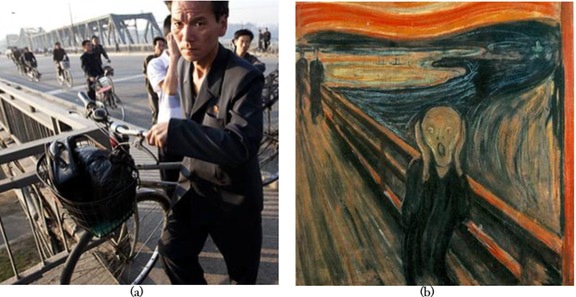
Superficially, Pyongyang is an impressive and agreeable city, but its cleanliness, orderliness and majesty are consequences of the oppression at the heart of North Korean life.
The four days that The Times spent there were a packed tour of monuments, each one a shrine to the Great and the Dear Leader. There was the Mangyongdae Schoolchildren’s Palace, where prodigies staged a faultless performance of songs, dances and music in praise of Kim Jong Il and his father. There was the Grand Monument to Kim Il Sung, a 20m (66ft) bronze statue of the man who, even in death, remains the official head of state.
This is the reason why the air in Pyongyang is so clean and you can see the stars — industry has ground to a halt, there are fuel shortages and not enough electricity to light the streets.The article also has an interesting photo slide show.
2009/6/2
Google Earth scores another scalp; thanks to its satellite imagery, a group of amateurs has been able to build up a comprehensive picture of North Korea, thwarting the hermit kingdom's hermetic borders. The picture is, as one might expect, not a pretty one:
Among the most notable findings is the site of mass graves created in the 1990s following a famine that the UN estimates killed about 2 million people. "Graves cover entire mountains," Melvin said.
The palaces housing dictator Kim Jong Il and his inner circle, clearly shown on the maps, contain Olympic-size swimming pools with giant waterslides and golf courses.The data is available as a Google Earth layer, peppered with detailed landmarks, from the project's web site. While Google Earth was crucial to it, other information sources, from sketches by defectors and escapees to the North Korean state press's own carefully circumscribed reports of the
The authors of the data have notified North Korean embassies about it but, for some reason, received no response.
Meanwhile, OpenStreetMap has actual maps of North Korea (sometimes even with labels); here, for example, is central Pyongyang.
2009/5/8
The government of the Chinese province of Hubei has ordered its officials to smoke 230,000 packs of cigarettes, on pain of fines, to raise tax revenues.
Even local schools have been issued with a smoking quota for teachers, while one village was ordered to purchase 400 cartons of cigarettes a year for its officials, according to the local government's website.Totalitarianism: is there anything it can't do?
(via Boing Boing) ¶ 1
2009/1/21
In today's big surprise: apparently the Chinese government censored local broadcasts of Obama's inaugural address, excising mentions of America facing down communism and condemnation of regimes that silence dissent.
Meanwhile, Patrick Farley (of the excellent E-Sheep Comics) has written up a summary of the Bush era: All Circus, No Bread:
Trying to explain what was wrong with the Bush Era feels like trying to vomit up a cannonball. I don't think my jaw can stretch that wide.
Seriously, where does one even begin? Abu Ghraib? Ahmed Chalabi? Mission Accomplished? The "Battle of Iraq?" Valerie Plame? No-bid contracts? The billions of dollars the Pentagon can't account for, and apparently never will? The Department of Justice firings? The blue Iraqi flag? The staged press conference? The fake Thanksgiving turkey? Terry Schiavo? Freedom Fries?
All my life I've heard Baby Boomers bitching about Nixon, even after he was dead. I used to wish they'd just GET OVER IT, but now I understand their bitterness. It wasn't what Nixon did that infuriated them so much. It's what he got away with. Nixon was nudged out of office by a momentary gust of public disfavor over a botched burglary attempt -- not, say, a Congressional investigation into the bombing of Cambodia. There was never a thorough reckoning of the misdeeds of Nixon's White House, just as there will probably never be a full accounting of the perversions and swindles of Bush's presidency. To the majority of Americans, Bush will be that guy who invaded Iraq and wrecked the economy.And US liberal cartoonist Tom Tomorrow has his own farewell salute to Bush and cronies:

2008/12/12
A representative of Britain's Police Cental E-crime Unit has complained about how difficult their job is, and outlined what would really help: a nifty black box, as easy to use as a breathalyser, which can identify illegal activity on PCs:
McMurdie said such a tool could run on suspects' machines, identify illegal activity - such as credit card fraud or selling stolen goods online - and retrieve relevant evidence.
"For example, look at breathalysers - I am not a scientist, I could not do a chemical test on somebody when they are arrested for drink driving but I have a tool that tells me when to bring somebody in."Of course, knowing New Labour, this will probably result in legislation mandating police-accessible data-logging devices in all PCs. And the legislation will make these devices not only accessible to the police, but also to the Inland Revenue, TV Licensing, the British Phonographic Industry and local council officials. And, knowing that laws (specifically British laws dealing with privacy and data security) are drafted in a parallel universe in which security is perfect, there will be no possibility whatsoever of these devices either being defeated by the potential paedoterrorists they are meant to monitor or else hijacked by other criminals and used to massively victimise the innocent.
2008/10/22
Faced with a wave of ostalgie, misty-eyed nostalgia for the fallen East German Communist regime, Germany's educational authorities have created a mockup of an East German classroom, in which school students would be subjected to the Communist experience. There they would be threatened with disciplinary action for wearing Western clothes, ordered to sing Communist marching songs and told of field trips to border guard regiments, by a "teacher" attired in authentic East German synthetic fabrics. One student would also volunteer in advance to play the child of dissidents, who would then be alternately criticised and ignored by the teachers. What the organisers hadn't planned on was that the whole thing would turn into a small-scale reenactment of the Stanford Prison Experiment, with dissident "Steffen"'s erstwhile classmates turning on him and joining in persecuting him like good cogs in the totalitarian machine:
The other pupils began to ostracise "Steffen" themselves and accused him of disrupting the class. Although they were encouraged to stand up against the system before the session, none of the pupils rallied to Steffen's support when he was told he could not visit the border-guard unit, or at any other time.
During these sessions Elke Urban models herself on Margot Honecker, the leader's wife who was also a hardline education minister. She said that only one group had dared to stand up and defend the dissident pupil during her classes. "I deliberately create a totalitarian atmosphere and I am still always shocked how quickly and easily people are conditioned by it," she said. "East Germany may have left a pile of Stasi files behind rather than a pile of corpses, but the similarities with the Nazi regime are there."
2008/9/8
A Japanese expert on North Korea claims that the secretive cult-state's God-Emperor Kim Jong-Il died of diabetes in 2003, and has since been played by several doubles, who have made public appearances and conducted international negotiations in his guise:
He believes that Kim, fearing assassination, had groomed up to four lookalikes to act as substitutes at public events. One underwent plastic surgery to make his appearance more convincing. Now, the expert claims, the actors are brought on stage whenever required to persuade the masses that Kim is alive.
One of its principal claims is that a voiceprint analysis of Kim’s speech at a 2004 meeting with Junichiro Koizumi, then the Japanese prime minister, did not match an authenticated earlier recording.If this is true, who controls the doubles? Do they rule the country themselves like some kind of freakish quadrumvirate, or are they kept under control by some shadowy true leader?
Also, it should be noted that, if this is true, it's not as great a leap as one might think. North Korea's "Great Leader" remains the late Kim Il-Sung; Kim Jong-Il (whilst officially credited with godlike powers) is merely the "Dear Leader", serving as a sort of viceroy in the absence (and the spectral shadow) of his father. If KJI has now popped his clogs, that merely takes it one step further.
So now North Korea is ruled by two godlike beings not present on this Earth, or rather by their representatives, and is essentially a somewhat novel theocracy. One could probably call it a necrocracy.
2008/8/27
The recent Beijing Olympics have been acclaimed as a spectacular success; though what they really demonstrated is the power of totalitarianism to get things done, a point which has been lost on a lot of naïve Western commentators:
The road home from Beijing is lined with wide-eyed converts who've seen the light on totalitarianism. “China has set the bar very high,” Jacques Rogge, the president of the International Olympic Committee, said. “There are some things that London will not be able to compare to, or equal - such as the ability to bring hundreds of thousands of volunteers to different sites.” Yes, Jacques, it is amazing what people can achieve once they appreciate there is no alternative.
Of course the Beijing Games went without a hitch. Give anyone total, terrifying control over a population, with force, and they will make them march in unison, drum, smile, dance, mime, jump through hoops if necessary. “They don't look very oppressed,” wrote one observer. No, pal, and neither would you if you knew the consequences of complaint.
Those performing the three-minute umbrella dance at the opening ceremony trained for six months for 14-15 hours each day, while the 900 soldiers unrolling the scroll that was the centrepiece of the production wore nappies because they had to stay hidden for seven hours, with not even a trip to the toilet allowed. And this is the event that our Olympics Minister called wondrous? That Rogge thinks will be hard to beat?And the biggest threat, the article says, is that Britain's politicians, starstruck by Beijing 2008, will take home the lesson that totalitarianism can be so awesome:
This is the most worrying legacy of the Beijing Games. It has shown our ministers, civil servants and sports administrators what could be achieved, if we could only suspend personal freedom. Change is afoot.Not that suspending civil liberties for the duration of the Olympics so that everyone can have fun without being brought down by protesters or other troublemakers is without precedent; it happened during the Sydney Olympics of 2000, when locals were prohibited from letting friends park in their houses (as not to compete with the official parking sponsors) and wearing clothing with political slogans or non-sponsoring brand names on it in the streets. Which is fairly mild compared to mass levelling of neighbourhoods, though it does make one wonder what innovations in the management of civil liberties the Blairite/Brownites will be tempted to bring to London 2012.
2008/8/18
The Chinese government has hit upon a novel solution for preventing troublesome protests from erupting at Olympic events: surreptitiously lose most of the tickets, and bus in well-disciplined cheer squads to fill the empty seats, taking place of unpredictable members of the public:
Blocks of tickets went to government departments, Communist party officials or state-owned companies, which have quietly obeyed orders not to hand them out. “People are so angry because they slept all night outside ticket booths and got nothing and now they see this,” said one blogger, Jian Yu.
At some football matches in the northern city of Shenyang, only a third of the seats were taken. Even some gymnastics finals, usually one of the biggest attractions on the programme, were not sold out.Of course, people who waited for tickets but failed to get them (from ordinary Chinese sports fans to the relatives of foreign competitors) are rather annoyed, though they are assuming that the purpose of the Olympics is to provide an entertaining spectacle (or, alternately, to serve as a promotional exercise for corporate sponsors). The Chinese government's view of the Games' purpose is somewhat different: to buy legitimacy for a worrisomely totalitarian one-party state (one typically associated with doing unspeakable things to cuddly
And here is Charlie Brooker's take on it.
2008/7/29
One of the arguments for giving the Olympics to China—a contentious choice, 12 years after the crushing of the Tienanmen Square protests—was that such an event would force China to improve its human rights. Even while we couldn't expect China, a totalitarian state, to become a model nation in this respect, the argument went, surely the eyes of the world upon it would cause the situation to improve somewhat.
This argument has been shattered by a recent Amnesty International report, which finds that the Olympics have actually made things worse, with the Chinese authorities stepping up repression, censorship and arbitrary imprisonment and relocation to make sure that the games run smoothly.
The report says that Chinese activists have been locked up, people have been made homeless, journalists have been detained, websites blocked, and the use of labour camps and prison beatings has increased.
"We've seen a deterioration in human rights because of the Olympics," said Roseann Rife, a deputy programme director for Amnesty International.The authors of the Amnesty report have the extraordinary naïveté to suggest that this has "undermined" the "Olympic values" of human dignity. Surely the values that would go best with putting on a huge spectacle of commercialism and national chest-beating would be those of totalitarianism; making the trains run on time, crushing any uncomfortable dissent, and all, and China would be a more natural host than any liberal democracy which would be obliged to pass uncomfortable laws suspending civil liberties (as Sydney did in 2000; the laws, still on the books, have since come in handy for other mass spectacles, such as the Catholic Church's World Youth Day this year). Meanwhile, with the exception of a few granola-eaters and Guardian readers, the West doesn't care as long as they get their entertainment product shipped into their sitting rooms through the TV.
Perhaps when the location of the next Olympics is decided, the IOC should consider North Korea; after all, coordinating mass events with ruthless precision is one thing the Hermit Kingdom excels at.
2008/7/24
Let it not be said that China is not willing to democratise; the Chinese government has announced that, for the Olympics, it is adopting one aspect of American-style late democracy: free speech zones, in which protest is permitted. As long, of course, as the protesters have permission from the police:
Liu Shaowu, director of the Beijing organising committee's security department, said protests would be allowed in Shijie, Zizhuyuan and Ritan parks.
"They are all close to the city proper and the Olympic venues," he told a press conference on the city's security preparations. But Mr Wu was hazy about how potential protesters would apply for permission, and on whether spontaneous demonstrations would be allowed.
2008/7/18
With the Olympics, that natural showcase of totalitarian regimes, approaching, the Chinese government is making sure that nothing is left to chance, and preemptively banning all sorts of things, just in case:
Beijing police have been visiting bar owners in the popular Sanlitun area and asking them to sign pledges agreeing to not serve black people or Mongolians and ban activities including dancing.
And in a separate move, the Ministry of Public Security announced at the start of the month that from October 1, discos, karaoke bars and other entertainment venues must install transparent partitions in previously private rooms, and ensure staff dress more modestly as part of an effort to crack down on prostitution and drugs.
Beijing CBD businesses are reporting increasingly bizarre restrictions on couriers. This includes a ban on transporting CD-ROMs through the city, and mobile phones or GPS devices can only be sent if their batteries are delivered separately. This is on top of postal restrictions on sending liquids and powders.
2008/5/19
The nifty thing about being a totalitarian state is that, when you declare three days of mourning, people mourn:
China has issued orders that all entertainment web sites and regular television programming be shut down completely for the next 3 days. Only web sites covering the recent tragic 7.8 magnitude earthquake and television stations broadcasting CCTV earthquake programming will be allowed to remain live.Mind you, this is according to Twitter messages from one web entrepreneur in China, and other reports are divided on whether such a shutdown has actually occurred.
2008/4/29
The Olympic torch relay, dogged by protests against Chinese government policies across its journey, has finally had a smooth, protest-free run—in North Korea, where it was met by thousands of North Koreans waving flags in perfect unison, with absolutely no sign of protest:
"We express our basic position that while some impure forces have opposed China's hosting of the event and have been disruptive. We believe that constitutes a challenge to the Olympic idea," Pak said.
2008/3/12
Great news on the human rights front: China is no longer one of the most systematic human rights violators, according to the US State Department's annual human rights report. This is the first time in many years that China has been removed from the list, now containing Iran, Zimbabwe, Cuba, Belarus, Sudan, Uzbekistan and, from this year, Syria.
Which raises the question: is China really that much less repressive than Iran, or is it just a more valuable trading partner? And where's Saudi Arabia?
2008/1/23
Wired has an interesting article on the project to reassemble shredded Stasi documents in Germany, a vast project involving scanners and custom-developed software from the Fraunhofer Group (best known for developing the MP3 audio compression algorithm):
The data for the 400-bag pilot project is stored on 22 terabytes worth of hard drives, but the system is designed to scale. If work on all 16,000 bags is approved, there may be hundreds of scanners and processors running in parallel by 2010. (Right now they're analyzing actual documents, but still mostly vetting and refining the system.) Then, once assembly is complete, archivists and historians will probably spend a decade sorting and organizing. "People who took the time to rip things up that small had a reason," Nickolay says. "This isn't about revenge but about understanding our history." And not just Germany's — Nickolay has been approached by foreign officials from Poland and Chile with an interest in reconstructing the files damaged or destroyed by their own repressive regimes.
The truth is, for Poppe the reconstructed documents haven't contained bombshells that are any bigger than the information in the rest of her file. She chooses a black binder and sets it down on the glass coffee table in her living room. After lighting a Virginia Slim, she flips to a page-long list of snitches who spied on her. She was able to match codenames like Carlos, Heinz, and Rita to friends, coworkers, and even colleagues in the peace movement. She even tracked down the Stasi officer who managed her case, and after she set up a sort of ambush for him at a bar — he thought he was there for a job interview — they continued to get together. Over the course of half a dozen meetings, they talked about what she found in her files, why the Stasi was watching her, what they thought she was doing. For months, it turned out, an agent was assigned to steal her baby stroller and covertly let the air out of her bicycle tires when she went grocery shopping with her two toddlers. "If I had told anyone at the time that the Stasi was giving me flat tires, they would have laughed at me," she says. "It was a way to discredit people, make them seem crazy. I doubted my own sanity sometimes." Eventually, the officer broke off contact, but continued to telephone Poppe — often drunk, often late at night, sometimes complaining about his failing marriage. He eventually committed suicide.
(via Boing Boing) ¶ 0
2007/9/12
Wall Street is experiencing a Chinese surveillance-led boom, with US hedge funds pumping more than $150m into the growth industry of developing high-tech means of detecting dissent and maintaining the control of the Communist Party over the world's most populous nation — namely, of squaring the circle of having economic freedom with totalitarian political and social control.
Terence Yap, the vice chairman and chief financial officer of China Security and Surveillance Technology, said his company’s software made it possible for security cameras to count the number of people in crosswalks and alert the police if a crowd forms at an unusual hour, a possible sign of an unsanctioned protest.
Mr. Yap said terrorism concerns did exist. His company has outfitted rail stations and government buildings in Tibet with surveillance systems.
In Shenzhen, white poles resembling street lights now line the roads every block or two, ready to be fitted with cameras. In a nondescript building linked to nearby street cameras, a desktop computer displayed streaming video images from outside and drew a green square around each face to check it against a “blacklist.” Since China lacks national or even regional digitized databases of troublemakers’ photos, Mr. Yap said municipal or neighborhood officials compile their own blacklists.
(via Boing Boing) ¶ 0
2007/7/13
A harrowing account of the life of an escapee from a North Korean gulag, a particularly brutal one reserved for those who fought for the south and their descendants:
Shin, now 24, was a political prisoner by birth. From the day he was born in 1982 in Camp No. 14 in Kaechon until he escaped in 2005, Shin had known no other life. Guards beat children, tortured grandparents and, in cases like Shin's, executed family members. But Shin said it did not occur to him to hate the authorities. He assumed everyone lived this way.
Shin "is a living example of the most brutal form of human rights abuse," said Yoon Yeo Sang, president of Database Center for North Korean Human Rights in Seoul, where Shin is taking temporary shelter. "He comes from a place where people are deprived of their ability to have the most basic human feelings, such as love, hatred and even a sense of being sad or mistreated."
During the interrogations he learned for the first time that his father's family belonged to a "hostile class" - a category that entailed punishment over three generations - because his uncles had collaborated with the South Korean Army during the Korean War.In other news from the Glorious People's Democracy that is North Korea, the government there has banned karaoke bars, to "prevent the ideological and cultural permeation of anti-socialism". The surprising thing is that they had karaoke bars in the first place.
2006/12/27
US discount store chain Target has withdrawn a line of CD cases with Che Guevara's image, after the Cuban government sued for copyright violation socialists protested at the commercialisation of his image critics protested at the glorification of an architect of totalitarianism:
"What next? Hitler backpacks? Pol Pot cookware? Pinochet pantyhose?" wrote Investor's Business Daily in an editorial earlier this month, citing the Guevara case as a model of "tyrant-chic".
2006/2/2
As the Hong Kong, the aspheads are adopting the tried-and-tested tactics of the most successful totalitarian regimes in history, and signing up children to look out for and report copyright violators.
The youngsters, part of uniformed groups like the Scouts, have been invited to join the Youth League for Monitoring Internet Piracy, which will be given a trial run next week.
If they notice anything that infringes on copyright, such as the illicit uploading of files, they can contact customs through a dedicated website.Apparently 200,000 children have been signed up.
2006/1/19
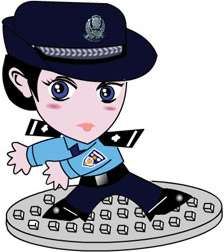 China's pervasive internet surveillance regime now has a new public image: from now on, either various government sites or all websites in Shenzhen will display cartoon mascots of police officers (looking big-eyed and oddly Caucasian). Clicking on the mascots will take you to a web page where you can talk with actual members of China's internet police. They do things differently in China.
(via bOING bOING) ¶ 0
2005/12/21
When he wasn't purging perceived enemies or trying to build a pure Communist society, Stalin was trying to breed a race of unstoppable half-man, half-ape Stakhanovites and super-soldiers to bring about Soviet world domination and bring the five-year-plan back on track:
According to Moscow newspapers, Stalin told the scientist: "I want a new invincible human being, insensitive to pain, resistant and indifferent about the quality of food they eat."
Mr Ivanov's ideas were music to the ears of Soviet planners and in 1926 he was dispatched to West Africa with $200,000 to conduct his first experiment in impregnating chimpanzees. Meanwhile, a centre for the experiments was set up in Georgia - Stalin's birthplace - for the apes to be raised.
Mr Ivanov's experiments, unsurprisingly from what we now know, were a total failure. He returned to the Soviet Union, only to see experiments in Georgia to use monkey sperm in human volunteers similarly fail.
A final attempt to persuade a Cuban heiress to lend some of her monkeys for further experiments reached American ears, with the New York Times reporting on the story, and she dropped the idea amid the uproar.It makes one wonder where they got the human "volunteers". I'm guessing from the gulags.
Also, was this the only instance of a totalitarian state attempting to selectively breed a new citizenry to better suit its needs? I wonder whether, say, North Korea or someone has tried anything like that, using people from different ethnicities and races, lured or kidnapped from across the world, to breed the model citizen.
(via bOING bOING) ¶ 1
2005/8/27
The central Asian republic of Turkmenistan proudly claims to have joined the space race. Turkmenistan, for all of its ice palaces in deserts and other marvels, has no actual launching facilities, and its debut as a space power did not involve anything quite as conventional as cosmonauts or satellites; instead, the state has launched a copy of the country's eccentric president's book of wisdom into space.
"The sacred text of Rukhnama was chosen because it contains all the wisdom of the Turkmen people, thanks to its creator, Turkmenbashi," the article said, using the name the country's president, Saparmurat Niyazov, has given himself, meaning "Guide of All Turkmens".Niyazov is best known for delineating the Ages of Man, renaming the months and recently banning lip-synching. His book of wisdom was launched into space on a Russian rocket, along with several Japanese satellites.
(via  substitute, rocknerd) ¶ 0
2005/3/18
An interesting NYTimes article on how mobile phones (many donated by South Korean journalists) and video recorders (which have become cheap as Chinese consumers adopt DVD players) are breaking down North Korea's barriers of isolation:
"In the 1960's in the Soviet Union, it was cool to wear blue jeans and listen to rock and roll," said Andrei Lankov, a Russian exchange student in the North at Kim Il Sung University in 1985, who now teaches about North Korea at Kookmin University here in the South. "Today, it is cool for North Koreans to look and behave South Korean, as they do in the television serials. That does not bode well for the long-term survival of the regime."
(Tangent: as Western pop music infiltrated Russia, it produced bizarre hybrids; porn-metal bands like Korozia Metalla and evil-sounding electronic noise acts and things like t.A.t.U. All of which makes one wonder what North Korean popular music will be like when the regime collapses. Assuming that it collapses without making North Korea (or, indeed, much of the Pacific Rim) into a radioactive crater.)
The North Korean government isn't taking this lying down: they've bought radio-location devices for detecting mobile phone signals. Meanwhile, to combat the video recorder menace (which, it would seem, is to repressive hermit-states what the Boston Strangler is to... never mind), the North Korean police simply switch off the power to areas, a block at a time, and inspect the tapes stuck in video recorders for subversive content. Those caught are probably executed if they're lucky, or used in hideous experiments if they're not. And Kim Jong Il has good reason to fear:
"They are gradually learning about South Korean prosperity," Dr. Lankov said. "This is a death sentence to the regime. North Korea's claim to legitimacy is based on its ability to deliver the worker's paradise now. What if everyone sees that it is not delivering?"
2005/2/22
Today is Free Mojtaba and Arash day, an international campaign to free two Iranian bloggers imprisoned in a crackdown on online publishing. To see how you can help, follow the link above.
2004/6/4
North Korea bans mobile phones, shortly after encouraging the few foreign business travellers in Pyongyang to use the devices. Meanwhile, South Korea's phone carriers merely configured their phones to destroy uploaded MP3 files after 72 hours, in an effort to placate the recording industry. It failed, and the pigopolists are suing the phone carrier anyway. (via Techdirt)
2004/4/29
North Korea's state-run media claimed that many of the 161 people who died in last week's train explosion devoted their last moments to saving portraits of the Dear Leader. Which is not implausible, given that people have been sent to the gulags for accidentally defacing said portraits; think of the risk if you survived but your portrait of Kim Jong Il didn't...
2003/4/10
An interesting thesis on the social history of Iraq, in particular the Ba'ath party's systematic annihilation of any possibility of a civil society arising any time soon.
In her book, The Outlaw State, she describes a common behavioral reaction that Iraqis exhibited when encountering foreign visitors like herself who happened to ask even apolitical questions. Sciolino referred to it as "the blank stare." (Sciolino, 77). By this she meant that when asked a question that might seem harmless to a Westerner, but that to an Iraqi connoted even the slightest hint that something political could be read into his or her answer, it was simply safest to reply by assuming a blank stare. For one could never be sure that an informer was not lurking nearby. Makiya takes this argument even further. Accordingly, to live in Iraqi Ba`thist society requires not just assuming the blank stare but putting on a mask
In one case, a government official and his family were executed and their house bulldozed simply because he happened to attend party where someone known to him had made a joke about Saddam in his presence. Informers were present at the time but his failure to report the joke cost him and his family their lives. (Miller and Mylroie, 50). In a more recent case, a telephone operator was executed simply for warning a businessman not to use a line that was bugged.
2003/2/27
Chinese political dissident Wu Chong has declared that he's proud that his T-shirts were used in the Global Weekend of Protest. The 45 year old former University professor, who is serving a 10 year sentence was delighted to learn the T-Shirts he makes in the prison sweatshop had been screenprinted with anti-war slogans, such as "No hoWARd" and "There's a village in Texas that's lost its idiot", and worn in rallies in London, Madrid and Sydney.
"I'm honoured they chose my T-Shirts to find against injustice." He said he thought that the choice would have been based not just on the competitive price of his T-Shirts, but the quality of his stitching. He noted his labour camp had some of the strictest "quality control incentives" in China.
2003/1/18
Rifts are emerging in the anti-war movement in the US (yes, there is one), with some activists (from moderates to anarchists) claiming that anti-war umbrella group is a Communist front. ANSWER stand accused of being a front for doctrinaire Marxist groups, supporting the governments of Iraq and North Korea, having backed Slobodan Milosevic and having defended the Chinese government's Tienanmen Square crackdown as recently as 2000.
"Basically, ANSWER is dominated by the IAC, which is largely a front for the Workers World Party, a Marxist-Leninist group that has been around since the 1950s," said Stephen Zunes, chair of the Peace and Justice Studies Program at the University of San Francisco. "They are very effective at organizing because they are hierarchical. The main problem that I have with them personally is they have been very reluctant to acknowledge the nature of Saddam Hussein's regime.
Sounds much like the S11/No Logo movement, which became little more than a brand name for the Democratic Socialist Party (the "cops of the protest movement") and Socialist Alliance, and indeed the local Indymedia site (which is apparently controlled by Resistance or someone and censors posts inconsistent with Marxist principles, or so some anarchists have claimed). Then again, who would you expect to organise mass movements: the anarchists?
"They are uncritical of anybody that the United States and NATO oppose, from Milosevic to Saddam Hussein," said David Walls, a sociology professor at Sonoma State University. "That's the weakness of their position. They won't acknowledge that there is something despicable about Saddam's regime and violations of human rights; they think it's too much of a concession to the imperialists. But it leaves them without a lot of credibility themselves."
A timely reminder that no one side has a monopoly on stupidity.
2003/1/17
A number of young idealists are on their way to Baghdad to act as "human shields", lending their moral authority to defend the peaceful Iraqi state against US imperialist aggression. As one guitar-wielding peacenik says, "Baghdad is probably the most peaceful, mellow place I've ever been in my life. Everybody is so laid-back it's unbelievable." Though this neglects the fact that Saddam Hussein's regime is monstrously brutal, with a shocking record of torture and murder.
According to Amnesty International the regime was busily torturing and executing various enemies, real and imagined. Eyes were being gouged, tongues ripped out and heads cut off. The torture of political detainees, said Amnesty, "generally takes place in the headquarters of the General Security Directorate in Baghdad or in its branches in Baghdad".
Now it could well be that Amnesty International has been infiltrated by Dubya's disinformation operatives (perhaps via Phony Blair's "Nu Labour" government) and turned into a pro-US propaganda engine, with their strident denunciations of US capital punishment and racism merely acting to lull bleeding-hearted Guardian readers into a false sense of trust and get them to swallow the bigger lie; it could be, but I doubt it.
This Iraq war is a sordid affair. On one hand, Saddam Hussein is a monster. (Not even the most delusional Marxist could argue that he's the leader of a liberation movement... well, maybe the Spartacists could, but everybody knows they're barking mad.) I doubt that there's much support given to him by the Iraqi people that's not the result of blind fear of what happens if they don't. On the other hand, the Saudis are just as bad, by all accounts, but they're Our Allies so it's OK. And pretending that the US invasion of Iraq will be all about giving a helping hand to the poor downtrodden Iraqi people (who happen to be sitting on one of the biggest, and most strategically important, oil fields in the world) stinks of hypocrisy. Given that the US is reportedly considering pocketing Iraqi oil to pay for its occupation (how fortunate that those poor Iraqis have this means of repaying their benefactors!) adds to suspicions that it's all about oil.
OTOH, the "peace activists" who plan to go to Baghdad to act as human shields for a murderous regime just because it opposes the US don't seem to be the sharpest knives in the drawer. In fact, they make student-newspaper pro-Cuban apologists (whose ability to excuse away the apparatus of totalitarianism as a higher form of freedom never fails to amaze) look like mature and well-reasoned political commentators.
2002/10/18
An American tourist's account of North Korea, that bizarre bastion of fetishistic neo-Stalinism and insular paranoia.
The spectacle was something I'll never forget, though perhaps not for the reasons Mr. Huk and his countrymen intended. The show was so precise as to be robotic. No one outside the group, everyone buried within it. All done with a flair and focus that was chilling to behold. The model of mass unity that was being held up as proof of greatness and independence smacked of mindlessness. Of course everyone in the performance was human, with their own hopes, dreams and desires. This though was something to be eliminated, not tolerated or encouraged. These were things that still had to be rooted out in an effort to build the utopian, Juche-centered society. The zeal in Mr. Huk's voice spoke not of a country, but of a cult.
(via Reenhead)
2002/9/15
A look at Burma's burgeoning rock scene, where bands with metal-sounding names like Iron Cross and Emperor perform Beatles covers and country & western numbers. Isolated totalitarian states sure are weird places.
2002/9/12
Those comsymps at the Grauniad are having a minute's silence for September 11 victims -- September 11, 1973, when the CIA-backed Pinochet regime overthrew Allende in Chile. Mind you, the estimated 30,000 men, women and children who were killed were all Communists, who would have enslaved Chile under a hellish Stalinist dictatorship had the CIA not intervened in the name of defending freedom worldwide.
(Wasn't it Kissinger or someone who articulated the difference between "totalitarianism", which is uniformly evil (and ideologically "left-wing"), and "authoritarianism", which can be benign, a strong state concerned about defending cherished values and such?)
On a similar tangent, I once heard that one of the reason for the West's toleration of the Indonesian invasion of East Timor was that Fretilin had troublingly leftist leanings; an independent East Timor would have been a probable Soviet client state, and Australia could have had its own Cuban Missile Crisis. And what better experts on Communist eradication in the asia-pacific region than Suharto's New Order?
2002/8/21
An article about Turkmenistan's President Niyazov, arguably one of the loopiest world leaders in recent times. (The only other contender I can think of, the former Latin American president who sang as "the madman who loves", pales into insignificance next to Niyazov's decidedly quirky and somewhat Jarryesque take on the traditional neo-Stalinist cult of personality.
He began by renaming the months of the year after himself, his mother, who died in an earthquake when Niyazov was eight, and a few of his favourite words (Flag Month, for example); and followed it up by decreeing that old age officially doesnt begin until 85. This was possibly in relation to both his 62nd birthday which he celebrated by dying his hair jet-black and his rampant hypochondria. On Turkmenistans website, there is more about Niyazovs recent doctors appointment than on melons and sulphur combined.
Mind you, by this account, Turkmenistan sounds like it was a rather odd sort of place even before Niyazov. (via New World Disorder)
2002/6/13
In Cuba, where the government aims to control every aspect of the flow of information, one needs special permission to borrow most books from libraries. As such, speakeasy libraries are the latest form of dissent, and seen as the latest threat to socialism:
"I can't just walk into a public library and ask for books on Afro-Cuban religion," said Luis Antonio Bonito Lara, a retired engineer and avid reader. "I can't even ask for copies of Granma from two years ago without special permission. It's enormously frustrating."
(Remember, this is the Another World that the people protesting outside the Nike store will tell you Is Possible.) (via Reenhead)
2002/5/1
Happy May Day: In a heartwarming example of notional-socialist solidarity, the Australian Labor Party seeks to establish formal ties with the Chinese Communist Party; a move which may alarm some ALP members concerned with China's human rights record.
2001/3/26
War is peace, freedom is slavery, but business is business: Murdoch's people have learned that, if you want any chance of access to the world's largest market, you bend over when the Chinese Government says so, or when you think it'll appreciate your doing so. Case in point: Murdoch fils James, in charge of dealings with China, gave a speech in Los Angeles, denouncing the Falun Gong movement, condemning Western media bias against Chinese government policy, and saying that Hong Kong's democracy activists should accept the reality of life under a strong-willed "absolutist" government. ("absolutist" sounds like a particularly psychoceramic strain of Ayn Randism, but is presumably a way of saying "totalitarian" without the negative connotations; sort of like the Reagan-era coinage of "authoritarian" for US-friendly right-wing dictatorships, as opposed to the truly evil "totalitarian" left-wing dictatorships.) (via Lev)