The Null Device
Posts matching tags 'authenticity'
2017/11/3
The British supermarket chain Sainsbury's is doubling up on the fashion for vinyl records. For a while, they (alongside their rival Tesco) have been selling a small selection of classic albums, repressed on 180 gram luxury vinyl, to shoppers who want to own a slice of pop-cultural history in its most authentic format, and to be at one with Led Zeppelin or Amy Winehouse or whoever in a way that those listening to the iTunes download can never be. And to think: all this at your local supermarket. And now, they're launching their own brand of vinyl-only compilation albums. Named Sainsbury's Own Label, the records, overseen by pop historian and Saint Etienne member Bob Stanley, will contain classic vintage tracks, and come enclosed in retro-styled monochromatic sleeves, for that extra dose of supermarket-fresh vintage authenticity. Two albums have been announced: Coming Into Los Angeles, which features Californian rock from the sixeventies such as Fleetwood Mac and The Monkees, and Hi Fidelity, which leans slightly (but never excessively) prog, with the likes of Mike Oldfield, 10CC and Roxy Music, and sounds like just the thing for putting that expensively restored vintage hi-fi system through its paces.
Which is an interesting business decision (and it's good that Bob Stanley is getting paid for his expertise), though I'm not sure it makes that much sense. From what I understand, the fashion for vinyl is less about its function as a sound carrier than its role as an ark of Authenticity, a token of connection to a legendary album, artist or era. Surveys back this up, showing that almost half of all vinyl bought is never played, and instead purchased to have something to keep whilst listening to a streaming service. In other words, a vinyl record is primarily a 12" collectible poster, representing the body of music one enjoys listening to or the artist one admires; that it contains a legacy sound carrier adds gravitas to the mystique, but is secondary. And as a sound carrier, vinyl records leave a lot to be desired; other than the bulk and the fiddly nature of putting a record on, as compared to queueing up a track on Spotify or YouTube, the sound quality of vinyl is objectively, measurably inferior to digital sound in a number of ways. Some of those shortcomings (the surface noise, the “warm” frequency distortion) can, to those who grew up with them, induce warm feelings of nostalgia, but that does not make vinyl's fidelity superior, as some of its champions are wont to claim, except, of course, at producing a characteristically vinyl-like experience. To claim that the experience of recorded music with the surface noise, distortion and constricted dynamic range and frequency response of vinyl is “better” or more “authentic” is a claim of subjective faith. (And then, there is the fact that the PVC that vinyl records are made of is pretty toxic stuff, impossible to recycle, and slowly emitting toxic particles as they age.)
It seems that what Sainsbury's are trying to do with Own Label is effectively sell the equivalent of Spotify playlists of “Classic Tracks”, only pressed to a stylish-looking vinyl record. Fair play that they slapped some modishly retro-modernist artwork on the cover, but it really does seem like the worst of both worlds: none of the collectibility of vinyl albums (except perhaps to a handful of people who fetishise commercial ephemera, and wish to get a head start on tomorrow's) and less convenient than listening to it on a computer or phone or digital system. Good luck to them, but I suspect this might not be a runaway success story.
2015/2/2
Artefact found in a record shop in London:
A snapshot of 1980s major-label rock at its most excessive, moments before grunge/alternative came along, doused it with petrol and threw the fateful lit match. This has all the maximalist, late-80s-high-tech sheen of commercial rock of the time: beds of digital synthesizers, sheets of chugging, flanged guitars, drums gate-reverbed to within an inch of their life, and expansive mixes as if bragging about the sheer number of tracks on the mixing deck at the studio that the label was hiring by the day (and remember, this was in the days before ProTools, when audio tracks were actual physical hardware that took up costly space). And yet, the music laid atop this gloss argues vociferously that, despite all the expensive digital gloss, it is Rock, in its primal, testosteronal sweatiness. The guitar figures in places aren't a million miles from Guns'n'Roses or Poison, in that post-Lynyrd-Skynyrd South-of-the-psyche that bespeaks rock'n'roll Authenticity. The subject matter is vaguely in the cars'n'girls territory of Rock. And above all are the frontman's vocals, hoarse and grunty almost to the point of ridiculousless.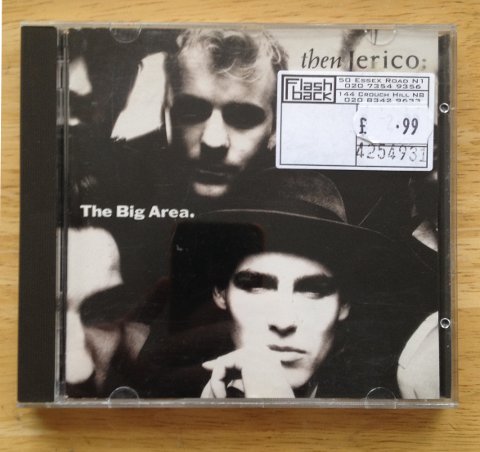
This is late-80s rock as cyborg caveman, a Hegelian synthesis of the dialectics of high-tech polish and Rockist Authenticity. Not a particularly convincing synthesis, though, in hindsight, given the lit match that was tracing a parabola through the air towards it at the very moment it came out. Rockist Authenticity won out, through Grunge and retrostyled Britpop and the waves of three-chord alternative-rock bands which all sounded equally rough-hewn; this state of affairs lasted until people realised that, while there were ProTools plugins for grunging up an expensively recorded boy band, one could make smooth, polished music on a cheap laptop, and the equation between roughness and Authenticity was forever broken.
2014/7/28
They call me Wayne Kerr, and if there's one thing I hate… it's records that are available only on LP with a download code; with no CD, and no option to buy just the download.
On one hand, this is an improvement on the previous state of affairs: records being available only on vinyl, with no downloads or digital copies whatsoever, so if you were the kind of weirdo computer-nerd to whom the words “download” and “MP3” meant something, your options would be to rig up one of those USB turntables, play your newly-bought record through them, recording to a WAV file, trim it to the separate tracks and do your best to EQ out the inherent suckiness of vinyl so you'd have something approximating what a hypothetical digital copy would sound like. Or if you don't have a USB turntable or reasonable Audacity skills, you would illegally pirate the digital copy from someone who does. At least with download codes, there is an audio file which hasn't been through the vinyl-transfer wringer. On the other hand, though, you can't have it without also accepting the slab of vinyl it comes with, because Authenticity.
The existence of the download code mockingly acknowledges the shift in ways of listening to music, the fact that not everybody owns a turntable or is willing to partake in the vinyl ceremony (taking the record gingerly out of its anti-static sleeve, placing it reverently in the middle of the vinyl shrine, sitting down cross-legged exactly between the two speakers and, for the 22 minute duration of a side, reverently contemplating the gatefold artwork with a joint in one hand, as one's forebears did in the prelapsarian Sixeventies, when love was free, weed was good and rock was the real thing), and that, with the rise of digital audio and portable sound players, the vinyl record has metamorphosed from the humble, utilitarian carrier of most convenience it was in the age of the teenager's Dansette into a fetish object; one part collectible trophy, one part quasi-religious totem of Authenticity. The denial of downloads on their own affirms the primacy of the cult of vinyl: you will take the vinyl record, it dictates, and you will regard it with quasi-religious reverence, as it is a sacred relic, a splinter of the True Cross, in which is embodied Authenticity.
The cult of vinyl-as-ark-of-Authenticity is a sort of conservative (with a small 'c') reaction to, and attempted brake on, the hurtling pace of technological and social change, which, in less than a lifetime, has rendered ways of engaging with music obsolete. The way people consume music has changed as the amount of music has increased and the price has plummeted; consequently, one has considerably more music at one's disposal than one's parents (or even one's younger self) would have, saving up for a few months to get the new LP by their favourite band and then listening the hell out of it. (A few years ago, Jarvis Cocker said that music has become something like a scented candle; something consumed casually in the background, without one's full rapt attention. Of course, Cocker's reaction to this phenomenon is coloured by the contrast with his own formative experiences in the early 1980s, which in terms of the culture of music consumption, were an extension of the Sixeventies.) Meanwhile, with the world's rising population (there are roughly twice as many people alive today as in 1970) and urban gentrification, the size of the typical residence (i.e., one affordable to one of ordinary means) has shrunk; as such, a nontrivial collection of music in physical format is increasingly becoming a luxury only wealthy eccentrics and rural hermits can afford; and this goes doubly so for space-inefficient formats such as vinyl records. The upshot is that each piece of recorded music in one's collection can expect both less attention and less physical space than might have once been the case. Which is why digital files come in handy. But, of course, that wouldn't be Authentic; when you listen to an MP3, you're not really listening to the recording and having the authentic experience of the music; you're a ghost, alienated from your own music-listening life, listening to a ghost of the music, having a ghost experience that doesn't really exist, not in the way that your dad's experience of the Stone Roses did. Or so the narrative of the vinyl mandate goes. Which is why we are stuck buying a slab of vinyl, opening the package, pulling out the card with the download code, and then putting the actual slab of vinyl in the gap behind the IKEA BILLY bookcase with all the other votive icons of Authenticity, its grooves doomed to never be touched by a gramophone needle. Time goes on and the mass of reluctantly adopted household gods grows.
The vinyl mandate is the product of a Baby Boomer elite (and, to a lesser extent, the Generation X that followed it and absorbed some of its superstitions and prejudices), having aged into seniority and cultural power, staring into the abyss of its own mortality, feeling the chill of rapid change having made its own formative experiences obsolete, recoiling before the sublime terror of one's insignificance in the face of the march of time and desperately clutching for the conditions of its own long-gone youth and virility; since these involved listening to rock'n'roll from vinyl records, it is decreed that the way that they consumed music (record player, reverent contemplation, possible recreational substance use; definitely not with a pair of white earbuds at one's desk or in the gym, and absolutely not sacrilegiously shuffled with the rest of one's collection of music) is the one true, Authentic way of truly connecting and engaging with the music. Granted, many of the artists and label owners who enforce this mandate are too young to have invested in this myth first-hand; perhaps they are motivated by a Couplandian displaced nostalgia for the golden age of authenticity they weren't born in, or perhaps such is the power of cultural transmission that values get propagated beyond the rationale from which they sprang. In any case, the myth persists for now, and we're stuck with piles of vinyl records which will never be played, all for want of a download code.
As for physical artefacts: could they not be something more practical? Personally, if I'm at a merch stand, I'd rather buy a band T-shirt or button badge with a download code affixed to it than a vinyl record with one.
2014/7/20
A report in The Verge from a conference in Las Vegas about the business side of electronic dance music (EDM). EDM is not to be confused with the electronic dance music that older readers will remember; the 303-heavy acid-house played in underground clubs in Chicago and New York in the 1980s, the rave-techno that crusties dropped E to in illegal (and definitely undermonetised) raves during the Second Summer of Love, or even the glossier house/trance that superclubs played in the 1990s and 00s, but is a new phenomenon, as different as rock'n'roll was from jump blues. Having moved to Las Vegas, cut its name down, Diddy-fashion, to three VIP-worthy letters, and replaced the loved-up Goa-beach hippyisms with some high-octane all-American shock-and-awe, EDM has had an extreme makeover, and in doing so, not so much sold out as absorbed the whole concept of commercialism and monetisation and become one with it. The fans, apparently, couldn't be happier with it (or so the boosters of the brand synergies say, of course); on some level, being part of a super-hot marketing demographic is this generation's equivalent of the distinctly shabbier solidarity of being a Mod or a punk or whatever your grandparents did because there was nobody around to sell them energy drinks or LED jewellery.
Not surprisingly, people who love electronic music also love electronics. They have "a high propensity to purchase high-tech devices versus other genres, making them ideal for partnerships in the mobile and tech space," Simonian said. They’re more likely than other music listeners to purchase songs after hearing them in an ad. They’re also 50 percent more likely to buy energy drinks and 18 percent less likely to buy diet soda — presumably because they spend too much time dancing to worry about calories, Simonian joked. They spend more of their music money on live events, and they’re trendsetters — EDM listeners are generally regarded as "key influencers" among their peers.
Festivals also offer fertile ground for millennials, a generation entirely unfamiliar with the concept of selling out, to engage in "brand immersion." Swedish House Mafia pioneered the trend when they partnered with Absolut in 2012, releasing a single called "Greyhound" — named after the popular combination of vodka and grapefruit juice — that featured the trio behind a roboticized race dog on its cover. The move successfully cast the cocktail as an EDM staple, and the band incorporated the digital dog into its visuals for an Absolut-sponsored tour. Simonian says Nielsen’s research has revealed that electronic music fans "want brands to sponsor artists." If this concept sounds like "selling out" to you, your problem might be that you were born before 1990, or that you were raised on some form of punk rock ethos that requires strict division between creativity and capital (I’m guilty of both). Selling out is an alien concept in the EDM market — when Simonian says that fans want brands to sponsor artists, it might just mean that fans are happy to see their favorite producers making a decent wage to create amazing music.
So when I hear Skrillex in a Best Buy commercial, hear Calvin Harris teaming up with Rihanna, or a mediocre deadmau5 rip-off while I’m browsing through the underwear section of Target, I can only smile contentedly: finally, the sound I wanted to hear everywhere when I was growing up is actually everywhere. EDM has become the first "voice of a generation" that openly accepts a partner all other types of music bristled at: unabashed capitalism.Well, there was such a thing as “commercial dance” in the 1990s, but the word “commercial” in that case cast it as a lesser form of dance music; something churned out by hacks in Germany and the Benelux countries to sell to mobile-phone ringtone companies, undiscerning preteens and those too hammered on flavoured vodka to know the difference. In this case, though, the big, well-hyped megastar DJs are the hypercommercial players, and the pervasive commerciality of EDM goes unremarked; the phrase “commercial EDM” would, indeed, sound awkward and ungainly, like “water fish” or something.
2014/3/24
Cross-cultural synergy of the day: ersatz Mexican-American gangsta culture seems to be popular in unusual places, such as Bangkok, where men who are civil servants and police officers by day get full-body tattoos and spend their spare time hanging tough East LA-style and bustin' rhymes about the thug life that they don't actually live in their day-to-day life. Or Brazil, where Mexican-American low-rider car culture spread via Japan, and those with the money and connections go to a lot of trouble to import the accoutrements of the lifestyle, from Dickies work pants to car parts.
2013/8/17
Rupert Murdoch, the patriarch of the Right in the English-speaking world over the past few decades, has bought 5% of VICE, the hipster magazine/record label/documentary producer:
Fox, which was spun off from News Corp earlier this year, confirmed the $70m (£45m) deal, which marks the latest stage in the evolution of Vice from an off-beat Canadian magazine into a global brand frequently dubbed the hipsters' bible.One does wonder what Murdoch's motivation is: is this a purely business decision, that of the last of the old broadcast-age newspapermen seeing his original world's time running out and trying to break into the new paradigm, either from scratch (the ill-fated Daily iPad magazine) or by buying his way in (MySpace, and now VICE)? Or is it Murdoch, the quintessential right-wing ideological warrior, responding to a different shift—namely, the political Right's electoral and opinion-forming base being set to shrink as the scared old people eventually die and their ranks aren't replenished by younger people who aren't sufficiently scared of gays, boats, gays on boats, atheism, socialism, uppity sheilas or brown people to pick up on watching FOX News or agreeing wholeheartedly with the Rush Limbaughs and Andrew Bolts of this world that everything's going to hell. (And if they agree that everything's going to hell, they'd be more likely to pin the cause on being neoliberalism and regulatory capture by sociopathic elites than foreigners, feminism or the decline in traditional values, which is not quite the message Murdoch and his ilk would approve of.)
As such, what if the purchase of a stake in VICE is the first stage in creating a means of selling the values of the Murdochian Right to the sorts of nominally socially progressive trend-seeking young urbanites—let's call them “hipsters”—who typically regard the Tories/Republicans with disdain, or if that's a bridge too far, of instilling a cynical contempt for leftist idealism, that places it behind the (obviously uncool) old Right among those in the know.
The positional good of Cool that is the currency of hipsters and the readership of VICE has a number of paradoxical properties, which emerge from it being not an absolute quest for truth or an ideal for living, but a positional good in the marketplace of status. One of these properties is that anything that's too obviously right on, and thus must, to a novice, be obviously cool is not really cool. (Imagine, if you will, a provincial teenager from a small village somewhere obsessively studying the classics of cool, and then, one day, moving to the big city and gravitating to the epicentre of hipness they have read about—say, to Dalston or Williamsburg, Newtown or Neukölln, or the equivalent in your city of choice. He spends some weeks hanging around bars, posing in his meticulously styled clothes and hairstyle, looking dishevelled and insouciant in precisely the right way, before being noticed and getting invited to a warehouse party. At that party, another hipster (about the same age, equally sharply styled, though having been in town for six months longer) asks him what music he's into, and as he reels off a curriculum vitæ of classically cool and credible bands—say, Joy Division, the Velvet Underground, the Smiths, Neutral Milk Hotel—you can almost hear her eyes rolling back, over the sound of the DJ segueing from Hall & Oates into a hard-wonky mashup of an old Michael Bolton track.) So for cool to function as a peacock-tail-style proof of connectedness, it must be disconnected, at least to some extent, from anything objectively inferable from first principles, and consist at least partially of arbitrary conventions, and furthermore, it must not be possible to fake knowledge by merely going by what is commonly known to be cool and reeling off a list of the classics.
One side-effect of this is that cool is not intrinsically connected to earnestness or principles, whether it's the inherent authenticity of post-punk guitar rock or the principles of the New Left; it can ride with such principles while they're outside of the mainstream (and function as a shibboleth in themselves), but no further. Sooner or later, major recording labels will discover grunge rock and “alternative music” and flood the market with authentically rough-sounding bands; soon after that, the hipsters will cede that territory, abandoning the equation of roughness with authenticity and look elsewhere, an then we get electroclash, Yacht Rock and new waves of Italo-disco made by hardcore punks. The same can go with ideals, no matter how lofty. The cool kids were all vegans who boycotted Nike sweatshops once, but once vegetarianism and anti-sweatshop campaigns went mainstream, they're more likely to be artisanal carnivores with meticulously curated vintage Nike collections. Conspicuously boycotting meat and sweatshop-made trainers is like showing up at a loft party in Bushwick and enthusing about this awesome band named The Pixies whom you've just discovered.
Assuming that someone like Rupert Murdoch wants to sell right-wing politics (or at least cynicism of, and disengagement from, the ideals of the progressive Left) to hip urbanites, the help of VICE Magazine could be indispensable. The wilfully contrarian tone VICE has often adopted is not too far from downward-punching conservative humorists like P.J. O'Rourke and Jeremy Clarkson, and with a bit of guidance could be put to use against overly earnest progressives. Granted, actually selling membership to the Conservative Party (or its equivalent) would be a stretch too far, though it's conceivable that, with a few strategically dissembling attack pieces, a Murdoch-guided VICE could, for example, hole the Australian Greens (whom Murdoch has said must be “destroyed at the ballot box”) below the waterline amongst crucial inner-city demographics. (A piece about how the dreams of “leftist utopians” like Stalin, Mao and Guevara have caused vast amounts of suffering, with an insinuation that that's what the Greens would have in store if they ever came to power, may be enough; similar calumnies have worked remarkably well among older demographics in the Australian.) In Britain, meanwhile, while saying nice things about David Cameron may be a dead loss, subtly building up Boris Johnson could be doable, as could attacking the critiques of Bullingdonian privilege often brought to bear against blue-blooded Tory politicians. Indeed, a sort of “hipster Bullingdonianism”, a celebration of privilege à la Vampire Weekend and rejection of the by now mainstream idea that soaring inequality is bad or dangerous, could be not too far from a Murdochian Vice.
2013/4/27
Apparently it's time for another Mod revival now, only this one hearkening back to the 1990s and the heady days of Britpop, with Oasis being a touchstone:
If you were looking for a reason, Oasis, forever riding on the fishtails of Paul Weller in the 90s, didn't help; the "Modfather" had ceased moving forward after the Style Council's ill-fated but entirely logical detour into house music. The Gallaghers were pictured on scooters, publicising their Earls Court gig, and mods now seem to equate Britpop (mainstream, nostalgic) with modernism (elitist, forward-facing). Mod bands who dress the part but favour Britpop over black music and its myriad mutations – and admittedly your writer has only anecdotal evidence, though it's the sort of thing mods argue over, a lot – are like a Jpeg of a photocopy of Liam's bumcheeks.Of course, strictly speaking, Paul Weller has little more claim to the holy grail of Mod authenticity than Noel Gallagher; despite being styled as “the Modfather”, he was a product of the 1979 Mod revival, the first backward-looking permutation of Mod which grew in the fertile soil following Punk's bonfire of 1970s vanities. Which, if one defines Mod as an explicitly reactionary phenomenon—a sort of mid-20th-century retrofuturism for those disaffected with the banality of the present day, and the present day always looks more banal than the tasteful photographs which survive from the past—would make Weller more authentically Mod than the paperback-reading Soho jazz intellectuals of 1960.
Then again, there is no way that something stylistically true to the tropes of the cutting edge circa the 1960s could not be reactionary. All the symbols of modernity tied to Mod—Italian tailoring and coffee, Black American music, the end of national service and rationing—are so ubiquitous that they have not been cutting-edge for a long time. Even more damning is the fate of Mod's technology of young freedom, the moped. Back then it was cheap, modern and cool; nowadays, a vintage Vespa or Lambretta would be a cantankerous inefficient relic, less an enabler of freedom and more a cross to bear for one's commitment to the Mod identity. And even worse, in the age of climate change, electric cars and cycling, wilfully riding around on something powered by a dirty 2-stroke engine would seem trollishly reactionary, like propaganda of the deed for global-warming denial and anti-green hippy-punching, a transportational equivalent of voting UKIP or complaining about foreign food. Or, indeed, about music that doesn't sound like back-to-basics rock, as those latter-day Mod icons the Gallaghers have been wont to do.
And so, just by standing still, yesterday's shining future becomes the ugly, reactionary past.
2013/3/8
Punk Rock Is Bullshit, a robust broadside against the ideology and cultural phenomenon of punk and its legacy, both in terms of the lumpen aesthetic conservatism of punk rock as a musical genre and the narrow, self-defeating and ultimately nihilistic nature of punk's ideal of that great subcultural holy grail, Authenticity:
I have friends in their mid-40s who don't even have a savings account because "saving money" never seemed punk rock. I can't count the number of small businesses I've seen fail because worrying about inventory or actually charging customers didn't seem very punk rock. I was once chastised for playing at a private Microsoft function by a guy who worked there, so disappointed was he that I would sell out by playing a corporate gig.
I'm not talking about punk-rock music, because I don't believe there is such a thing. Punk music is just rock music, and the best punk is halfway decent rock. Punk rock was nothing new in 1976, and it's nothing new today. The Beatles' cover of "Roll Over Beethoven" is more punk than 90 percent of all punk rock; the Ramones were way more conservative—musically and socially—than Sha Na Na; the Sex Pistols were just dumb David Bowie; The Clash was a world-music band and the direct antecedent of the Red Hot Chili Peppers. If anything, the mantle of "punk rock" was an umbrella to describe a reactionary retro-ness, a feeling that music was best played with old-fashioned dumb energy, simple to the point of being simplistic—which not coincidentally corresponded to the period of the widest proliferation of recreational drug use in world history. It was music to validate being too wasted to think.
What started out as teenage piss-taking at baby-boomer onanism quickly morphed into a humorless doctrine characterized by acute self-consciousness and boring conformism. We internalized its laundry list of pseudo-values—anti-establishmentarianism, anti-capitalism, libertarianism, anti-intellectualism, and self-abnegation disguised as humility—until we became merciless captors of our own lightheartedness, prisoners in a Panopticon who no longer needed a fence. After almost four decades of gorging on punk fashion, music, art, and attitude, we still grant it permanent "outsider" status. Its tired tropes and worn-out clichés are still celebrated as edgy and anti-authoritarian, above reproach and beyond criticism. Punk-rock culture is the ultimate slow-acting venom, dulling our expectations by narrowing the aperture of "cool" and neutering our taste by sneering at new flavors until every expression of actual individualism is corralled and expunged in favor of group-think conformity.
2013/2/2
In a play for the wallets of synth fetishists and authenticity-hungry hipsters, Korg have released a new edition of their MS-20 analogue synth. The MS-20 Mini is slightly smaller, has a USB MIDI interface and uses 3.5mm plugs for its patch leads rather than 6.5mm ones, but otherwise is identical to the 1978 MS-20, with the exception of a slightly cleaner voltage-controlled amplifier. It follows a number of software recreations (including an iPad app named iMS-20 and various softsynth plug-ins for use in music software).
Actual vintage synth geek Tom Ellard (of 1980s industrial electropop band Severed Heads) is less than impressed, precisely because of its authenticity:
There was a time slightly after the dinosaurs that I owned a small wall of KORG. There was two MS20′s, an MS50, a SQ10 and a billion of those short patch cables. And you know, it was pretty grand for 1980 something. For 2013, it’s… well… gee what a nice watch, does it tell the time?
But here we go again with a reissue of Old and Safe for the New Conservatives. Already been asked if I am going to buy a new midget MS20. I bought a MiniNova instead – maybe I made the wrong choice. Let’s be scientific about this:
Patch Management
MiniNova: there’s four banks of 256 patches which can be sorted into categories and saved back to a patch librarian over a USB connection.
KORG MS20: photocopy pages from the manual and draw the approximate positions of the knobs with a pencil.
Advantage: KORG for being legendary and analogue.
I keep reading the articles and hearing the talk and wondering if people use this stuff for making music. Or does it go next to the “Christmas Tree”? You know, that elaborate, expensive modular system that people build to look fantastic but sounds like a Roland preset that goes bwooooouuuw?
2012/6/4
In honour of this being the Diamond Jubilee long weekend, here is an evaluation of a piece of critique from an earlier Jubilee, namely the Sex Pistols' God Save The Queen:
God save the queenWe're not off to a good start. Even if one relaxes the definition of “fascist” (as some on the left of political debate are sometimes wont to), calling Elizabeth II's figurehead reign, floating above the governments of the day, mouthing their words and cutting ribbons, a “fascist regime” would stretch it beyond recognition. One could argue that the song referred to the government of the day, except that it was written in the days of a flounderingly ineffectual Labour government, long before Maggie sent her riot police to smash the unions and said nice things about Chilean dictator Augusto Pinochet.
The fascist regime
She ain't no human beingIf one's talking about the office of Queen, that could be considered to be true. Whoever sits on the throne occupies a peculiar role; wearing the title of an ancient absolute monarch, but serving as a mascot of sorts, and being on duty at all times, until she dies or abdicates (and the latter is not possible without scandal). Whereas an ancient monarch's freedom of opinion was limited only by their own power, the Queen has effectively given up the right to express opinions on anything consequential, lest they interfere with her official “opinions”, which change with the composition of Parliament and the will of Rupert Murdoch. (Her son, alas, has not received this memo, and is happy to give his loyal subjects the benefit of his expertise on fields as diverse as homeopathy and architecture.) So, half a point here; the office of the Queen is not human, though the occupant of it, biologically, is, unless you're David Icke.
There is no futureWhen there lines were written in 1977, Britain was in a political, economic and cultural malaise—there was the three-day week, uncollected rubbish was piling up; the Empire was gone, but its memory was still fresh enough that some people believed it wasn't. Ironically enough, one other person who would have agreed with Lydon that there was no future in England's dreaming would have been the aforementioned more-plausibly-fascist-than-the-Queen Tory MP, Margaret Thatcher.
In England's dreaming
God Save The Queen,This sudden lapse into a Californian surfer-dude voice is puzzling. Does Lydon believe that, as a rock'n'roll practitioner, he must adopt an American voice? How does he reconcile the showbiz fakery of rock'n'roll with the professed authenticity of punk as a voice of the people/youth? Or is he suggesting that a US-style Presidency would be preferable to a constitutional monarchy? (Which, a few years after Watergate, sounds implausible.)
I mean it, man
God save the queenFull points for this one; when motherhood statements about “timeless national symbols” and “bringing the country together” aren't enough, monarchists often follow up with “besides, they bring the tourists in”. Though, by some accounts, royal palaces aren't among the most popular of Britain's tourist destinations. Whether this was the case in 1977 is another question.
'Cause tourists are money
And our figureheadAnother one for the conspiracy theorists, it would seem; does the Queen sit at the apex of international organised crime (as US third-party political candidate Lyndon LaRouche claims), or are she and the entire house of
Is not what she seems
2012/2/22
Japanese culture places a lot of value on attention to detail. One result of this has been a generation of Japanese artisans taking artefacts from elsewhere, from clothing to coffee, and improving them:
"My boss won't let me make espressos," says the barista. "I need a year more, maybe two, before he's ready to let customers drink my shots undiluted by milk. And I'll need another whole year of practice after that if I want to be able to froth milk for cappuccinos." Only after 18 years as a barista in New York did his boss, the cafe's owner, feel qualified to return home to show off his coffee-making skills. Now, at Bear Pond's main branch, he stops making espressos at an early hour each day, claiming that the spike on the power grid after that time precludes drawing the voltage required for optimal pressure.
As a result of this quest, Japan has become the most culturally cosmopolitan country on Earth, a place where you can lunch at a bistro that serves 22 types of delicious and thoroughly Gallic terrines, shop for Ivy League–style menswear at a store that puts to shame the old-school shops of Cambridge, Massachusetts, and spend the evening sipping rare single malts in a serene space that boasts a collection of 12,000 jazz, blues and soul albums. The best of everything can be found here, and is now often made here: American-style fashion, haute French cuisine, classic cocktails, modern luxury hotels. It might seem perverse for a traveler to Tokyo to skip sukiyaki in favor of Neapolitan pizza, but just wait until he tastes that crust.The article also mentions, among other things, Real McCoy, a boutique which makes and sells expensive, high-quality clothing made on vintage American lines, and a tapas bar which went to the trouble of importing waxy, nigh-unusable paper napkins from Spain just to recreate the authentic experience of eating tapas in a packed Spanish bar.
2012/2/12
The Quietus, an online journal of music and culture, looks at contemporary "folk" culture (you know; the intersection of the improvised and rough-hewn, the spontaneous and "authentic"; ukuleles, beards, peasant skirts, artisanal food, that sort of thing) and argues that contemporary indie-folk culture is essentially a bourgeois, conservative phenomenon; you see, only those comfortably well-off (and sufficiently well connected to the establishment to feel confident) can allow themselves to indulge in a spot of faux-rustic reverie or fantasise about that old canard of "a simpler life". If those who are not unmistakably comfortably middle-class or better do it, they might get mistaken for the actual underclass and treated with the contempt Anglocapitalist society reserves for its lower orders. (Hence the well-documented phenomenon of class anxiety in England, where every class tries hard to draw a sharp line between itself and the class below, with the exception of the very top and the very bottom, who have the luxury of not caring.)
Shortly after the riots, a photograph was taken that let slip pop's complicity in this subterfuge. Alex James, a man who has spent the last few years protesting too much about how organic food production is infinitely more gratifying than the life of a touring rock star, gave consent for his Oxfordshire farm to be used to stage Harvest, a boutique food and music festival. Playing the garrulous country squire, he was snapped deep in conversation with both Cameron and Jeremy Clarkson, the avatars, respectively, of compassionate Conservatism and PC-baiting, speed camera-hating Little Englanderism. Harvest, it appeared, was an ideological interzone for disparate trends within modern Toryism.
During the mid-2000s, forward-thinking tendencies in rock were suddenly overwhelmed by a glorification of spontaneity: it didn't matter what the music sounded like, so long as it could be knocked out at short notice to a crowd of thirty-six slumming private school kids in a Bethnal Green bedsit.
Presumably the "private school kids" part comes from the fact that, in today's Austerity Britain, those not born with a silver spoon in their mouths these days are too busy holding down two low-wage McJobs to pay their tuition fees to get in much in the way of spontaneous ukulele-strumming, the places in urban bohemia they reluctantly dropped out of to survive having been taken by the slumming scions of the gentry, taking a break from playing tennis and skiing to play at doing whatever (they imagine) common people do. Much in the way that a significant proportion of Brooklyn hipsters these days are one-percenters from the Hamptons (see also: Vampire Weekend, Lana Del Rey).
In this similarity, one can perceive a fundamental truth about the cultural logic of Big Society. When it did locate compliance in popular music, Thatcherism gave rise to an aspirational, future-oriented strand of New Romanticism: Cameron's Conservatism, by contrast, finds a less direct mode of expression in sham enactments of 'folk' autonomy. The organic, 'real' provenance of movements which affirm the ideological status quo is offered as proof that challenges to that dominant order are regarded by the majority of the nation's population as undesirable and inauthentic.Meanwhile, the comedian Stewart Lee is the latest to be faced with the agony of having one's favourite art defiled by the approval of the political centre-right; specifically, he is throwing away his Gillian Welch CDs, after the alt-country singer failed to display the integrity to prohibit David Cameron from liking her music, as Johnny Marr did with The Smiths.
Why was Cameron there anyway? Welch's music is not the music of library closures and the stoppage of disabled babies' free nappies. Great art ought to be incomprehensible to the dead-hearted politician. But then Ken Clarke comes along, with his brilliant Radio 4 Jazz Greats. Were his real parents bereted beatniks, who abandoned him as a baby in a golf club toilet to be raised by Tories?
It is inappropriate of Ken Clarke to love jazz, and cruel of David Cameron to attend a Gillian Welch show, or indeed any live event except sport, which is of no value. It must be obvious to him that the majority of fans of anything good would despise him and that knowing he was in the room would foul their experience.
2011/10/30
The phenomenon of the greying of rock'n'roll—an art form/entertainment industry born of idealised vintage juvenile delinquency, stylised and re-stylised over decades, and now enjoying the position of the established genre of popular musical entertainment, while the first generation of its practitioners are long-dead and the following generation, who presided over its imperial phase, are of pensionable age—has brought many paradoxical situations with it, from an aging Pete Townshend reciting his younger self's hope of dying before getting old to the question of what exactly a Rolling Stones gig signifies in the 21st century.
And now, theatrical glam-rock veterans Queen (whose imperial phase involved prodding the fourth wall between the contrived outlaw-rebel-berzerker spectacle of rock'n'roll and the formalism of public performance) have decided to embrace the inevitability of a successful rock band turning into an entertainment franchise and a micro-genre in itself by recruiting their own tribute band:
"Let's face it," Taylor told Rolling Stone magazine, "we're getting a little long in the tooth, but there are an awful lot of tribute bands, some of them good, some of them not good." Inspired by a poster he saw in Norfolk, Taylor hopes to start a "never ending" Queen tribute tour, keeping the band's music alive with performances by young lookalikes. "I'm quite convinced that there are tens of thousands of kids, of really talented people, in their bedrooms around the world playing drums, guitar, and singing," he said. "And I want to find some of those people."It's not entirely a novel act—British indie-rock combo Art Brut famously franchised their name out to cover bands—though Queen seem to be doing it less as an artistic statement and more as a professional business model, like taking a successful restaurant, codifying everything from the recipes to the décor in a ring binder, duplicating it and letting a thousand facsimiles of it bloom in shopping malls everywhere.
2011/9/29
There's a piece in the Guardian's Bike Blog on the subculture of cyclists affecting the style of a bygone aristocracy (minus the unpalatable bits, of course):
Browsing some of the increasingly popular retro bike designs recently, I came across the Old Bicycle Showroom ("Purveyors of Fine bicycles to Nobility & Gentry"); and I met Pashley's owners' club of "jolly chaps", who look more Friedrich Nietzsche than Fausto Coppi. Then there is the Tweed Run, issuing its dress code like a public school prefect: "Now look here, proper attire is expected"; and Rapha, with its series of Gentlemen's Races, and clothing for gentlemen.The irony that the article points to is that the golden age of aristocratic cycling is only slightly less fantastic than steampunk, with cycling having been a largely proletarian phenomenon, at least until the age of high-tech materials and the (distinctly modern) bike snob (not to mention of ubiquitous car ownership):
Seventy early cycling clubs were named after the campaigning socialist paper The Clarion (founded 1891), with its ideal of fellowship. The brief aristocratic fad for cycling petered out when the bike became too popular to be posh. It has, as Tim Hilton's memoir One More Kilometre and We're in the Showers relates, "belonged to a lower social class" ever since. Until, that is, the recent popularity of cycling among wealthy men persuaded some marketing departments to rewrite the history of cycling. But does this retelling make any sense?Or, to quote from one of the commenters: "Mummy, why is daddy dressed as a racist?"
2011/7/21
In the past, hand-made goods used to be considered inferior; cheap, flawed, jerry-rigged substitutes for expensive manufactured products. Nowadays, perfectly mass-manufactured goods are cheap, almost to the point of disposability. Hand-crafted items, meanwhile, have become signifiers of status, their flaws and imperfections representing individuality and artisanal values, in opposition to the alienatingly sterile qualities of assembly-line products. (That bag hand-sewn from drink containers by some dude in Berlin or Portland may not be as solidly made, well-designed or otherwise fit for purpose—in a prosaic, bourgeois way—as one manufactured in Shenzhen by the million, but what you lose in build quality and materials, you get back tenfold in the warm fuzzy feeling of being part of something outside the corporate-consumerist mainstream, i.e., differentiating yourself from the wrong kinds of white people who shop at Wal-Mart and eat at McDonald's.)
Writing in Make (a magazine of the maker culture—a new hobbyist culture with a focus on repurposing existing items, from cheap consumer electronics to flat-packed furniture, often for fun), Cory Doctorow speculates on how the corporations will attempt to commodify this trend, extrapolating from the already prevalent practice of having call centres in low-wage countries full of workers trained to pretend to be American/British/Australian to a vision of a manufactured replica of an anti-corporate maker counterculture, conjured out of the whole cloth using low-wage labour and business-process outsourcing methods:
Will we soon have Potemkin crafters whose fake, procedurally generated pictures, mottoes, and logos grace each item arriving from an anonymous overseas factory?
Will the 21st-century equivalent of an offshore call-center worker who insists he is “Bob from Des Moines” be the Guangzhou assembly-line worker who carefully “hand-wraps” a cellphone sleeve and inserts a homespun anti-corporate manifesto (produced by Markov chains fed on angry blog posts from online maker forums) into the envelope?If it happens, it won't be unprecedented. Ersatz authenticity (from studiedly shitty-looking advertiser-sponsored zines to ProTools plugins for making major-label alternative bands sound grungy and lo-fi) is big business.
2011/6/2
Simon Reynolds writes about popular culture's increasingly revivalist tendencies:
Head into the post-indie musical zones of NME/Pitchfork and most of what you encounter is "alternative" only in the sense of offering an alternative to living in the present: Fleet Foxes, with their beards and balladry modeled on their parents' Crosby, Stills & Nash LPs; Thee Oh Sees' immaculate 60s garage photocopies; the Vivian Girls' revival of what was already a revival (C86 shambling pop). In indieland too we're starting to hear 90s vibes creeping in, from Yuck's grunge-era slacker-isms to Brother's Gallagher-esque "gritpop".
Head into the post-indie musical zones of NME/Pitchfork and most of what you encounter is "alternative" only in the sense of offering an alternative to living in the present: Fleet Foxes, with their beards and balladry modeled on their parents' Crosby, Stills & Nash LPs; Thee Oh Sees' immaculate 60s garage photocopies; the Vivian Girls' revival of what was already a revival (C86 shambling pop). In indieland too we're starting to hear 90s vibes creeping in, from Yuck's grunge-era slacker-isms to Brother's Gallagher-esque "gritpop".(I'm not sure I'd lump NME and Pitchfork in together; while each does convey a formula for what "indie" is, there's an order of magnitude of difference in how cynically formulaic it is. Pitchfork, whilst being a musical equivalent of Stuff White People Like, at least aspires to a demographic which purports to be somewhat more thoughtful about its aesthetic preferences. NME, meanwhile, has long ago abandoned any ideal of "indie" being driven by any sort of independence of tastes; its oeuvre is marketing-driven Indie® reduced to a cartoonish lowest-common-denominator of facile lad-rock in skinny jeans and striped deep-V T-shirts, the messages of the original source material reduced to a series of cool stances, with ads in the back for where to buy the uniform.)
Reynolds' contention is that popular music (and other aspects of popular culture; witness retro fashion, for example, or pixel art, or the prevalence of apps that make your smartphone simulate a stylishly crappy old camera) has increasingly become focussed on the past. The mainstream has all but stripmined the obvious things (garage rock, Motown, synthpop), turning them into pattern-books of conventions (I'm not sure if anyone has described 1980s synthpop as "timeless" yet, though it's bound to happen). Meanwhile, once bounteous treasure troves of leftfield cool and edgy weirdness such as krautrock and tropicalia now look as despoiled as Nauru's phosphate quarries, leading retro cool hunters to look further afield, from exploring foreign tributaries of the collective past recently opened by the advent of YouTube (apparently the next big thing among hipsters is Soviet new-wave post-punk known as stilyagi) to the cultural equivalent of tar sands oil extraction, digging up and reviving what was considered terminally cheesy (the yacht-rock revival could be considered in this regard), to the point where one considers whether we may, indeed, run out of past. And now, as the 1980s revival is exceeding the duration of the decade it revived, the revivalists are moving into the 1990s, with indie bands doing grunge and R&B/pop artists detuning their polyphonic synths and riffing off cheesy Eurodance.
The question is: does popular music really look backwards a lot more than it used to? Is it because, as recorded music (which, a few decades ago, was relatively new) has accumulated more past, it is increasingly difficult to do anything totally novel without referencing the past, or because recorded music is becoming an elderly pursuit, with the more forward-looking diverting their attention to newer endeavours?
Anyway, Reynolds (who has a new book titled Retromania out) is chairing a talk on the subject tonight at the ICA in London.
2011/4/2
The first two in a series of articles about the history of rock'n'roll-influenced pop music in Japan, through the 1960s and 1970s: Part 1, about the rise and decline of Beatles/Stones-influenced, tightly controlled "Group Sounds" bands and the rise of the psychedelic rock that followed, and part 2, about the rise of the Kansai underground protest-folk scene and its influence on Japanese rock:
In 1966, The Beatles came to Japan, playing a series of five concerts at Tokyo’s Budokan. In doing so, they transformed rock and roll into a phenomenon among Japanese youth. Within months, an unprecedented number of Japanese rock bands, each with their own take on the sounds of The Beatles or The Stones, were debuting. The Japanese press started writing articles about the new, controversial band boom, which they had termed “Group Sounds” (or GS). The Japanese music industry, however, was slow to adapt to Japan’s changing musical climate. Labels assumed a high degree of musical control, often forcing bands to record compositions by in-house songwriters instead of their own material. Only in live performances were the GS groups granted creative control. Many groups refused to preform their singles at all, instead playing from a repertoire of covers and original songs.
Okabayashi quickly became one of the most prominent members of the Kansai Folk movement. His 1969 URC debut demonstrates the level of freedom Takaishi’s label granted its artists. Watashi wo Danzai Seyo contained songs criticizing the Vietnam War (“Sensou no Oyadama”), Japanese labor conditions (“Sanya Blues”), and the perils of Japan’s capitalist aspirations (“Sore de Jiyuu Natta no Kai”). Okabayashi also wrote songs that explored taboo topics like the discrimination against descendants of Edo Japan’s pariah caste, the burakumin (“Tegami”). Although Okabayashi was often critical and sardonic, he expressed a great deal of hope for a brighter future in songs like “Tomo yo” and “Kyou wo Koete.” Okabayashi’s blunt lyrics about sensitive topics caused the JRIA’s standards committee to ban many of his songs from being broadcast on Japanese radio. The most infamous of these songs is “Kusokurae Bushi,” or in English, “Eat Shit Song.” Even after removing a verse concerning the Japanese Emperor, which centered around a pun between “God” and “[toilet] paper,” “Kusokurae Bushi” was banned from radio and recalled from record shops.In the second article, an interesting point is raised about authenticity, with many in Japan's rock scene regarding rock-style music sung in Japanese, rather than English, to be inauthentic, thus framing rock as a specifically ethnic genre (much in the way that one might argue that, say, Balkan folk songs in English would be inauthentic, or possibly in the way that rap not performed in an American accent was regarded as "wack" for a decade or two).
2010/11/16
The New York Times (registration required) has a convincing essay by one Mark Greif on what the word "hipster" actually means in a social/cultural context. It's a largely pejorative word nobody will admit to applying to them, though many of those using it derogatorily to refer to others look suspiciously like the stereotypical description of a hipster. The key, it seems, is in the writings of French sociologist Pierre Bourdieu, whose thesis was that taste (in everything from diet to dress to the various arts) is neither arbitrary nor objective, but correlates rigidly to one's social stratum, and serves a competitive role in jockeying for position in the social hierarchy. And this is where hipsters come in.
According to Greif, what people might classify as "hipsters" are three different groups: upper-middle-class, university-educated "culture workers" (i.e., Richard Florida's "Creative Class"), upper-class "trust fund hipsters", the scions of the aristocracy seeking to convert financial capital into cultural capital, and the old-guard, lower-middle-class hipsters, wearing thrift-shop clothes they acquired before they became expensively trendy, serving the aforementioned two categories in dive bars and boutiques and then repairing to crappy bedsits or borrowed couches. These may be the most authentic, but are looked down upon by the others for their lower standing, with only their unpurchased cultural authenticity giving them a form of superiority which doesn't afford them economic mobility. These three categories use the H-word as a weapon in an ongoing cultural jousting match, to knock each other down, belittling each other's cultural standing by denying its authenticity:
All hipsters play at being the inventors or first adopters of novelties: pride comes from knowing, and deciding, what’s cool in advance of the rest of the world. Yet the habits of hatred and accusation are endemic to hipsters because they feel the weakness of everyone’s position — including their own. Proving that someone is trying desperately to boost himself instantly undoes him as an opponent. He’s a fake, while you are a natural aristocrat of taste. That’s why “He’s not for real, he’s just a hipster” is a potent insult among all the people identifiable as hipsters themselves.
2010/10/26
When popular music (in the loosest sense of the word) is discussed, the axis of authenticity often comes up, in the context of determining where on it an act fits. Its usual construction is something like this: at the inauthentic end, one will find the usual suspects: manufactured pop groups, middle-class gangsta rappers and anyone using AutoTune. Moving towards authenticity, things get less polished, grittier and rawer (though that, again, is no guarantee; it's easy enough for a producer to make a group of models or reality-TV contestants sound "grungy"). The gold standard of authenticity, if there is one, would probably be old blues recordings from the 1920s and 1930s: made before both modern recording techniques and the rise of an entertainment-industrial complex geared to parting teenagers from their pocket money in large numbers, before postmodern irony, they're as real as recorded sound gets. The rawest, most basic rock'n'roll from the mythological Golden Age sacred to rockists can only reflect, imperfectly, the authenticity of the blues.
Except that now, it may be that even the old cornerstones of the blues may not be entirely pure of sophistry and trickery: new claims have emerged that the recordings of Robert Johnson (the legendary bluesman, best known for allegedly having sold his soul to the Devil at a crossroads in return for an unbeatable playing technique) may have been sped up by as much as 20%, either to fit them on 78RPM records or—horror of horrors—to make them sound more commercially marketable:
he theory, which may have started in Japanese collector circles (it goes back at least to 2002; I'm still hunting for the original source) and has been taken up by several people in the UK, most notably John Gibbens, a poet and musician who has researched the matter and produced alternate versions of the recordings in which he slows down the existing recordings roughly 20 percent. We still hear those amazing words and that tough, doomed voice, but we hear a dramatically different Robert Johnson: his voice sounds more like the masters who preceded him (Charlie Patton, Son House) and his guitar playing, while still intricate (Johnny Shines, another outstanding bluesman who travelled with Johnson for a time, once claimed Johnson used a bizarre seven-string guitar), is more deliberate and dour. He sounds older, nastier, as if the hellhound on his trail that he sang about had caught up to him already. He sounds, in essence, like a different man. Speeding up the recordings, if it happened, changes how we hear blues and rock history. If Gibbens is right, this would change the way we hear and understand the blues. Johnson's raw, on-the-edge voice? Fake. The wild guitar runs that made thousands of aspiring guitarists' fingers bleed? Ditto.
2010/10/14
10 pivotal moments in band/brand relationships, from the crude commercial tie-ups of the old days (the Beatles' disastrously naïve merchandise licensing deal and the Pepsi/Michael Jackson tie-up), through various milestones (Moby licensing every track on his album Play to advertisers, whilst saying no to firms he found ethically dubious, such as McDonalds; Of Montreal turning the sell-out into performance art by rerecording a song as an Outback Steakhouse jingle and pocketing lots of money for it (though, to be honest, they probably they probably stole the idea from New Order), and onto the current day, when traditional record labels are waning and savvy sponsors are acting more like the art patrons of the pre-capitalist era than the traditional merchandisers of yore, setting up free MP3 labels and free recording studios, letting bands do their own thing for a reflection of some of the cool; raising questions about the nature of authenticity and the idea of "selling out" (a concept by now as unfashionably anachronistic as boycotting Nike products). Is selling a song to an advertiser, and spending the money on projects one has creative control over, more damning than signing one's rights away in perpetuity to a major label owned by a hedge fund for a pittance? And if there's no such thing as purity, which ways of compromising are more acceptable?
2010/4/24
The Graun has an interview with James Murphy of LCD Soundsystem, in which he talks about, among other things, the mechanisms of "cool" and pretentiousness:
"I actually want to write a treatise in defence of pretension," he says. "I think the word pretension has become like the word ironic – just this catch–all term to distance people from interesting experiences and cultural engagement and possible embarrassment. Pretension can lead to other things. You know, the first time I read Gravity's Rainbow, I did so because I thought it would make me seem cool. That was my original motivation. But now I've read it six times, and I find it hilarious and great and I understand it. You can't be afraid to embarrass yourself sometimes."
2009/11/28
The vinyl record "died" in the 1980s, killed off by the increased convenience of cassettes and CDs (and the recording industry's drive to get people to buy their music all over again), though, thanks to hip-hop and dance-music DJs, enjoyed a vibrant second life. Niche labels started putting out vinyl, new pressing plants opened, and then the majors got back into the game. Now, it seems that vinyl's second life may be coming to an end; Technics have announced that they are discontinuing their iconic 1200 and 1210 turntables, as more DJs realise that digital DJing technology has improved spectacularly, and that the old arguments about it not being authentic or "proper DJing"* aren't getting any less tired than the ones about digital photography not being real photography. Indeed, while Technics scrap their turntables, their rival Pioneer have just released a new CD DJ deck which can play MP3s off a USB drive; though even such advances in dedicated DJing hardware are in part defensive actions against the onslaught of laptop DJing software.
* What's the DJing equivalent of rockism? Vinylism perhaps?
2009/9/24
In an attempt to wrest back the spotlight from Apple, Microsoft are organising launch parties for their new Windows 7 operating system. For merely the cost of your dignity as a human being, you too can host a Windows 7 launch party, and Microsoft will supply balloons, napkins (printed with the Windows 7 logo) and tote bags, as well as a free copy of Windows 7 for you.
Microsoft have even produced a video, showing how it's done. In the video, four regular people (the Mom, the older lady, the Urban Outfitters cool-dude (casting brief: slightly hip and with-it, but not intimidatingly so, like those Mac-toting hipster douchebags) and, of course, the Token Black Guy*) stand around a Sony Vaio laptop in a regular American kitchen and discuss the activities you can do at a Windows 7 launch party. Awkwardness ensues. Yes, you too can have highly organised fun.
The whole video has that unmistaken sheen of ersatz authenticity so typical of a poorly-made astroturf campaign: the combination of shaky, pseudo-amateurish camerawork, professional editing and implausibly even lighting that suggests that the layers of Microsoft management who signed off on the campaign weren't sure of what they wanted: something that seemed "fresh" and "organic" but, at the same time, didn't let down the professional production standards one would expect from a Fortune 500 corporation campaign.
And here is The Register's impression of what a Windows 7 party, with a middle-class middle-English bent, would be like:
Now you'll have to excuse me for a moment while I do my hostess duties. If everyone can just come in here for a minute, and gather round the laptop, then we can begin. Yes, very funny Eric, you are allowed to bring in your drinks actually, so no it isn't at all like being at school again, and that was a silly thing to say. If you want to hear something funny, you should listen to what Verity says. Wooj, come on through and bring the others, will you?
* may not be available in all countries.
2009/9/23
As September 2009 comes to an end, so (arguably) does an era of sorts, because that is when the last batch of Polaroid film expires. Cue the standard nostalgia for the "authenticity" of lossy, pre-digital technologies:
More significantly, though less obviously, it's the end of an era because Polaroid photography was the last technology of irreproducibility. In the digital age we expect – we assume – that every data-based artefact is infinitely reproducible. A piece of recorded music can be ripped, burned, stretched, transposed, copied, compressed and shared to our heart's content. The same goes for video. In writing, there are no longer manuscripts, only versions of files which can be edited, printed, saved (as .doc, RTF, plain text, PDF or XML, all representing the same piece of work). Photography developed rapidly into something similar, and did it first: as soon as the photographic negative arrived on the scene, photography incorporated the idea of the "original" which could be used to make multiple copies. But only the first copy, the print made from the original negative, was of the highest grade. Every generation of copy thereafter deteriorated; information was lost every time a new copy was made. Nor was any copy, any print, definitive. Anyone who has worked in a darkroom knows you can make 20 prints from one negative and every one will be slightly different, depending on the enlarger, the exposure, the manipulation, the developer, the paper, the temperature.The article goes on to mention instant photography's place in the history of 20th-century sexual morés:
Which was, of course, another driving force behind Polaroid: no trip down to the chemist. As one commenter on The New York Times Lede blog wrote: "I bought a Polaroid circa 1986, the day I got a short note from my corner drugstore, 'Dear customer, We are returning your negatives. We regret the inconvenience, but Walgreens does not print photos from negatives of that nature.'" How many marriages did the discreet Polaroid save? How many did it undo? How many secret passions did the unmistakable clunky click WHIRRRRR document? In Britain we weren't allowed to buy the radio remote control "because of RF interference", but I suspected it was the same thinking that undid Oscar Wilde: people should under no circumstances be allowed to do what they like in their bedrooms. Phoo to that. I brought a remote control back from New York and you probably did too.Art hipsters and retro perverts need not despair, however, as long as these people can succeed in making Polaroid-style instant film.
2009/1/21
Québecois music software maker Plogue have announced a software synthesiser designed for chiptunes. the Plogue Chipsounds plugin (Windows/Mac VST; price/release date unknown) will simulate not one but seven different 8-bit sound chips (from the SID chip to ones taken from the Atari 2600, Nintendo NES, VIC-20 and arcade machines), all to great authenticity, and even features "faithful DC signal leakage emulation" for added versimilitude. It'll also come with presets made by chip musicians 8-Bit Weapon and ComputeHer.
Of course, not everybody's pleased. Some chip musicians are unhappy that this means that dilettantes unwilling or unable to put in the hard yards writing 6502 assembly language will be able to get the same authentically 8-bit sounds they can. Why, Plogue could port it to Pro Tools and it could end up on the next Madonna record; for shame!
Whether this is a good or bad thing depends on whether one regards 8-bit sound chip sounds as worthy in their own right, or merely as a shibboleth for separating the truly hip and hardcore from trendies and hangers-on. I lean towards the former camp; surely there are other ways of distinguishing interesting music from commercial pabulum than by whether the composer knows assembly language. Then again, I would say that, not having written any 6502 assembly in about two decades.
2008/9/27
His work fetching huge sums, street artist Banksy has refused to authenticate five artworks up for auction this weekend, on the grounds that he does not approve of his art being removed from its original setting. The auctioneers are putting on a brave face, though:
A spokesman for the auctioneers said: "Banksy hasn't said they are fake. I don't know why he's not authenticated them... He's saying that street art should stay on the streets."
On its website, Pest Control said that since its creation in January, 89 street pieces and 137 screen prints attributed to Banksy had turned out to be fake.
"Pest Control does not authenticate street pieces because Banksy prefers street work to remain in situ and building owners tend to become irate when their doors go missing because of a stencil," Pest Control said.(Pest Control is the official organisation with authority to authenticate Banksy artwork, which was established in response to a spate of fake Banksys. Not to be confused with Vermin, an unauthorised organisation which vouched for the authenticity of the artworks being sold.)
2008/5/30
Nerdcore hip-hop has made it into the Graun:
Obviously, that doesn't mean there were only eight people rapping on nerdy themes. Jazzy Jeff was doing just that a full two decades ago, and the lineage runs through MC Paul Barman, Del Tha Funkee Homosapien, various Madlib and Kool Keith projects and even Lupe Fiasco. Yet these aren't nerdcore artists, not least because they never claimed to be; nerdcore, Frontalot tells me, is strictly an "opt-in identity".
In Nerdcore for Life, MC Chris makes a similar point, noting that mainstream hip-hop is getting geekier, to the point where even Jay-Z records now contain references to comic books and superheroes. High-C takes the argument even further: "The whole definition of a nerd is expanding. Everybody in the US uses computers, a great many of them play video games, and comic books are really coming back for adults. So there's a little bit of nerd in us all."Not surprisingly, nerdcore hip-hop has its critics. Some people think it's all a joke or a parody, and others regard it as inherently racist, being white people mocking black culture for their amusement. That claim, though, is predicated on the assumptions that (a) hip-hop is exclusively black culture and when white people do it, they're appropriating a black identity (which, given that there's a generation of non-Afro-American people who grew up listening to NWA and Public Enemy (not to mention the Beastie Boys) and for whom, hip-hop is pop music, seems a little naïve), and (b) that nerdcore is a joke or gimmick, like a Weird Al Yankovic novelty record or office gangsta Herbert "H-Dog" Kornfeld, rather than an authentic cultural expression from people within both the hip-hop and geek cultures:
Dan Lamoureux, whose Nerdcore For Life depicts black and Asian as well as white nerdcore artists, responds thus: "I spent more than two years studying nerdcore, and never once did I encounter anyone that I thought was trying to insult or disparage people of another race. The genre is not a parody. A lot of the music is very witty, but the primary goal isn't to make people laugh. I think that the confusion comes from the antiquated and prejudiced assumption that hip-hop is 'black' music and shouldn't be attempted by people of other races. The whole point of hip-hop is that it's supposed to be the voice of the people. It's evolved into a truly global art form, and the music is so ubiquitous that it's even permeated into geek culture."
Indeed, if a key tenet of hip-hop is "keeping it real", then a fantasy obsessive is being less true to the genre by pretending to have more bullet scars than 50 Cent than he is by rapping about Lord of the Rings. Though admittedly, Lords of the Rhymes, who in Nerdcore for Life do exactly that while dressed in Middle Earth costumes, remain on the wrong side of the crucial distinction made in the same film by MC Lars: between being "fun" but still being taken seriously, and being "funny", and hence perceived as a joke.
2008/3/26
This book looks like it could be interesting:
They believe that in-authenticity is the defining nature of popular music and that notions of authenticity have been manufactured and marketed, as a matter of fact they argue that the more performers try to "keep it real" the more artificial they become. Everything from black-and-white minstrel shows, the "primitive" blues of the South, and The Monkees, to Neil Young's Tonight's The Night as their most "honest" record and Kurt Cobain's suicide note denouncing his own "fakery" are all grist for their mill.
Another case was Mississippi John Hurt who was in fact was not from the Mississippi delta, his name was amended by his record company for marketing purposes. Originally he played a mixture of Tin Pan Alley tunes and ragtime guitar with a white fiddle player but that was seen as problematic, the reverse of the situation where Jimmie Rodgers who was a white blues player was told to play folk and country because it was more saleable for a white man. For Southern whites, meanwhile, "authenticity" consisted of fiddle tunes, Appalachian ballads and square-dance songs. And so, after one recording session, John Hurt went back to his house in Avalon, Missouri. He stayed there until 1963, when two young white men found him and hauled him off to help lead the blues revival. That he didn't think of himself as a bluesman seemed not to matter.
The authors argue persuasively that the authenticity commonly ascribed to these forms of so-called roots music is, as often as not, artificial in that the distinctions drawn between these musical categories distort both the experience of the musicians who played the music and the history of the songs assigned to one category or another. They argue that considerations of authenticity distort the music and constrain the musicians in the world music genre (Ry Cooder, Paul Simon and the Buena Vista Social Club) and how authenticity plays out in genres that embrace artifice such as bubblegum pop (The Monkees), dance/electronica (Kraftwerk) and early rock (Elvis Presley).
2008/1/30
The Japanese government is planning a system for certifying the authenticity and Japaneseness of Japanese restaurants around the world:
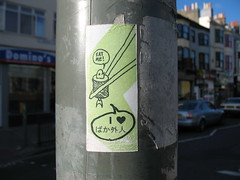
The origins of the wasabi horse-radish (preferably from the Izu peninsula), miso paste (preferably from the Nagano mountains) and pickled ginger (preferably from Tochigi) will all be scrutinised. Rice is expected to be the most frequent area of failure: a true sushi master will insist on Japanese koshihikari rice grown in Japan.
The same variety grown in California might, just, be acceptable. Faux pas may include serving Chinese soy sauce, or miso soup in a porcelain cup.Meanwhile, bluefin tuna used in sushi has been found to contain terrifying amounts of mercury, at least in the US.
2008/1/25
Art hipsters rejoice: someone has finally designed a digital camera without a screen or viewfinder:
Designer Sungwoo Park's prototype Eazzzy! camera consists of a USB stick with a lens and one button, and offers "the feeling of not knowing how your shots turned out à la analog film" with the convenience of USB transfer; not to mention a groovily ironic, retro-styled shape in several bright colours. And you can undoubtedly expect the images to turn out fashionably lo-fi, as you'd get that with anything of that size.

Though I wonder if it'd be just standard cameraphone lo-fi or whether they'd put an artfully crappy lens on the thing (as with cult film cameras such as the Lomo and Diana). They could, of course, program the firmware to oversaturate the colours, or overexpose the centre of the image and vignette the edges, though that would run against the cult of authenticity from which the lo-fi fad stems, thus being the photographic equivalent of alternative rock recorded for major labels in expensive studios, with special ProTools plug-ins thrown in to make it sound grungier.)
2008/1/17
As Banksy's artwork continues to climb in value (a collector recently bought a piece on a building wall in Notting Hill for £208,100, plus the (not inconsiderable) cost of removing and relocating the wall), BBC News has a piece on how to tell an authentic Banksy from a knockoff:
wo key signifiers of a genuine Banksy work are a busy location and a political subject, he says. While other graffiti artists go for railway lines or rundown areas to reach their community, Banksy aims for the wider public.
"The drawing will be reasonably competent, not brilliant, he's not a great artist. And it will be making a small jokey point about something. It's very difficult to fake that authentically. I don't doubt people will try but he'll distance himself from it."
2007/4/20
The Guardian looks at why today's hot new music all sounds like something you've heard before:
Pop's history, not its future, has become the driving force for so many artists that it's possible to get a modern British version of just about any music you care to mention. Want to hear brand-new 1930s swamp blues? Look to Duke Garwood. Ever wondered how the Andrews Sisters might sound transplanted to the present day? Turn to the Puppini Sisters. In search of rock'n'roll sporting unscuffed blue suede shoes? Here's Vincent Vincent and the Villains. The list goes on, taking in the Pipettes' and Lucky Soul's updates of the girl group/60s pop sound, the Draytones' recreation of 60s garage, Selfish Cunt's rowdy 70s punk, Franz Ferdinand's and the Futureheads' homage to post-punk, travelling from genre to genre and decade to decade until it reaches the so-called post-Libertines bands - most prominently, the View and the Fratellis - who take their inspiration from a group nostalgic for the 1970s and who still existed three years ago.Paul Morley, music journalist and founder of 1980s Fairlight-driven avant-garde artist of Art Of Noise, believes that music has become backward-looking:
"Instead of music moving forward," Morley says, "there was a moment - which you could pin down to around Britpop, or even earlier - when it started to fold backwards on itself. Instead of music having an idealistic need to create a future, to change things and have enough optimism to believe that could happen, it has ground to a halt."Britpop is one candidate for such a moment, especially with the media-driven hype about it being a new Mod revival/second coming of the Swinging Sixties, which some of the bands and promoters either started to believe or played along with, inaugurating a tradition of fashionable musicians dressing, knowingly or otherwise, in the drag of past eras. In Rip It Up And Start Again, however, Simon Reynolds places the end of originality after post-punk declined, via "new wave", into "new pop" and the mainstream, and places the C86 generation of indie music, with its unexperimental pop song structures and traditionalistic guitar/bass-guitar-driven instrumentation, as the start of a new conservatism in indie music.
If there is no originality any more, then originality becomes simply a matter of choosing which reference points you slavishly rip off (and/or update by putting in more swear words and references to iPods and text messages) more creatively:
Vincent Vincent thinks it's a positive advantage that someone like him has more than 60 years of musical history to draw on. "That's what this whole first decade of the 21st century has been about: this massive amalgamation of all the previous decades," he argues. "We now are in the luxury position that we can cherry-pick our favourite things from the past." A fan of Elvis, doo-wop, Bob Dylan and the 1970s rock'n'roll revisionism of Jonathan Richman and Richard Hell, he aims to "pull rock'n'roll apart and add modern things to it". Doing so, he thinks, makes Vincent Vincent and the Villains "perhaps the most forward-looking, adventurous band out there. I feel like I'm presenting something new, something different that people haven't thought about. An English rock'n'roll band of now."
For the Pipettes, choosing different reference points from your contemporaries is a sign that you're "being intelligent". "If other bands can go as short a time back as Britpop and try to recreate that, why can't we go back and discover music that we think is more interesting?" asks Becky.
Asked whether he thinks it's possible to create original music today, Lucky Soul's Andrew Laidlaw grimaces. "I think that would be utterly pretentious," he says. "And it immediately dates - unlike timeless melody." By its nature, timeless isn't modern - and it certainly isn't futuristic.Today's hot young revivalists are, of course, not the first musicians to stand on the shoulders of giants; however, they differ from their predecessors in the reverence with which they treat what came before them. Rather than ripping it up and starting again, they elevate it to sacred canon:
Think of the Libertines: they were so enamoured of punk, they hired Clash guitarist Mick Jones as their producer. "I cannot help but marvel at how peculiar that is," says Morley. "Something that was meant to be a radical music has become truly conservative, in that it conserves: it's recreating shapes and riffs and sounds that have happened before."And here's Momus' take on this.

2006/6/14
Charlie "TV Go Home" Brooker rips into Sandi Thom, the bland, suspiciously manufactured-looking "grass-roots Internet sensation" who sings some inane load of bollocks about wishing she was a punk rocker with flowers in her hair or something:
All I hear is that telltale, indefinable something that immediately marks it out as something that's bypassed the soul completely: consumable noise for people who don't like music but know listening to it is "the done thing" - like mutant imposters mimicking the behaviour of humans. I can't relate. It doesn't go. I'm being alienated by the replicants.
There's a word for this sort of thing. It's not "art", it's "content".
Sometimes I can ALMOST see where content is coming from. Take Angels by Robbie Williams. It's a massively popular piece of content, beloved by millions. If I strain really hard, I can just about make out some genuine emotion. Just a speck or two - but enough to make its huge success at least vaguely explicable. Compared with anything that has any semblance of balls whatsoever, Angels is a bowl of cold mud - but next to most content, it's a towering emotional epic. It almost makes you feel something. No wonder it's become the official theme tune for thick people's funerals.Brooker then goes on:
As luck would have it, while typing this article, I've just heard I Wish I Was a Punk Rocker (With Bollocks in My Mouth) on the radio, and the real braintwister is the lyric, in which she yearns for a time "when accountants didn't have control and the media couldn't buy your soul". It's a boneheaded plea for authenticity, sung in the most Tupperware tones imaginable: a fake paean to a pre-fake era. It's giving me vertigo.Which sounds like the totality of the Sandi Thom phenomenon (the song, the soullessly plastic paean to authenticity, the backstory with its transparent contrivedness) could almost be a work of conceptual art in itself. Perhaps it was created by Bill Drummond or some other prankster (much like the Pete Doherty sideshow is said by some to have been; I have heard rumours that the glamorous rock'n'roll nihilist was originally a small-town Buddy Holly impersonator who had been discovered and manufactured into the New Sid Vicious for a prank/art project).
Of course, the problem with creating a work of art such as the manufacture of a transparently, cynically plastic "authentic" pop star is that it is difficult if not impossible to distinguish it from the way a big part of the recording industry normally operates, guided by nothing more self-aware than the cold, insectile logic of marketing and demographic modelling. If some neo-Situationist prankster manufactures a perfectly plastic pop star, indistinguishable from the normal products of the entertainment machine, is it still art?
2005/2/17
The Graun's Alexis Petridis looks at why the (ostensibly) mentally disturbed make such compelling rock stars:
According to Oliver James, a clinical psychologist and author of They Fuck You Up: How to Survive Family Life, the rise in numbers and popularity of emo acts may be linked to a rise in mental illness among their obvious target market of 18- to 24-year-olds (the age group most likely to be affected by psychological problems, according to studies published in Europe and Australia).
But if fans buy into it, that may be because rock music, unlike other art forms, is depicted as benefiting from being created by those with mental illness. Most critics would tell you Van Gogh's paintings are great despite, rather than because of, his psychiatric problems - but that's not true of the Beach Boys' Smile or Barrett's The Madcap Laughs or Nirvana's In Utero, for example, whose greatness is widely held to be inexorably entwined with their creators' mental problems.
It's the whole dionysiac genius thing; the myth, deeply ingrained in the Rockist mindset, that primal authenticity and true brilliance comes not from carefully honed technique, deep knowledge of the genre, cleverness or anything so square and totally un-rock-and-roll, but from abandoning oneself to the frenzy like a Viking berzerker. To give a topical example, crack-smoking, junk-shooting fuckup Pete Doherty is one of the greatest geniuses of our time, and his new band Babyshambles is ten times the band that The Libertines (who kicked him out) were, as the world would find out if he'd ever get his shit together for long enough to actually play a gig.
The article also mentions Ol' Dirty Bastard, as an example of the fine line between empathy and voyeurism. One notable omission, though, is Wesley Willis, described by Jello Biafra as one of the most punk-rock artists ever.
Of course, with the rising popularity of emo and various forms of fuckedupcore came a lot of opportunists putting on the "tortured genius" act, acting like caricatures of pissed-off, fucked-up, tantrum-throwing teenage nihilists and raking in the cash. Thirtysomething Universal Music executive and part-time teenage mook Fred Durst is one name that's mentioned there; and I'm sure you can think of other notable examples (anyone remember Vanilla Ice's reinvention as a tortured, angry-white-guy rap-metal mook? Or cyberpunk boy-band Information Society's post-Reznorian take-a-walk-through-my-nightmares industriogothic makeover?)
(On a tangent: Wikipedia's lists of songs about bipolar disorder and suicide)
2003/10/27
Today's Cat and Girl ties in nicely to the chip-tune/authenticity debate previously mentioned:

"Guitars are bourgeois, OK? They're expensive and the skill they demand is elitist!"
"We should be making music with computers! They're the populist medium of today!"
Mind you, computers are bourgeois and expensive too; the iBooks that all the inner city hipster kids have certainly are. Though maybe it's more authentic if you shlep along a battered beige box that looks like it was stolen out of an office and souped up numerous times, running Windows 98 and AudioMulch (or better: Linux and some home-brewed audio software; it's not going to sound as slick as Cubase, but slickness is bourgeois). Having to lug that and a 15" glass bottle to see what's going on bespeaks punk authenticity and commitment to one's art, in a way you can never get with an Apple PowerBook.
(Of course, there's no way you could carry a PC/monitor to gigs on a bicycle. Then again, real proles drive, usually battered Mazdas or Holden panelvans. Cycling everywhere is a bourgeois affectation, like vegetarianism. Discuss.)
(Btw, Graham: any ideas on how one could combine tracker modules and live performance? Perhaps a tracker with keyboard-controlled mutes/cuepoints/sample triggers could be useful for that...)
2003/5/21
In today's Onion: '90s Punk Decries Punks Of Today:
"Those so-called punk bands they listen to today? Sum 41? Good Charlotte? The Ataris? They're not punk. Back in the day, man, we used to listen to the real deal: Rancid, The Offspring, NOFX, Green Day. Those guys were what true punk rock was all about. Today's stuff is just a pale, watered-down imitation. There's no comparison."
"I saw some kid wearing a Sex Pistols T-shirt the other day--he couldn't have been more than 9 when the Pistols did their Filthy Lucre reunion tour," Tolbert said. "I was like, 'You can listen to the music, you can wear the T-shirt, but I was there.' I had fifth-row seats at that goddamn stadium, man, right up front, close enough to see Johnny Rotten's wrinkles. Did you see an original member of The Clash play during Big Audio Dynamite II's last tour? Did you see two of the four original Ramones play at the KROQ Weenie Roast in '95? You did not, but I did. I swear to God, they're like a joke, these people."
And then, the front page has the following useful wardating tip:
SPRINGFIELD, MO--Wanting to add something special for new love Danielle Welter, Andy Mansfield, 24, burned three personalized tracks Monday onto his standard new-girlfriend mix CD. "Danielle loves that No Doubt song 'Running,' so I threw that on there just for her," Mansfield said. "And she doesn't really like rap, which [previous girlfriend] Erica [Hollings] loved, so I took off [Salt-N-Pepa's] 'Whatta Man' and replaced it with two Aretha Franklin songs, because Danielle loves the oldies." Mansfield said he expects Welter to love the mix "even more than Erica did, maybe even as much as Christine."
2003/1/17
Thomas Frank on the corporatisation of cool, on how ersatz "rebellion" (and ersatz "authenticity") is the engine of consumerism, and the false hip-square dichotomy created by advertising:
So it offers not just soap that gets your whites whiter, but soap that liberates, radios of resistance, carnivalesque cars and counter-hegemonic hamburgers.... If our fragmented society has anything approaching a master narrative, it is more of a master conflict. We are in constant struggle - not against communism, but against the spirit-crushing, fakeness-pushing power of consumer society. And we resist by watching Madonna videos or by consorting with more authentic people in our four-wheel-drives, or by celebrating consumers who do these things.
People worked harder and longer in the '90s than in previous decades; they saw more ads on more surfaces than before; they ran up greater household debts; they had less power than at any time in the past 50 years over the conditions in which they lived and worked. In such an environment our anger mounted. And from the eternally outraged populist right to the liberation marketers of Madison Avenue, those who prevailed in the past decade have been those who learnt to harness this anger most effectively.
2003/1/12
Could this be the most authentic gangsta rap song ever? Bandit holds up a fast-food place, kills five people execution-style, and then writes a rap song about it.
I said give me the doe you say no, no?
is it no you said stick some lead to your head
guess what punk now your dead
with all that blood bursting out your Head
from Head to toe if you wanna know I gotta go,
thats why they got me on
the worlds most wanted show
Police found the handwritten lyrics in a suitcase, along with stolen money. Instead of a chance to record with Dr Dre, the author got the death penalty for his trouble. Maybe keepin' it real isn't such a good idea after all. (via rotten.com)